Italian wine stocks reach 42.6 million hectolitres as calls grow for a vineyard-first policy
Italian cellars held 42.6 million hectolitres of wine on 31 July 2026, about 6.9% more than a year earlier, according to Cantina Italia data from ICQRF. Writing on newsfood.com, agricultural economist and oenologist Giampietro Comolli argues that a Vine Package covering area, yields and varieties must come before any new Wine Package on stocks, promotion and export. Unione Italiana Vini ruled out generalised grubbing-up in June 2026, but its president Lamberto Frescobaldi has opened to selective removal accompanied by alternatives.
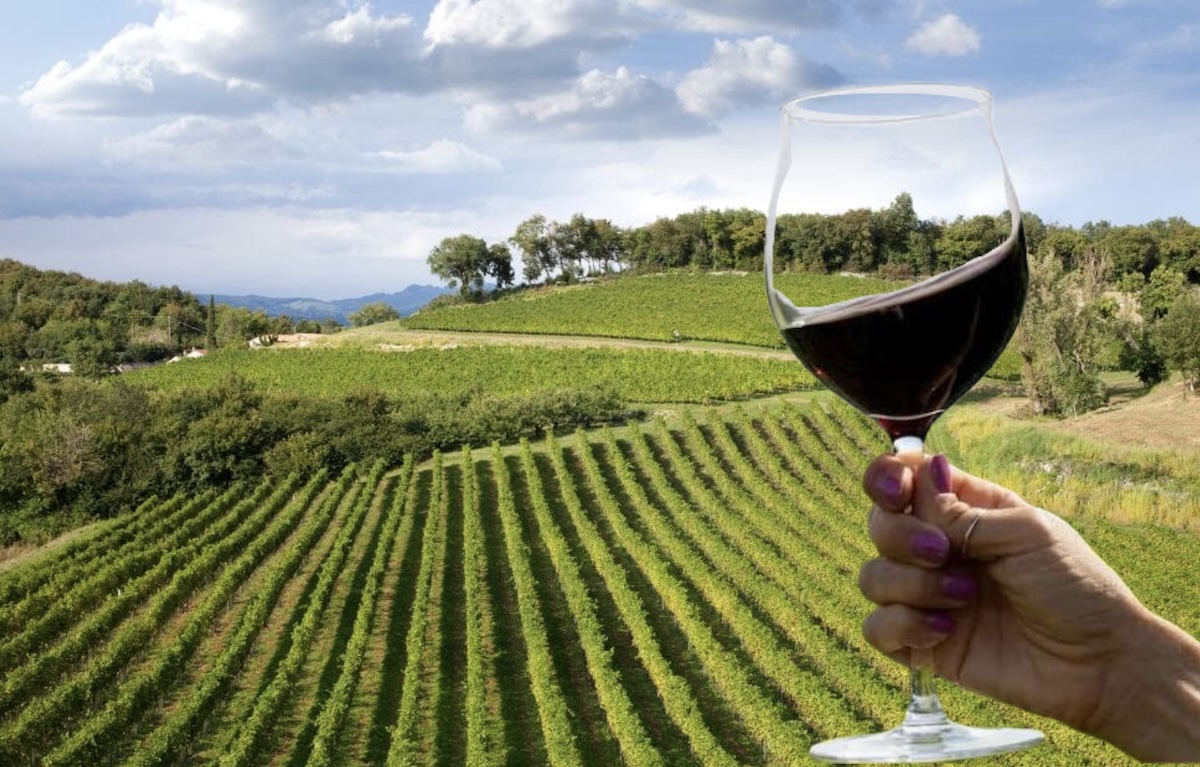
Italy should separate its vineyard problem from its market problem and deal with the vineyard first. That is the argument set out by agricultural economist, agronomist and oenologist Giampietro Comolli in a commentary published by newsfood.com, which calls for a Pacchetto Vite — a Vine Package covering planted area, territories, yields, varieties, climate and water — before any new Pacchetto Vino, a Wine Package covering denominations, stocks, promotion, export, distribution, prices and competitiveness. Both, he writes, must sit inside a long-term national viticulture plan rather than function as emergency measures.
Cellar stocks up 6.9% year on year
According to Cantina Italia, the stock monitoring run by Italy's ICQRF, Italian cellars held 42.6 million hectolitres of wine on 31 July 2026, about 6.9% more than at the same point a year earlier. Comolli cautions against a mechanical reading of that figure. Stocks cannot simply be added to incoming production to produce a headline of 80 million hectolitres of unsold wine, he writes, because wine leaves cellars continuously to be bottled, exported or consumed.
The warning concerns direction rather than arithmetic. New production is entering cellars while stocks remain high and demand slows, which in his view makes the question of balancing supply against the market impossible to postpone further. The sector, newsfood.com notes, came out of a 2025 that was already difficult on foreign markets, and the opening months of 2026 brought continued difficulties, particularly on some non-European markets.
Two packages, in sequence
The proposal separates agricultural policy from market policy. The Vine Package would address production itself — surfaces, territories, yields, varieties, climate, water, reconversion and the future of wine-growing businesses. The Wine Package would address the product and its commercial position. Comolli argues that any restructuring should start from clearly identified categories of vineyard:
- vineyards that do not supply DOCG or DOC wines;
- areas that have not been claimed for years;
- less specialised plantings;
- areas where production, environmental conditions and the market show evident imbalances.
Positions inside the industry have shifted. As recently as June 2026, Unione Italiana Vini ruled out generalised grubbing-up plans, favouring instead yield containment, a temporary halt to new planting authorisations, revision of production rules and a national strategic plan. UIV president Lamberto Frescobaldi has since opened to the possibility of selective grubbing-up, provided it is accompanied by alternatives and does not become an indiscriminate intervention.
Those alternatives, in Comolli's account, include varietal conversion, grafting, more resistant and resilient grape varieties, restructuring of plantings, agricultural diversification and, where rules allow, relocation of production within a territorial strategy. He notes that the new European framework points the same way, covering varietal reconversion, climate adaptation and vineyard relocation while attaching precise conditions to aid for definitive grubbing-up.
Climate, competing drinks and the limits of promotion
Climate change is altering temperatures, water availability and the agricultural vocation of entire territories, the commentary argues. Some areas could move to other crops — mango, papaya, dates, guava, watermelons or melons are cited as examples of what soil and climate may permit — while higher-altitude zones could become interesting for new viticulture. The underlying question is what Italian agriculture will produce over the next thirty years, which cannot be answered by looking only at the last thirty.
On the demand side, wine no longer competes only with other wine but with cocktails, beer, soft drinks and changing lifestyles. Comolli describes a café-bistrot in Saint-Germain-des-Prés in Paris where Spritz was widely present and French sparkling wine much less so, presenting it explicitly as a snapshot rather than a statistic. Cutting shelf or restaurant prices may help in some situations, and low- and no-alcohol wines may open opportunities, but neither route alone resolves a structural imbalance. For many DOCG and DOC wines, he writes, value is tied to history, territory, grape variety, production method and identity.
The commentary also raises a governance question about the Consorzi di tutela, asking whether the weight of membership fees and the interests of economically stronger players risk conditioning their choices. The sequence he proposes is explicit: first save and rethink the vine, then help wine find its market. If production is 100 and the market absorbs 50, he writes, promotion alone will not explain why the other 50 find no buyer. The article was updated on 2 September 2026.