Italian boating splits in two: superyacht output up 132.6% in a decade, small-craft segment retreats
Data presented at the Risorsa Mare forum in La Spezia show Italian superyacht production up 132.6% over ten years, with segment turnover rising alongside it. Over the same period the small nautical business has gone backwards. CNA Nautica La Spezia says the divide is a cause for concern.
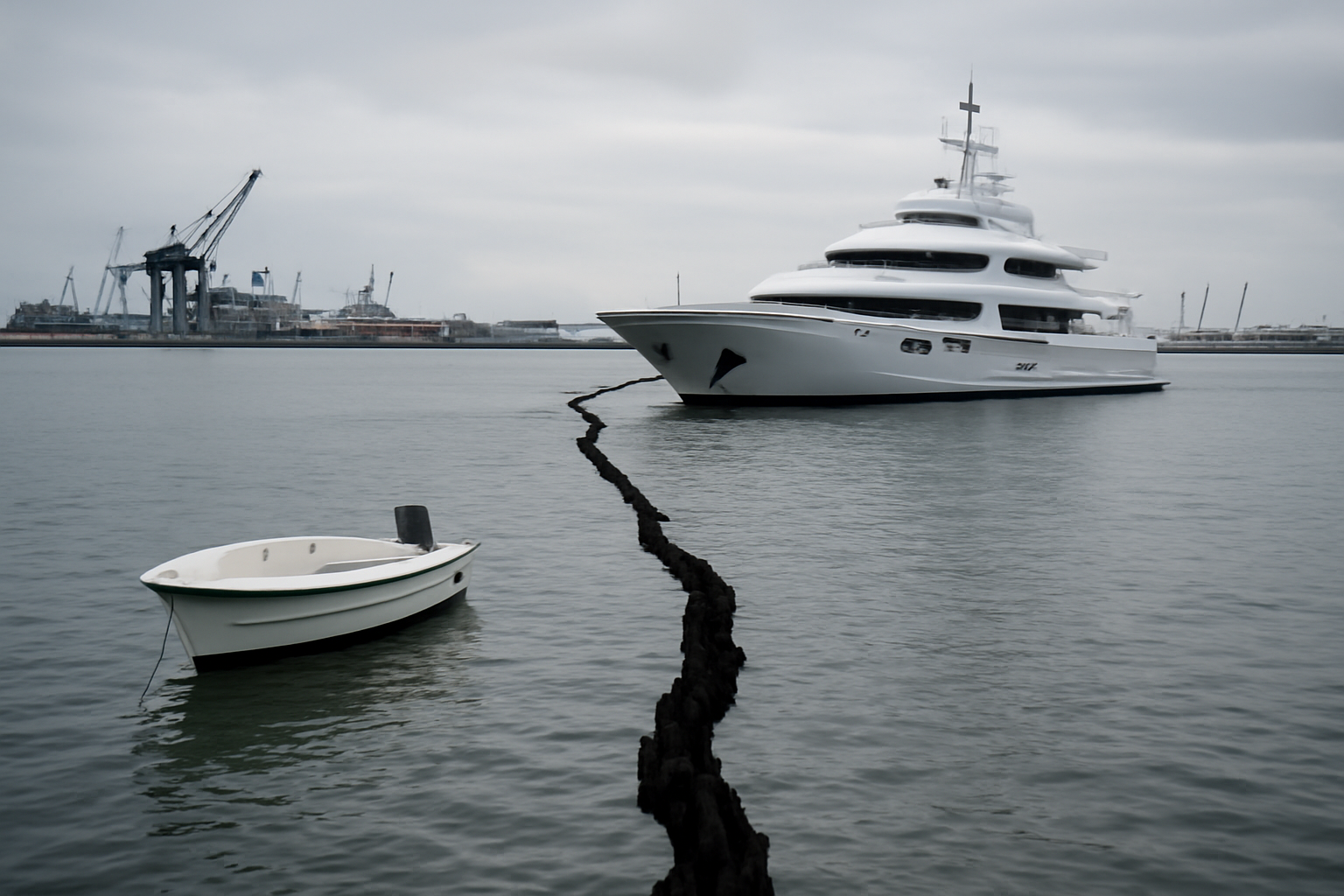
Italy's recreational boating industry is expanding and contracting at the same time, depending on which end of it you look at. Data presented at the Risorsa Mare forum in La Spezia show superyacht production up 132.6% over ten years, while the small nautical business loses ground, Gazzetta della Spezia reported.
Growth concentrated at the top
The 132.6% figure refers to superyacht production across a ten-year span and implies output roughly 2.3 times its level at the start of the period. Turnover in the segment has risen alongside volumes, according to the data presented at the forum and reported by Gazzetta della Spezia.
The account of the forum does not break that increase down by vessel length, by builder or by destination market, nor does it set the Italian figure against competing yacht-building countries. What it establishes is direction and scale: the luxury end of Italian boatbuilding has more than doubled its output in a decade, and it did so while the rest of the sector moved the other way.
Small boating loses ground
The second half of the picture is what prompted the warning. CNA Nautica La Spezia, the marine section of CNA, the association representing artisan firms and small businesses, said the data presented at Risorsa Mare are a cause for concern, with small nautical activity in retreat.
That segment consists of small and medium boats and the firms built around them: compact yards, fitters and repairers, engine and systems workshops, dealers, brokers and service providers. It is dispersed across many small operators rather than concentrated in a few large groups, which is precisely why a decline there registers far less visibly in national output statistics than a superyacht boom.
Why the divide matters for the supply chain
A superyacht order carries high value per hull, covering propulsion, interiors, automation, paint systems and deck equipment, but it flows through a short list of builders. Small-craft demand works the opposite way: low value per unit, spread across a wide base of buyers and suppliers, and closely tied to household purchasing power, financing costs and berth availability. An industry whose growth sits entirely in the first channel depends on a narrow group of clients and becomes more exposed when that channel cools. For component makers, importers and service firms, the two channels require different pricing, inventory and lead-time strategies.
What the figures do not show
For anyone sizing the Italian market, several questions remain open:
- absolute turnover in euros for each segment;
- the number of units produced or sold;
- employment in each segment and how it has shifted;
- the export share and the main destination markets for Italian-built yachts;
- how much of the small-craft decline comes from new-boat sales rather than refit, repair and services.
Until those figures are published, two fixed points remain: growth of 132.6% in superyacht production and the warning from CNA Nautica La Spezia about a shrinking base beneath it, both inside the same national industry.