Imports supply almost all of Italy’s salmon as consumption rises
Almost all salmon sold in Italy is imported, with Norway holding an 88% market share in 2025. Italian consumption of Norwegian salmon rose from 84,000 tonnes in 2017 to 154,000 tonnes in 2025, increasing exposure to concentrated foreign supply and environmental constraints.
Norway dominates Italian salmon supply
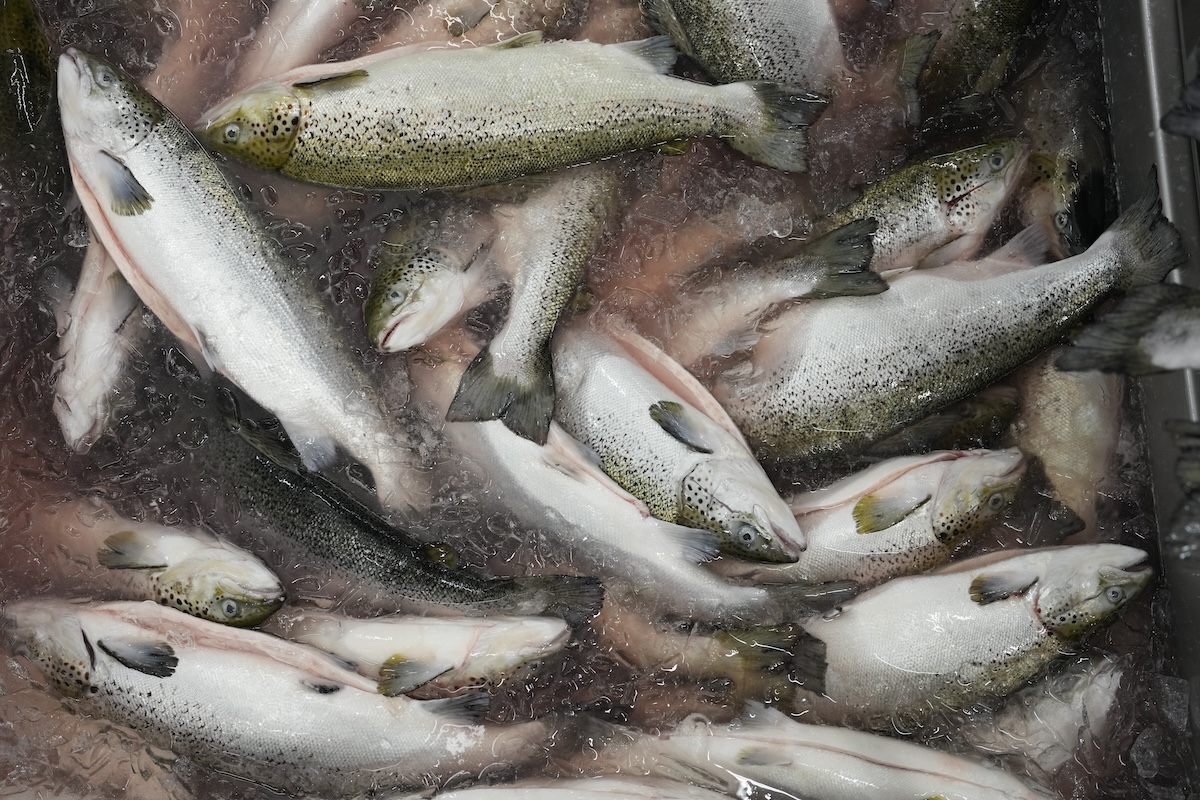
Almost all salmon sold in Italian fish shops, supermarkets and restaurants is imported, according to Il Post. Packaged smoked and frozen products normally disclose their foreign origin, but most fresh steaks and fillets displayed alongside Italian fish also come from abroad. They are predominantly Atlantic salmon, supplied mainly by Norway, which accounted for 88% of the Italian market in 2025.
Italy is not an exception. Most commercially available salmon comes from a limited group of producing countries, including Norway, Chile, the United Kingdom through Scotland, and Canada. This concentration leaves processors, retailers and food-service companies dependent on farming conditions, biological risks and regulation in a small number of coastal production regions.
Consumption nearly doubles in eight years
Italy has become Europe’s third-largest market for Norwegian salmon after Poland and France. Consumption increased from 84,000 tonnes in 2017 to 154,000 tonnes in 2025, an 83% rise over eight years. A Norwegian Seafood Council survey cited by Il Post found that salmon’s popularity in Italy had become comparable with pizza. Its expansion is closely connected to sushi, poke and other dishes popular among people aged 18 to 34, who eat them in restaurants or fast-food outlets an average of three times a month.
Global demand has been growing faster than supply, particularly since the pandemic. Demand has expanded by 7% a year, compared with 3% for supply. Between 2014 and 2024, the value of salmon rose by 98%, while sales volume increased by only 27%. For Italian importers and restaurant operators, that gap shows how constrained production and stronger consumption can translate into greater sourcing costs even when physical volumes grow more slowly.
Farmed fish carries most of the market
Farms produced 2.8 million tonnes of salmon in 2024, equal to 80% of total supply. More than half of farmed salmon is Norwegian. The industry, which began experimentally in Norway in the 1970s, now generates about €16 billion a year and is the country’s second-largest export after oil. Salmon are generally raised in open-net coastal cages, each capable of holding as many as 200,000 fish.
Critics say these installations release waste, parasites, viruses, pesticides and antibiotics into the marine environment, while escaped farmed fish can affect wild populations. Industry representatives argue that farms operate under strict national and international standards and provide a nutritious food at large scale. The International Salmon Farmers Association says the sector produces 17.5 billion meals annually, although critics note that salmon feed requires substantial volumes of other marine products.
Environmental pressures limit alternatives
Wild supply offers no simple alternative. Wild Atlantic salmon populations have fallen by about 70% over the past 50 years, and the species has been considered endangered in the United Kingdom since 2023. In North America’s Yukon River basin, average annual chinook salmon passage fell from 375,000 in the mid-1980s to about 65,000 in 2024.
Researchers associate the decline with several potential factors, including pollution, agricultural runoff, accidental capture by trawlers, habitat management, predators and warmer water linked to climate change. Companies are testing technologies designed to reduce farming’s impact. Il Post cites an experimental Hofseth project for a closed production system intended to retain waste and separate salmon from surrounding water. For Italy, however, high consumption and negligible domestic output mean foreign aquaculture will remain central to availability, pricing and procurement decisions.