Italian rice growers insure 75% of area as covered value nears €740 million
Ismea reports that the value of Italian rice area covered by insurance policies has reached almost €740 million, 12% more than in 2024, with about 75% of the surface insured against a national average of roughly 9% for crop production. Northern Italy concentrates 99.7% of insured value, while cover against catastrophic risks such as drought remains limited.
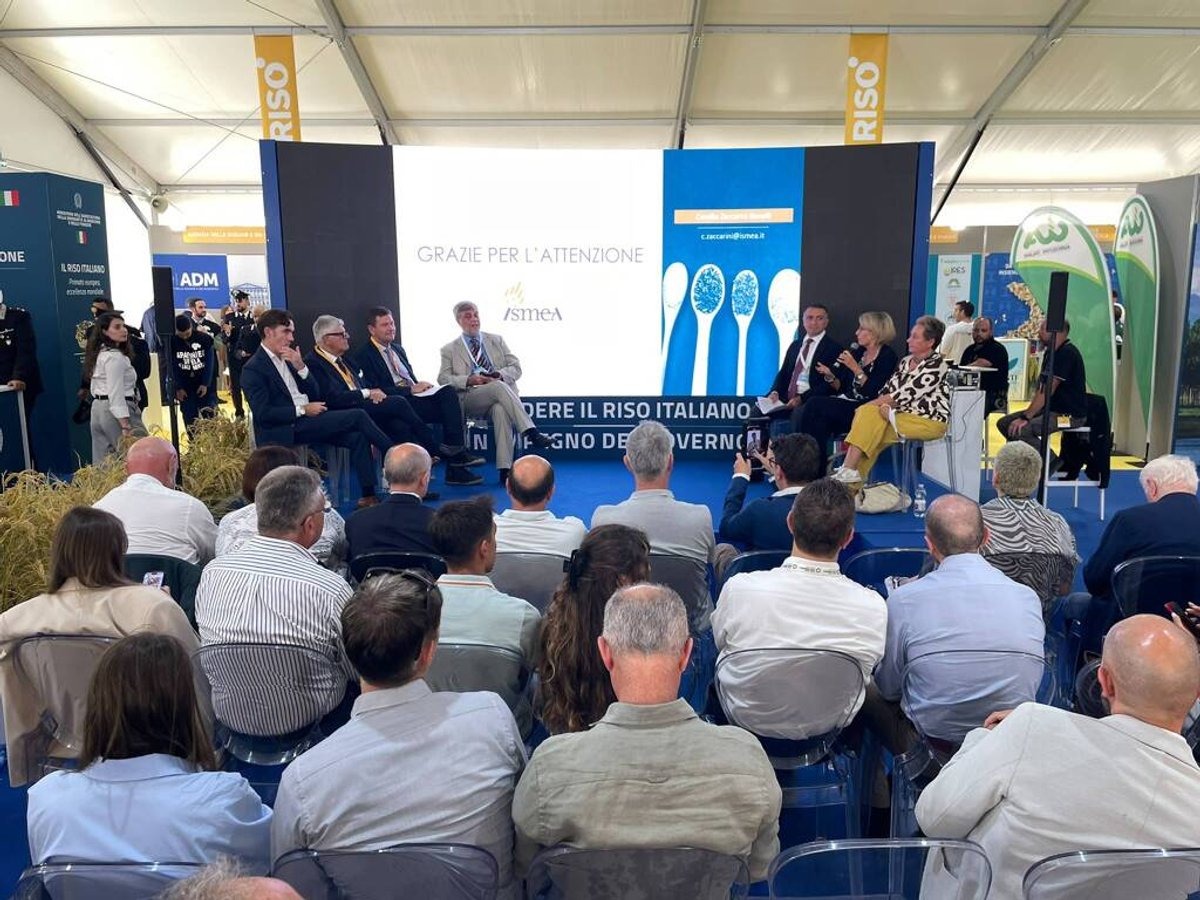
Rice is the most widely insured arable crop in Italy. An analysis by Ismea, the Institute of Services for the Agricultural and Food Market, puts the value of rice area covered by insurance policies at almost €740 million, 12% more than in 2024, with about 75% of the total rice surface insured. The data were presented in Vercelli at a meeting on risk prevention and management in the rice supply chain, held during the Risò international festival, and reported by soldionline.it.
A coverage rate far above the national average
The 75% figure places rice first among Italian arable crops by insurance penetration. The national average for crop production stands at around 9%, meaning rice coverage is more than eight times as wide. Ismea describes a sector that has turned risk management into a structural instrument rather than an occasional purchase.
In insurance terms, agricultural risk management means using policies and mutual funds to protect farm income from adverse weather, price swings and other production problems. In the rice segment that practice is now standard rather than exceptional.
Northern Italy accounts for 99.7% of insured value
The geography of coverage mirrors the geography of production: northern Italy concentrates 99.7% of insured values, reflecting the concentration of paddy fields in the northern regions that host the country's main rice-growing areas. Vercelli, where the Ismea figures were presented, sits at the centre of that belt.
Frequent perils dominate, drought remains thinly covered
Most policies target what Ismea calls perils of frequency — events that occur regularly, above all hail, strong wind and excess rainfall. These are rarely as destructive as extreme events, but they hit harvests repeatedly and erode farm margins.
Cover against catastrophic risks remains more limited. Drought is the clearest example, and in the current campaign it weighed significantly on rice output, according to the Ismea analysis. Ismea also notes lower volatility in insurance costs for rice than for crop production on average: the premiums paid by rice growers fluctuate less over time, which makes financial planning easier for farm businesses.
Ismea points to new vulnerability tools
Ismea director general Sergio Marchi said that “in a context marked by growing climate uncertainty and strong economic volatility, risk management ceases to be a mere bureaucratic requirement and becomes a strategic pillar of the resilience and competitiveness of businesses”.
Ismea president Livio Proietti said the institute stands alongside farms and institutions with increasingly innovative instruments, citing the Cevi, described as a tool for identifying the vulnerability of a territory to extreme events. Its purpose is to support the planning of insurance cover and of the active prevention measures foreseen by the regional CSR — the regional strategic plans and intervention programmes that implement agricultural and risk-management policy.
- Camillo Zaccarini Bonelli, head of the Ismea directorate supporting the CAP strategic plan
- Paola Pietropoli, director of Condifesa Vercelli Biella, the consortium that manages collective policies for farmers
- Patrizia Barrale, HowdenRE Climate Risk & Resilience
- Marco Pieri, Consorzio di Riassicurazione Ismea
The Risò festival setting placed the discussion inside a supply chain that is among the most exposed to climate change in Italian agriculture and, at the same time, among the most advanced in its use of insurance instruments.