Italy requires three-month shrinkflation notices in stores and online
Italy now requires disclosure when manufacturers reduce a product’s nominal quantity without lowering its price. Retailers and e-commerce platforms must display the information for three months, replacing an earlier plan for six-month warnings printed on packaging.
Three-month disclosure requirement takes effect
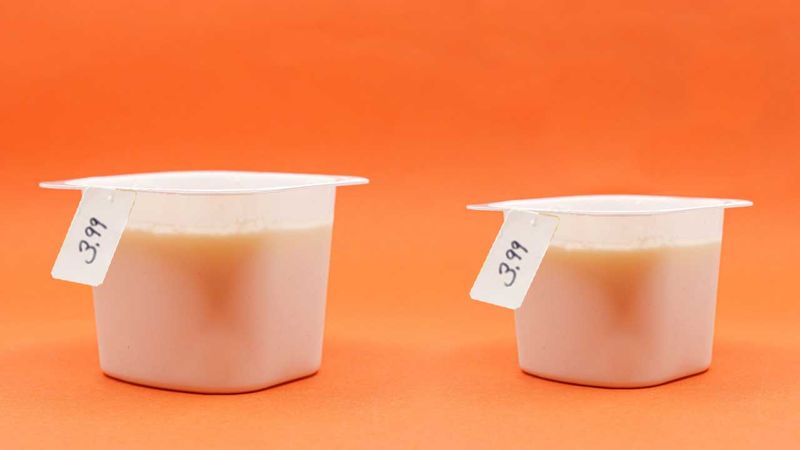
Italy has introduced new disclosure rules for shrinkflation, requiring consumers to be informed when a manufacturer reduces the nominal weight or volume of a product while leaving its price unchanged. From 15 July, notices must remain visible in physical stores or on the websites where affected goods are sold for three months after the smaller product reaches shelves.
The obligation begins with manufacturers, which must communicate the quantity change through the supply chain to distributors, supermarkets, shops and e-commerce platforms. That communication must state the variation and the percentage price increase attributable to the quantity reduction. Retailers are then responsible for presenting the information to customers.
Packaging proposal replaced after EU dispute
The current system is a compromise following a dispute between Italy and the European Commission. At the end of 2024, Parliament approved article 15-bis of the Consumer Code through the Competition Bill. That version would have required packaging to state explicitly how much less product it contained than the previous format, with the warning remaining in place for six months. It was scheduled to take effect on 1 April 2025.
In March 2025, however, the Commission opened infringement proceedings because Italy had not followed the prior notification procedure for national technical rules affecting the single market. The Commission also considered an Italy-specific packaging requirement disproportionate, arguing that it would create additional costs for manufacturers and could obstruct the free movement of goods.
Italy subsequently adopted point-of-sale and online notices instead of package labels and shortened the disclosure period from six months to three. The Ministry of Enterprises and Made in Italy notified the revised legislative decree to the Commission on 15 April. The three-month objection period expired without intervention, allowing the measure to take effect through tacit approval.
Broad impact across food and household goods
The rule covers a wide range of fast-moving consumer goods. Quotidiano Canavese lists cereals, yogurt, ice cream, snacks, biscuits, crispbread, prepared sauces, packaged cheese and soft drinks among the frequently affected food categories. Detergent, toilet paper, shower gel, shampoo and toothpaste are also exposed. Milka’s smaller chocolate bars have become a prominent example of the practice.
An exemption applies when a quantity reduction results from a reformulation that improves the product’s yield or effectiveness while preserving its overall use value. In that case, no disclosure is required. The exemption could be particularly relevant to concentrated detergents and other products for which a smaller quantity may deliver the same number of uses.
Consumer groups question the rule’s visibility
Codacons described the revised measure as diluted and insufficiently effective, arguing that a shelf or online notice is less visible than information printed directly on the package at the moment of purchase. Italy’s fast-moving consumer goods market is worth about €120 billion annually. Codacons estimates that shrinkflation produces hidden average price increases of 10% to 18%, reaching 40% in some cases.
The European Commission’s Consumer Conditions Scoreboard 2025 found that 74% of European consumers had noticed smaller packages or lower-quality products without a corresponding price reduction, in addition to general price increases. Italy’s statistics agency, Istat, does not isolate shrinkflation in its inflation monitoring, making its precise effect difficult to measure. Codacons estimates that even a minimum annual effect of 0.1% across the full consumer-goods basket would have cost Italian households nearly €1.8 billion over the past fifteen years.
The rules address quantity reductions rather than the related practice known as skimpflation, in which weight and price stay unchanged but cheaper ingredients reduce quality. Examples cited by Quotidiano Canavese include palm oil replacing butter, powdered yolk replacing fresh eggs, and thickeners and water replacing meat in prepared dishes.