Italy Plans €300 Million for Olive Oil and Tighter Quality Controls
Italy plans to allocate an initial €300 million to strengthen quality-focused olive oil production under the Coltiva Italia plan. Agriculture Minister Francesco Lollobrigida also announced risk-based controls against fraud and requested European emergency support for a sector facing price pressure.
Funding targets quality-oriented production
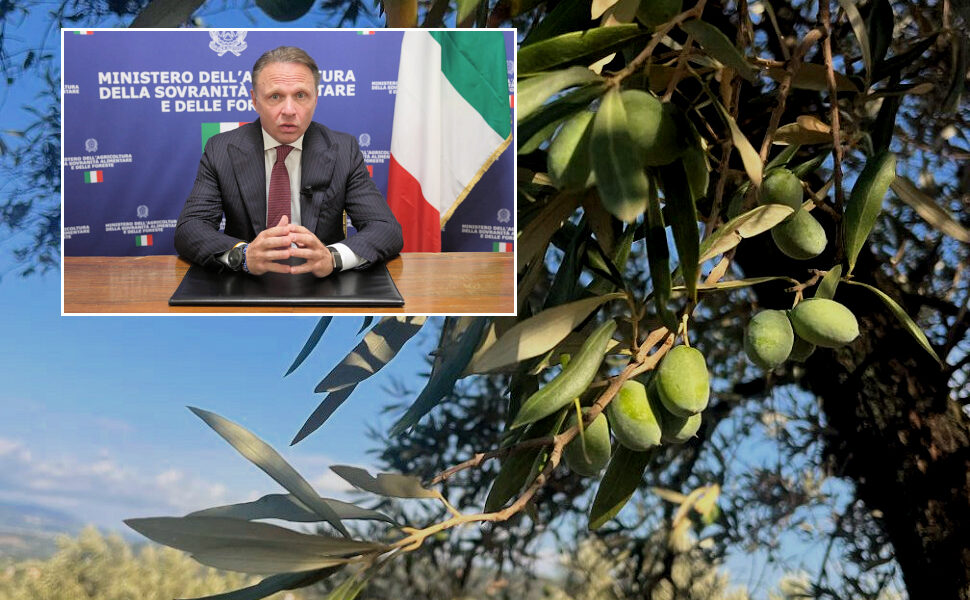
Italy plans to allocate an initial €300 million to its olive oil sector through the Coltiva Italia plan, Agriculture, Food Sovereignty and Forestry Minister Francesco Lollobrigida said in a message to the Academy Olivo in Campo Calabria. The two-day event, organized by the Calabria Region and ARSAC with L’Informatore Agrario, brought together institutions and industry participants to discuss the future of olive cultivation.
According to QuiCosenza, the funding is intended to strengthen a production system based on quality. Lollobrigida also said Italy had asked the European Union to activate its emergency fund for a sector experiencing a difficult period for product prices. No timetable, eligibility criteria or division of the €300 million among growers, mills and other participants was specified in the report.
Controls will focus on higher-risk operators
The government also intends to tighten enforcement against fraud in extra virgin olive oil. Lollobrigida said Law 75/2026 established an integrated system of checks based on risk, with less administrative work for individual businesses and more systematic inspections in areas where irregularities are considered more likely. He argued that unusually cheap extra virgin olive oil can raise doubts over whether a product meets the expected characteristics.
The enforcement strategy matters to legitimate growers and processors because quality claims support the positioning of Italian oil in domestic and international markets. Stronger checks could help protect compliant companies from products sold as extra virgin olive oil without meeting the relevant standards. Their commercial effect will depend on implementation, including how authorities identify risk, conduct inspections and respond to violations.
Italy looks to the wine model
Lollobrigida said the olive oil industry should follow the model used by Italy’s wine sector, emphasizing individual cultivars, regional identity and certified quality. The Academy program reflected that approach by combining policy discussions with practical work on water management, plant nutrition, mechanization and plant health. Activities took place at the Statti farm in Lamezia Terme and at the Jole Santelli regional government complex in Catanzaro.
The measures form part of a broader agricultural policy presented by the minister. He said Italian agriculture generated more than €46.6 billion in value added for the second consecutive year, while the wider agri-food industry supported 5 million jobs, represented 15% of gross domestic product and recorded €72.4 billion in exports from 2025. He also said the Agriculture Ministry had directed more than €17 billion to the supply chain under the Meloni government. For olive growers and processors, however, the immediate issues remain production costs, weak product prices and climate-related pressure. The government has cited a diesel tax credit and compensation equal to 50% of the increase in fertilizer costs among its responses. The planned olive oil funding and tighter controls could reinforce investment and market credibility, but their impact will depend on the final rules and enforcement capacity.