Italian olive oil output rebounds 31% to 325,000 tonnes as ISMEA flags softer 2026 prices
ISMEA puts Italy's 2025-26 olive oil production at 325,000 tonnes, up 31% on the previous season, with prices declining in 2026 while Italian extra virgin keeps a premium over Spanish, Greek and Tunisian oil. Rome has launched a €40 million liquidity facility for mills and earmarked €300 million for the olive sector in 2027-2029. Italian buyers are meanwhile covering their needs in Spain at €3.35-3.80/kg ahead of the new harvest.
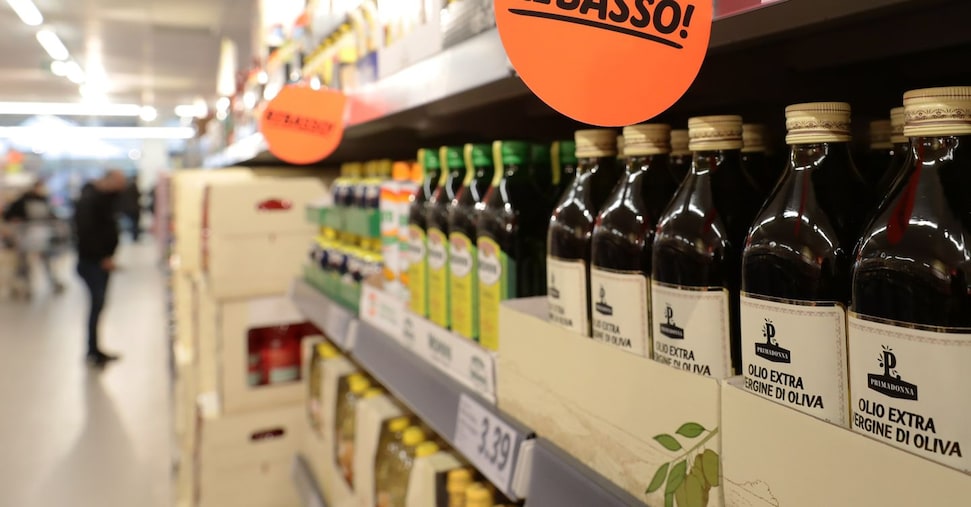
Output back to 325,000 tonnes
Italy produced 325,000 tonnes of olive oil in the 2025-26 campaign, 31% more than the previous season, according to figures presented by ISMEA at a panel on the sector during Terra Madre in Turin and reported by Il Sole 24 Ore. National output has returned to significant levels in line with an international market that has itself regained balance after two consecutive short Spanish crops and the price spike that followed.
ISMEA said the chain is closing the 2025-2026 campaign with higher production and with the price decline recorded in 2026, while still holding a stronger market position than its main competitors. Quotations for Italian extra virgin remain above those of Spain, Greece and Tunisia and stay above the levels seen before the 2022 surge.
ISMEA described the scale of Italian olive growing as follows:
- more than 1 million hectares planted, of which about 289,000 hectares are organic;
- around 620,000 olive farms;
- more than 4,200 active mills;
- 51 geographical indications, comprising 42 PDO and 9 PGI designations.
€40 million in working capital, €300 million pledged
The Ministry of Agriculture, Food Sovereignty and Forestry has launched the Cambiale Frantoi Oleari, a €40 million instrument managed by ISMEA that channels liquidity to mills and to small and medium-sized firms in the sector to cover running costs through the production phase. Il Sole 24 Ore describes the measure as the latest piece of a wider set of tools made available by the ministry.
The ColtivaItalia bill, approved at first reading by the Chamber of Deputies on 6 August and currently before the Senate, earmarks €300 million exclusively for the olive sector — €50 million in 2027, €200 million in 2028 and €50 million in 2029 — to implement the Italian Olive Plan 2026-2030, adopted by decree on 13 July 2026. Planned interventions cover the structural relaunch of the chain, higher national production, the renewal and recovery of olive groves, modernisation of irrigation infrastructure and the fight against plant disease. Across 2023-2025 the olive oil sector drew on almost €1.9 billion, including roughly €500 million from the PNRR and PNC programmes, which financed more than two thousand companies through work on mills, supply-chain contracts, mechanisation and farm solar installations.
Imports down, exports rotating northwards
ISMEA data cited by Il Sole 24 Ore show imports falling in the first six months of 2026, helped by greater domestic availability. On the export side, shipments to the United States and Germany declined, while sales to the United Kingdom grew and positive performances were recorded in Poland, the Netherlands and Belgium.
Italian buyers stock up in Spain
Iberian trade coverage points to Italian operators using the current lull in Spain to build cover before the new harvest. Olimerca, quoted by OlivoNews, reported that the Spanish extra virgin market showed no significant change week on week, with a minimum price holding at €3.35/kg and a maximum that could reach €3.80/kg, and that Italian producers continue to take advantage of the situation to cover themselves while waiting for the new crops.
New-crop offers are already below that level. According to Olimerca, Tunisian traders are offering lots of new extra virgin for November delivery on the Spanish market at €3,100 per tonne, while Morocco is quoting lampante at €2,500 per tonne and new extra virgin at €3,400 per tonne. Portugal is taking a more cautious approach to futures trading and to the harvest itself, and brokers there told Olimerca that a kilo of olive oil in November could be worth around €3,500 per tonne. The Spanish market is going through a period of relatively weak trading volumes, with lampante the most active category and the virgin grade practically non-existent; prices adjusted slightly lower and stabilised at €3.15/kg.