Drought cuts Italy's malting barley harvest by 39% as yields fall to 37 quintals per hectare
Italian malting barley production fell 39% in 2026 after drought and adverse weather, with two-row barley yields dropping from 55 to 37 quintals per hectare. The figures were presented by Coldiretti and the Consorzio Birra Italiana with Filiera Agricola Italiana at a meeting in Terrasini, Sicily, which also hosted the first brew of Kidda, a beer made from an entirely Italian chain.
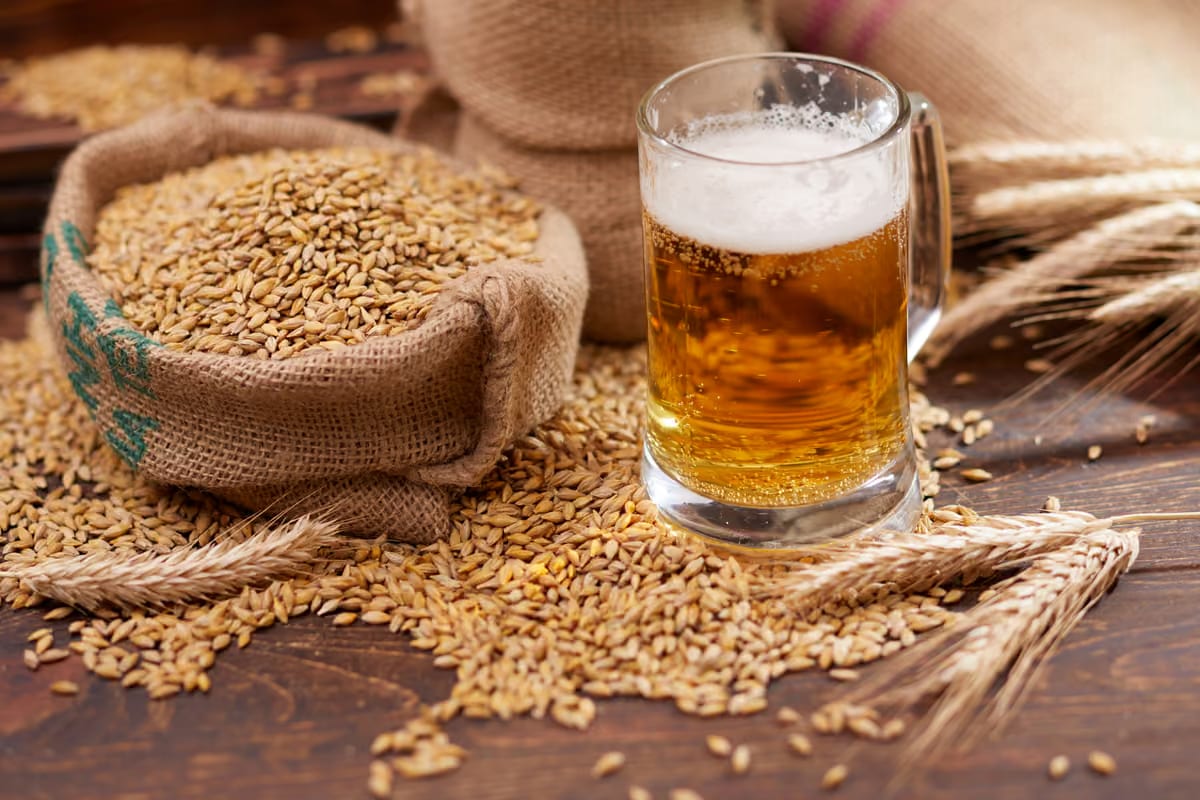
Italy's malting barley production fell 39% in 2026 after drought and adverse weather, according to data presented by Coldiretti and the Consorzio Birra Italiana together with Filiera Agricola Italiana (Fdai). The figures were released at a meeting held in Terrasini, in the province of Palermo, at the Bruno Ribadi plant, and reported by Italia a Tavola.
Yields drop from 55 to 37 quintals per hectare
The contraction is concentrated in two-row barley destined for brewing, whose yields fell from 55 to 37 quintals per hectare — from about 5.5 to 3.7 tonnes per hectare, or roughly a one-third reduction in output per unit of area. Coldiretti links the decline directly to the effects of climate change on harvest performance.
The 39% fall in production is steeper than the drop in yield alone, which points to planted area as a second variable behind the national figure. For the malting stage, the binding constraint is not only tonnage but the availability of barley with the characteristics required for malting, a point the organisers raised alongside the volume loss.
Costs compound the yield loss
Brewing barley already carries cultivation costs above the average for cereals, which makes a smaller harvest harder to absorb. According to Coldiretti, higher energy and fertiliser costs added to the pressure, in an international setting shaped by geopolitical tensions and their consequences for commodity trade.
With fewer quintals spread across the same per-hectare costs, the cost of the raw material rises at every stage that follows. The organisations warned that the reduction in yields makes production costs difficult to absorb without repercussions along the chain, from growers through malting to breweries. As framed at Terrasini, the issue is twofold: the availability of barley suitable for malting, and the economic sustainability of growing it.
First brew of Kidda tests the fully Italian chain
The Terrasini meeting also marked the first brew of Kidda, a blonde beer produced from what its promoters describe as an entirely Italian supply chain. The malt is obtained exclusively from barley grown in Sicily, and the project brings together Coldiretti, the Consorzio Birra Italiana and Filiera Agricola Italiana through the Firmato dagli Agricoltori Italiani label.
The stated aim is a short, traceable chain linking cereal growers, hop producers and local breweries, connecting the farming stage to malting and brewing. Sicily has seen growth in agricultural and craft beer ventures in recent years, and the promoters present the project as a way to tie beer production more closely to local farming.
What the shortfall means for the chain
The Italian brewing barley chain has expanded its presence on the domestic market in recent years, and now faces a season in which raw material availability and cost move in the wrong direction at the same time. Coldiretti and the Consorzio Birra Italiana presented the 39% decline as a test for that chain rather than an isolated event, pointing to climate as a recurring factor in yields.
For buyers along the chain, the practical questions are how much of the 2026 Italian crop clears malting grade, what contract prices growers will require next season to keep area under two-row barley, and how projects built on a fully Italian sourcing claim manage volumes in a drought year. Malting barley that fails specification is normally diverted to feed use, which reduces the pool available to maltsters by more than the headline production figure suggests.