Italy’s Lombardy cosmetics district supplies global beauty brands
Contract manufacturers clustered around Milan, Bergamo, Pavia and Crema provide formulation, production and packaging for international beauty brands. Italy’s cosmetics industry generated €18 billion in 2025, while the Lombardy district accounted for 70% of sector exports.
A full-service manufacturing cluster
Many skincare, body-care and make-up products sold by international brands are manufactured by specialist companies located between Milan, Bergamo, Pavia and Crema. Il Post describes this Lombardy cluster as Italy’s cosmetics quadrilateral. Its mostly little-known contract manufacturers do not usually appear on product packaging, even when they handle most of the work behind a launch.
In Crema, the central hub of the district, suppliers operate what the industry calls a full-service model. Customers including L’Oréal, Estée Lauder, Dior and Chanel can commission formulation, product development, manufacturing, packaging and support for launch planning within a few kilometres. The district covers products ranging from foundation, concealer and blush to mascara, eyeliner, lipstick and gloss.
Exports support sustained industry growth
Italy’s cosmetics industry recorded revenue of €18 billion in 2025, according to Il Post. Sales increased by an average of 6% a year over the previous ten years, and 70% of the sector’s exports originated in the Lombardy district. These figures make the cluster both a domestic production centre and a major supplier to the international beauty industry.
The division of responsibilities is economically attractive to both sides. A mascara for which a Crema manufacturer receives €1 can retail for between €40 and €100, depending on the brand. The contract producer accepts a limited share of the final value because it avoids consumer-market risk and has a buyer for the agreed output. Brand owners, meanwhile, reduce fixed manufacturing costs and direct more resources toward marketing and advertising.
From Intercos to an integrated supply chain
The district’s development began with Intercos, founded in Agrate Brianza in 1972, and an eyeshadow order from Estée Lauder. Intercos has since grown into a multinational business while retaining plants at Dovera and Romanengo in Cremona province. During the 1980s and 1990s, former technicians established their own companies and suppliers became manufacturers, creating a dense industrial network. Intercos says it now serves about 700 brands.
Other contract manufacturers include Ancorotti, Regi, Omnicos and Gamma Croma, which was incorporated into Chromavis. A parallel packaging industry also emerged. This concentration lets customers move from an initial concept to industrial output within the same region, while allowing manufacturers to share access to specialised labour, machinery, laboratories and suppliers.
Research, regulation and faster product cycles
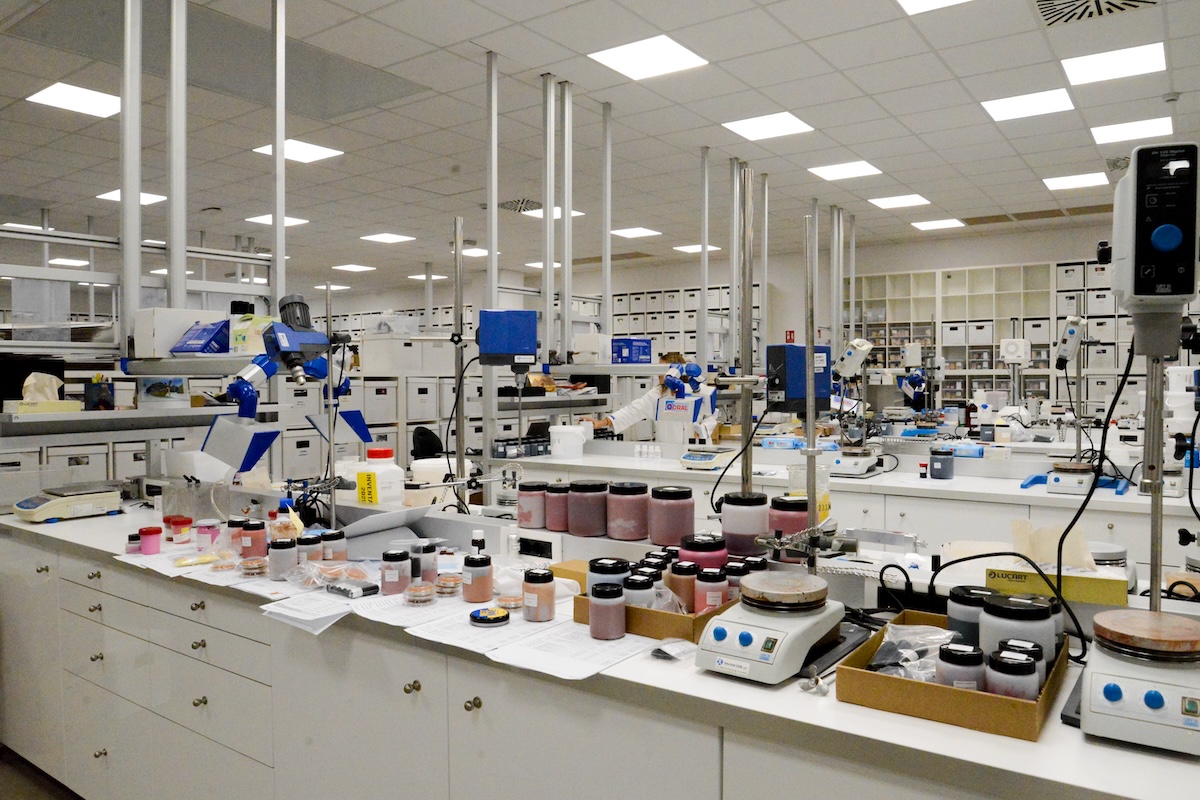
Formulators work with about 3,000 raw materials, including water, waxes, oils, emulsifiers, preservatives, pigments and active ingredients. Many originate in India, China, Korea and other Asian countries, although companies may purchase them through Italian or French distributors to strengthen quality control and traceability. Formulas undergo efficacy, stability and packaging-compatibility tests, and approval can take six months. Ancorotti employs seven people solely to check formulas against European rules, national requirements, customer specifications and about 90 separate restricted-substance lists.
Research and innovation spending at some district companies exceeds 5% of revenue, reflecting how much product development brands now outsource. Ancorotti says orders from influencers, creators, athletes and other public figures already represent about 30% of its business. At the same time, make-up and skincare are converging into hybrid products that combine appearance, treatment and comfort. Product lifecycles have also shortened: items that once remained on the market for five to seven years now often last two to three years, forcing manufacturers to develop and produce new formulas more quickly.