UNRAE: incentives drove Italy's van market in July and August 2026, diesel still at 78%
UNRAE reported that purchase incentives were the main driver of light truck and van registrations in Italy in July and August 2026, supported by an incentive envelope of €180 million running through 2030. Diesel remained the dominant powertrain in the segment with a 78% share, indicating that fleet renewal in Italy is still largely combustion-based despite multi-year public support.
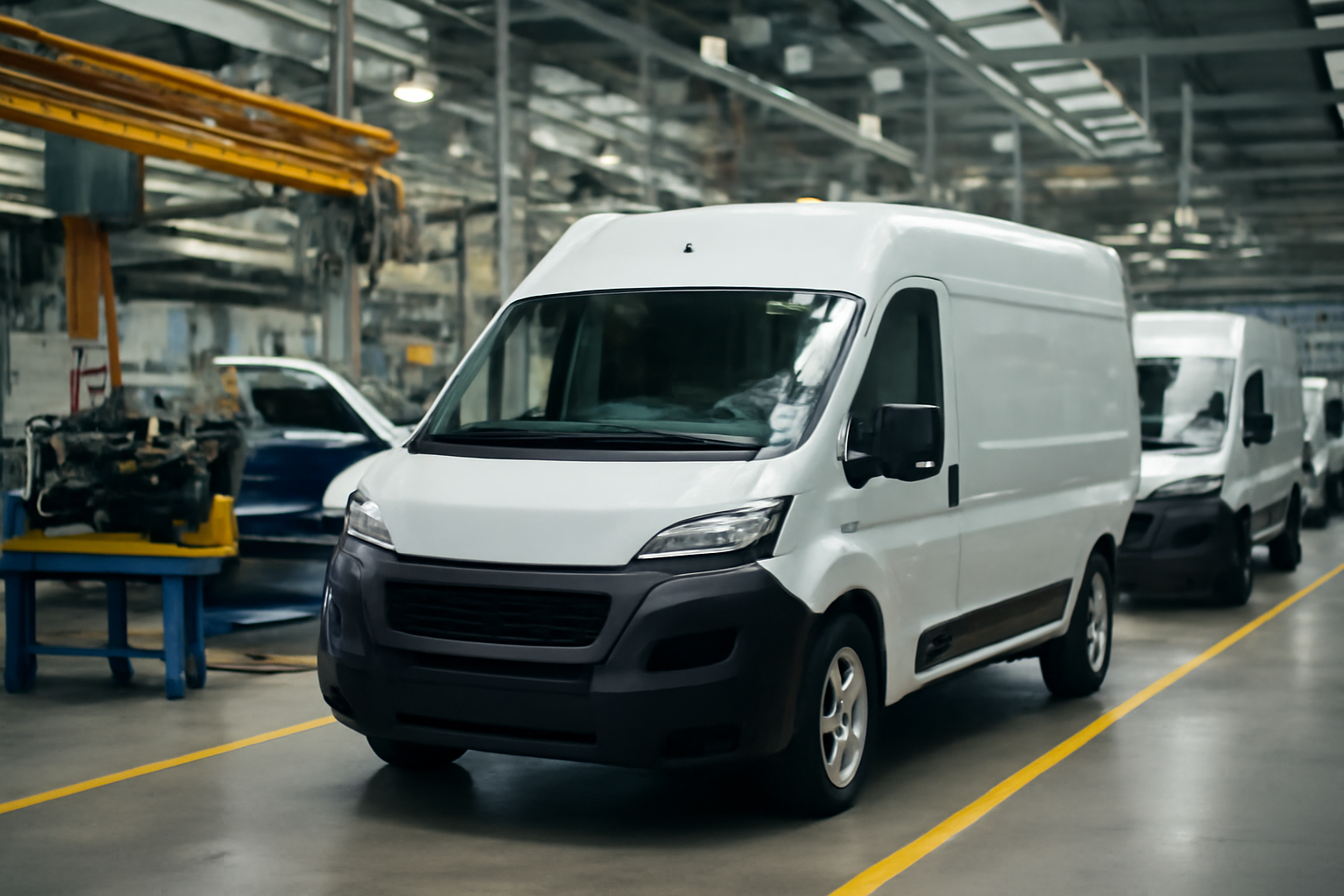
Italy's light commercial vehicle market leaned on public support over the summer. UNRAE, the association representing foreign vehicle manufacturers in Italy, said in its review of the July and August 2026 light truck and van market that purchase incentives were the main driver of registrations, pointing to an incentive envelope of €180 million running through 2030. Diesel remained the dominant powertrain in the segment, with a 78% share.
Incentives set the pace in July and August
UNRAE frames the two summer months as incentive-led rather than demand-led, and that distinction matters for the sales channel. When registrations track the opening and exhaustion of subsidy windows, order intake follows an administrative calendar rather than the replacement cycle of craft firms, logistics operators and utility fleets. August is also a short working month in Italy, which amplifies the effect of any scheme that concentrates applications and deliveries into a few weeks. Two subsidised months therefore say little about underlying appetite for new vans once support is withdrawn.
- Segment covered: light trucks and vans, the workhorses of Italian construction, trades and last-mile delivery.
- Reported driver of volume in July and August 2026: purchase incentives, according to UNRAE.
- Incentive envelope: €180 million, available through 2030.
- Diesel share of the segment: 78%.
Diesel holds 78% of the segment
The 78% figure is the clearest structural signal in the UNRAE snapshot. Light commercial vehicles are bought on payload, range, refuelling time and residual value, and those criteria still favour diesel for operators working outside dense urban centres. Electrification has advanced faster in passenger cars than in vans, where battery weight eats into payload, depot charging requires capital investment, and residual values for used electric commercial vehicles remain harder to underwrite. For bodybuilders and converters, a 78% diesel base also means that chassis-cab and van conversion work continues to be engineered around combustion platforms, with their established dimensions, power take-offs and service networks.
An envelope of €180 million with a 2030 horizon
The size and duration of the package matter as much as its existence. The €180 million is a total envelope rather than an annual budget, so the amount available in any single year is a fraction of the headline figure. A horizon extending to 2030 gives fleet buyers planning visibility that stop-start national schemes usually do not provide, and it allows leasing companies and large logistics operators to phase orders instead of racing a single deadline. It also signals that policymakers expect the commercial vehicle transition to take years rather than quarters. For manufacturers and importers, the schedule feeds directly into allocation decisions: how many battery-electric vans to send to Italy, and how long to keep diesel variants in the price list.
What the market will watch next
Three questions follow from the UNRAE data. The first is whether registration volumes hold once each incentive tranche is absorbed, or whether demand falls back in the months after payouts are exhausted. The second is the trajectory of the diesel share: a move away from 78% would be the first hard evidence that the subsidy is changing the mix rather than simply moving purchases forward in time. The third is the drawdown pace of the €180 million, since a package designed to last until 2030 that is consumed early would leave several years of the horizon unfunded. Italy is one of Europe's larger light commercial vehicle markets, so the segment's powertrain mix affects assembly plants, component suppliers and used-vehicle exporters well beyond the domestic market. For now, the data describes a market where public money sets the pace of registrations while the underlying technology mix has barely moved.