Italy's Battery-Electric Share Stalls at 8% in First Half of 2026, Against 22% Across the EU
Battery-electric vehicles took 8% of the Italian new car market in the first half of 2026, compared with 22% in the European Union. A report on the market calls the result a paradox, since electric cars in Italy cost less, and points to weak demand, unstable incentives and expensive public charging as the main constraints.
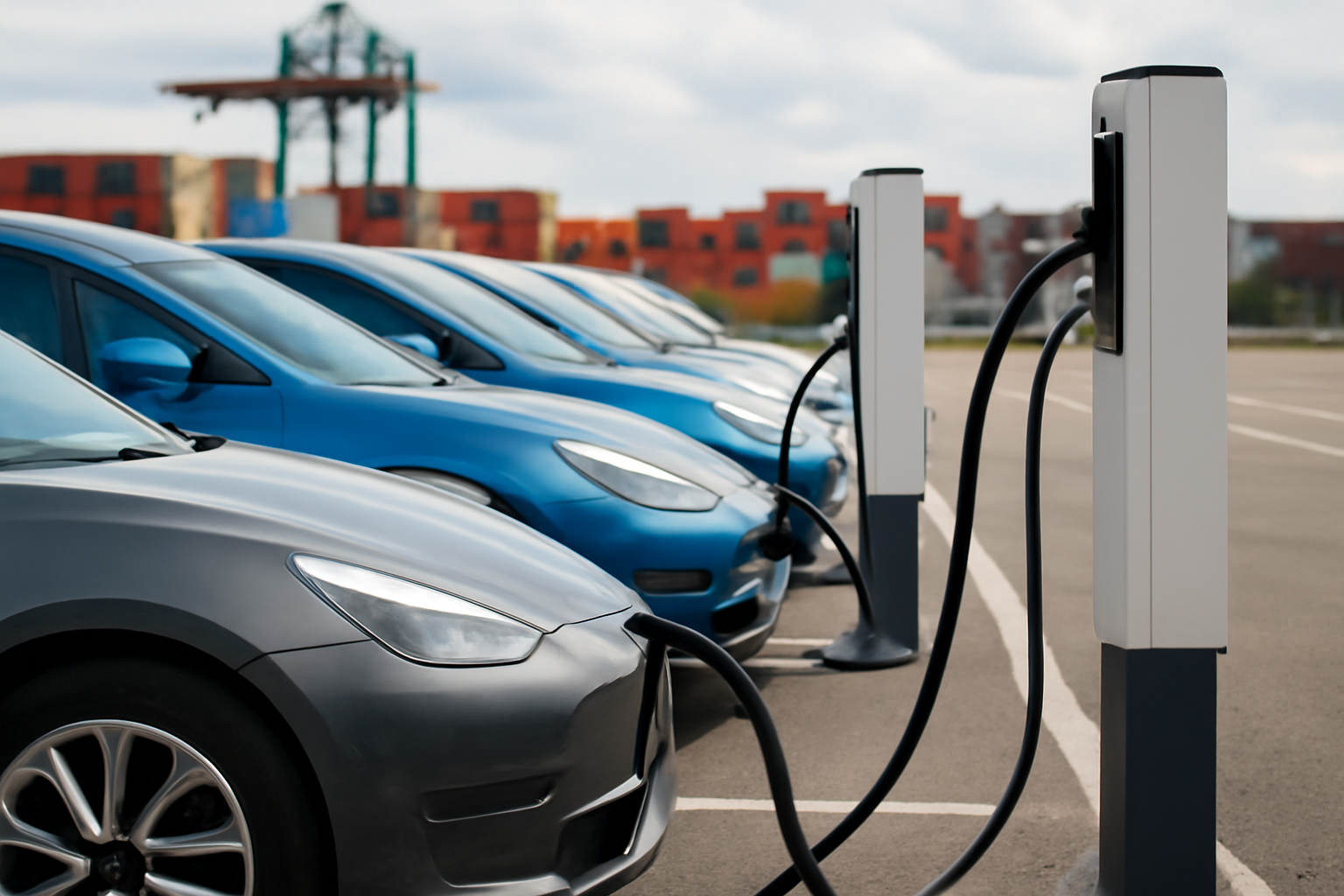
Eight percent in Italy against 22% in the EU
Battery-electric vehicles accounted for 8% of the Italian new car market in the first half of 2026, against 22% for the European Union as a whole. The 14-percentage-point gap leaves Italian BEV penetration at roughly a third of the EU average. The half-year figure is a share of registrations, so it reflects both what buyers selected and what manufacturers and importers pushed into the market.
The outcome is described as an Italian paradox: electric cars in the country cost less, yet they sell proportionally worse than in the rest of the bloc. On that reading, the sticker price is not the variable holding the market back.
Lower prices, weaker uptake
The pricing point matters because affordability has been the standard explanation for slow electrification. If Italian prices are lower and the share still sits at 8%, the obstacle lies in the ownership experience and in the policy environment rather than in the showroom. That shifts the question from what a battery-electric car costs to buy toward what it costs to run and how predictable the terms of purchase are.
Weak demand is named as a cause in its own right, not only as a consequence of price or infrastructure. Italian buyers have shown limited appetite for battery-electric models even while the segment continued to expand elsewhere in the European Union, where more than one new car in five is now fully electric.
The constraints identified in the report
Three factors are set out behind the low share:
- weak demand for battery-electric cars among Italian buyers;
- an unstable incentive framework, with support schemes that appear and lapse rather than running continuously;
- public charging that is more expensive, raising running costs for drivers who cannot charge at home.
Each acts on a different stage of the purchase. Weak demand limits the pool of interested buyers before any calculation is made. Stop-start incentives push those buyers to wait for the next scheme instead of ordering now, so an announcement can freeze the market rather than move it. Higher charging costs bite after delivery, and they fall hardest on urban drivers without private parking, who depend entirely on public points for every kilometre.
What it means for the market
For manufacturers and importers, an 8% share sets the allocation logic for Italy: battery-electric volume goes to the markets that absorb it, while Italy remains primarily a market for combustion and hybrid models. Dealers carry the inventory risk on unsold electric stock, which in turn discourages ordering. A low share of new registrations today also thins the supply of second-hand electric cars in the years ahead, and the used channel is where price-sensitive buyers usually enter the technology.
For charging operators the arithmetic is circular. Expensive public charging depresses uptake, and a small electric fleet keeps utilisation of the network low, which in turn supports high tariffs. Breaking that loop requires either cheaper electricity at the point of use or a stable, multi-year purchase incentive that allows buyers to plan. The report indicates that neither condition has been met, which is why the Italian share has held near a third of the European average while the rest of the bloc moved ahead.