Italy’s battery storage pipeline reaches 300 GW as market moves toward operating assets
Italy had received 300 GW of high-voltage storage connection requests by the end of 2025, but only 6.8 GW was ready to begin construction. A heavily oversubscribed capacity auction, new financing structures and tighter connection rules are turning battery storage into a more mature but increasingly selective market.
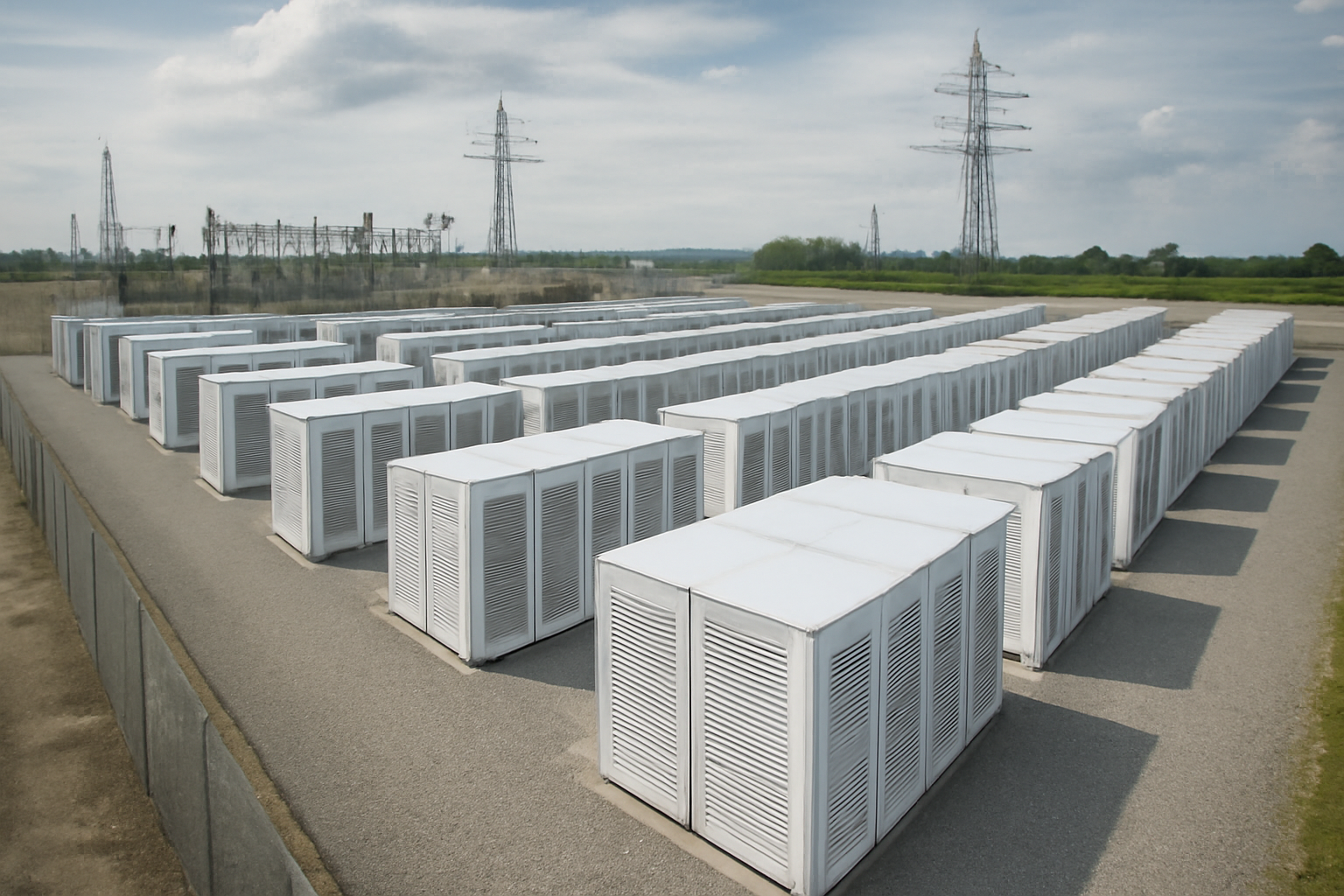
A large pipeline meets a much smaller operating market
Italy is moving from speculative battery proposals toward an operating energy-storage market, driven by renewable generation, volatile wholesale electricity prices and the need to balance the grid. Euronews reports that connection requests submitted to Terna for storage systems at high and extra-high voltage had reached 300 GW by the end of 2025. Only 56 GW had received clearance, however, and just 6.8 GW was ready to begin construction.
The gap illustrates both the scale of investor interest and the immaturity of much of the pipeline. Installed storage assets had 7.4 GW of power and 17.9 GWh of energy capacity. Terna estimates that Italy will require around 72 GWh by 2030, with demand rising further in its 2040 scenarios. Batteries can absorb surplus electricity when solar and wind production exceeds demand, then release it when market prices and system needs increase.
Competitive auction reshapes revenue expectations
Italy’s first MACSE auction in September 2025 awarded 10 GWh of capacity, entirely to lithium-ion batteries. Offers exceeded the requested volume by more than four times. The weighted average price fell to €12,959 per MWh per year, about 65% below the €37,000 reserve premium. The result demonstrated strong competition among developers and lowered the level of contracted revenue available to winning projects.
For investors, the emerging model combines contracted income with earnings from electricity-price arbitrage and grid services. Under tolling agreements, an operator pays for the right to use battery capacity, giving the asset owner a more predictable revenue component. Such arrangements can support bank financing by reducing exposure to merchant-market volatility.
European financing activity is already accelerating. Modo Energy counted 82 BESS transactions in Europe during 2025, compared with 25 a year earlier, with a disclosed value of €8.6 billion. Publicly disclosed debt rose from €1.4 billion to €6.1 billion, while project finance accounted for half of the transactions. The development of Germany’s Kyon Energy also illustrates the shift: TotalEnergies acquired the company in January 2024 for an upfront €90 million plus earn-outs, and in 2026 sold Allianz Global Investors a 50% interest in 11 projects totaling 789 MW and 1,628 MWh. A project-finance package of about €440 million was announced in July.
Connection reform could favor larger developers
Italy is also tightening its treatment of projects that reserve grid capacity without advancing toward construction. The February 2026 Bollette decree introduced measures against the network’s “virtual saturation,” with definitive capacity intended for authorized projects and the possibility that connections held by immature developments could lapse. The implementing decree from the Ministry of Environment and Energy Security was signed on September 8, although a final regulatory step by ARERA was still pending.
More demanding maturity tests, deadlines, penalties and financial deposits may clear speculative projects from connection queues. They may also make it harder for small developers to retain projects through lengthy permitting processes, while utilities, infrastructure funds and major engineering groups have more capital available. Authorized projects and suitable land near grid connections could therefore command greater value, but the fall in auction prices shows that a connection position alone will not guarantee attractive returns. Execution, financing terms and the ability to combine contracted and market-based revenue will determine which projects reach operation.