Italy Backs Hydrogen Expansion With €3 Billion in Investment
Italy is directing €3 billion toward hydrogen as part of its decarbonization strategy. Companies are continuing research and development investment, while the PNRR supports the construction of hydrogen infrastructure.
Italy places hydrogen at the center of decarbonization plans
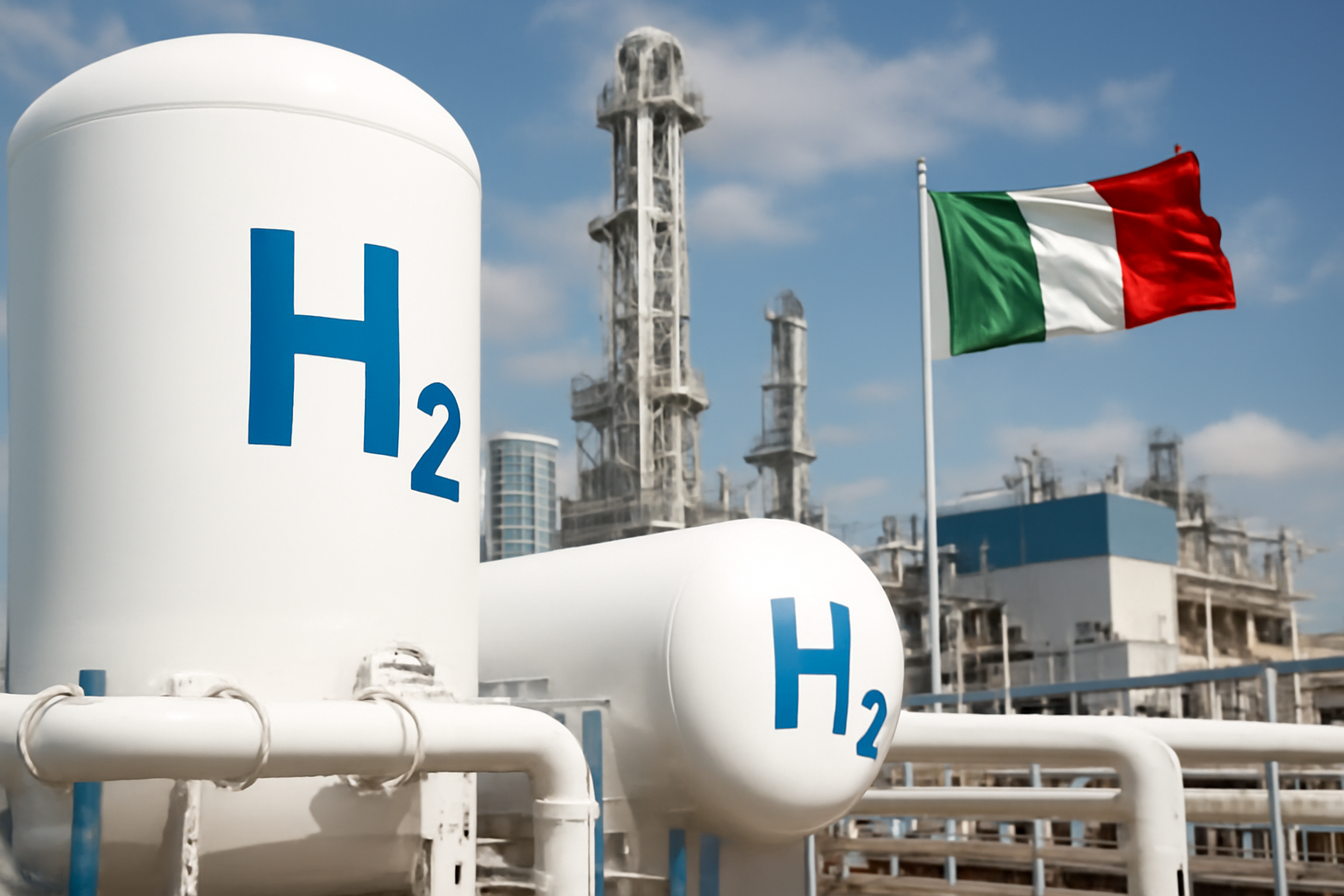
Italy has invested €3 billion in hydrogen, positioning the energy carrier as one of the instruments supporting the country’s decarbonization effort. The funding signals a push to move hydrogen beyond individual research projects and toward a broader industrial and infrastructure pipeline.
The investment comes as Italian companies continue to direct resources toward hydrogen research and development. This industrial activity is important because the sector still depends on advances in production, storage, transport and final-use technologies before projects can operate at wider commercial scale.
Italy’s National Recovery and Resilience Plan, known as the PNRR, is supporting the creation of hydrogen infrastructure. The combination of public funding and corporate research is intended to establish the physical and technological foundations needed for hydrogen deployment across the economy.
Public support anchors the investment pipeline
The €3 billion commitment gives developers and industrial companies a clearer basis for planning projects, but the available information does not specify how much has already been spent, which facilities will receive funding or when individual projects will enter operation. It also does not provide a breakdown between hydrogen production, transport, storage and end-user applications.
Those details will determine the commercial effect of the program. Production assets need compatible infrastructure and dependable demand, while prospective users need sufficient supply at a workable cost. Research spending can improve technology, but coordinated investment across the chain will be necessary to turn pilot activity into operating capacity.
PNRR backing can reduce some of the early financial burden associated with building a new energy system. For equipment suppliers, engineering companies and industrial developers, the program creates a domestic project pipeline. For potential hydrogen consumers, its value will depend on whether supported infrastructure provides reliable access rather than remaining a collection of separate demonstration projects.
Execution will determine the industrial impact
The investment also places Italy within the wider effort to develop lower-carbon industrial energy systems. Hydrogen can contribute to decarbonization only when production and infrastructure are matched with practical uses. The quality of project selection, construction progress and links between producers and consumers will therefore matter as much as the headline funding figure.
Companies’ continued commitment to research and development indicates that the industrial sector sees a role for hydrogen despite the technical and commercial work still required. The next measure of progress will be the conversion of the €3 billion pipeline and PNRR support into completed facilities, usable infrastructure and sustained industrial demand.
For market participants, transparency on project locations, capacity, technology and commissioning schedules will be essential. These data will allow producers, equipment manufacturers, investors and prospective buyers to assess whether Italy is creating an integrated hydrogen market and how quickly the investment can contribute to measurable decarbonization.