Italy Fast-Tracks €274.6 Million in CAP Aid to Rice Growers, Paying the 2026 Advance Three Months Early
Italy's paying agency Agea has channelled 274.6 million euros of Common Agricultural Policy support to the national rice sector on claims filed over the 2023-2026 period, covering 854,695.22 eligible hectares. For the 2026 campaign it is releasing an advance of 245.17 euros per hectare three months ahead of the usual November schedule, with the balance from 1 December 2026. Satellite monitoring under the Area Monitoring System replaced most field inspections and made the earlier timing possible.
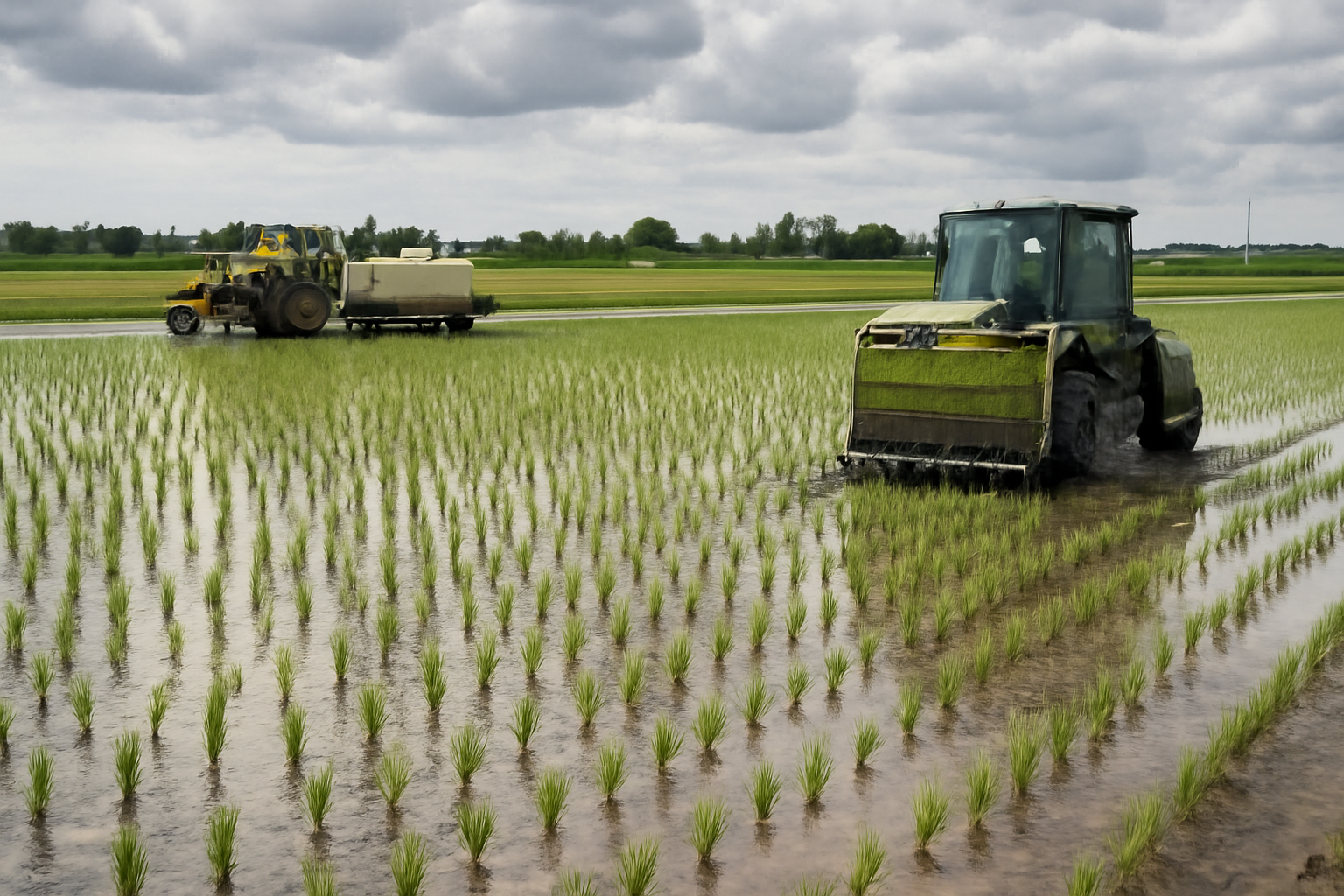
Italy's agricultural paying agency Agea has brought forward by three months the Common Agricultural Policy (CAP) payments owed to the country's rice growers, and has put total public support for the sector at 274.6 million euros on claims filed over the 2023-2026 period. The figures were presented at the second edition of Risò, the International Rice Festival held in Vercelli, and reported by soldionline.it.
The money was paid through the network of paying bodies coordinated by Agea, which manages a significant share of European and national funds for Italian agriculture. The amount corresponds to an eligible area of 854,695.22 hectares under rice across the four claim years covered; because that figure aggregates claims from 2023 to 2026, it is not a snapshot of a single season's planted area. The CAP is the European Union's main instrument for supporting farm incomes and competitiveness, through direct payments and rural development measures.
What growers receive and when
For the 2026 campaign, Agea has authorised an advance of 245.17 euros per hectare, equal to 75% of the maximum amount payable at this stage. The remaining 25% will be settled from 1 December 2026. According to Agea, the maximum total support that can be reached is 370.11 euros per hectare.
The distinctive element is the calendar. Allocation began three months before the traditional deadline tied to the November phenological window, the point in the crop cycle when field inspections and verification are normally concentrated before aid is released. For farmers, these payments are direct income support linked to the land cultivated and to compliance with specified agricultural practices.
Satellite monitoring replaced field checks
Agea attributes the earlier schedule to the Area Monitoring System (AMS), a satellite-based monitoring system for farmland. It uses imagery and data from the continuous observation of fields to verify crops and compliance with eligibility requirements, largely replacing traditional on-site controls. The agency said the AMS "made it possible to bring forward a stage that would otherwise have remained tied to the ordinary timing of the control cycle".
In practice, digitalisation and satellite verification allow aid applications to be validated faster and financial flows to farm businesses to be released earlier. As part of the same process, Agea has developed a dedicated application for the rice sector, designed to make information and data on the industry available.
Italy's position in EU rice
Agea notes that Italy accounts for more than half of the European Union's entire rice output, a lead that makes the country the bloc's largest producer. The agency's figures for the national sector:
- more than 50% of EU rice production
- around 220,000 hectares under cultivation
- more than 1.4 million tonnes produced annually
The territorial breakdown of the payments confirms the weight of the large rice-growing regions of northern Italy, where two regions play the decisive role. All other regions together account for roughly 6% of the national rice area, with small high-quality productions.
The overall picture set out by Agea is that CAP instruments, combined with advanced monitoring technology, are having a concrete effect on liquidity flows to one of the Italian farm sectors that matters most on the European market.