Meloni commits €60 billion to lower Italian energy bills, backing renewables and nuclear
Italian Prime Minister Giorgia Meloni said the government is committing €60 billion to containing electricity and gas bills, with renewables, nuclear power and domestic production as the pillars of the strategy. MeteoWeb reported the remarks, made during a television appearance, but no breakdown, timeline or delivery mechanism was given. The move puts nuclear generation back into Italy's declared energy policy.
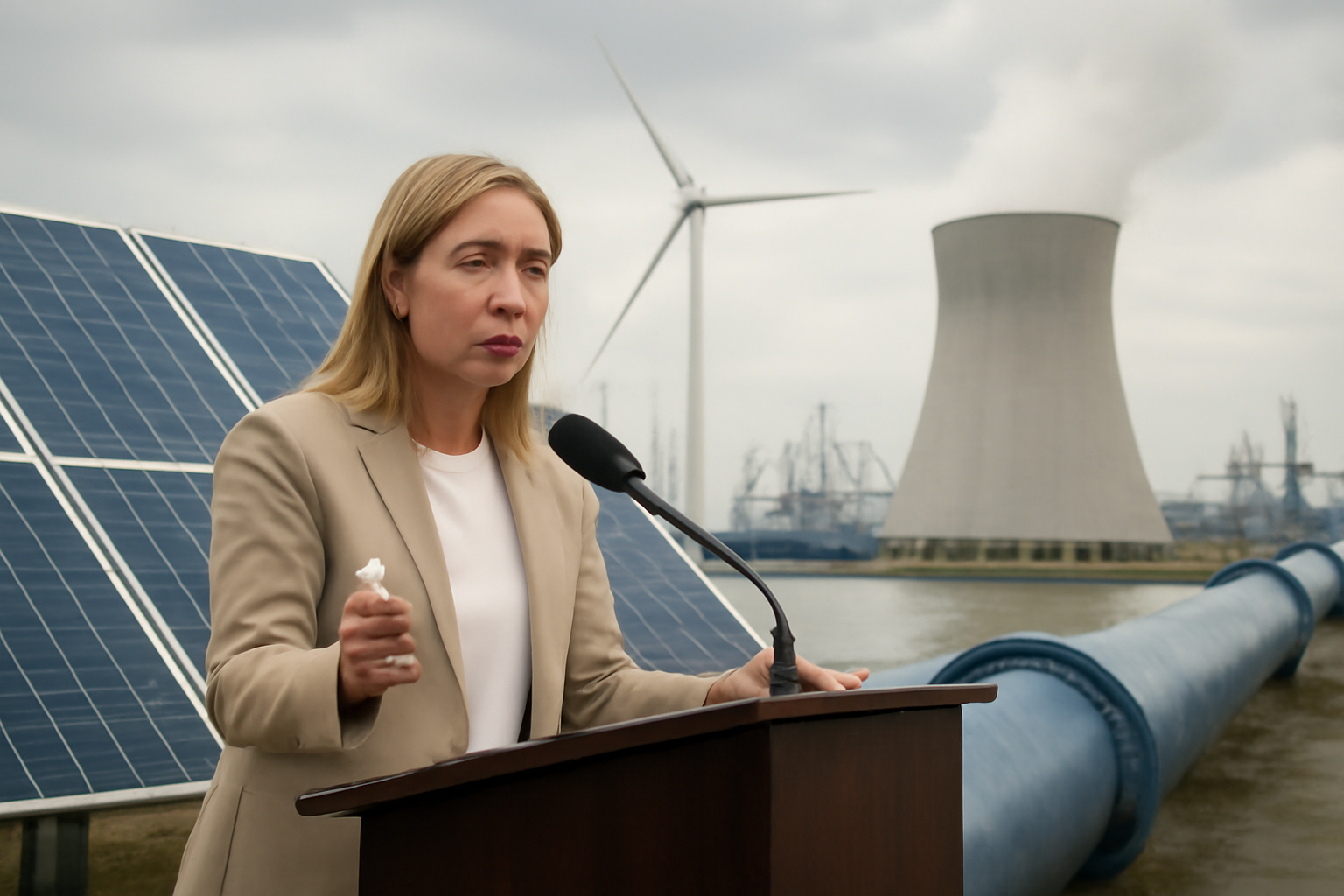
Italian Prime Minister Giorgia Meloni said her government is committing €60 billion to holding down electricity and gas bills, making cheaper energy a central plank of national policy. Speaking during a television appearance, she tied the money to three priorities — renewables, nuclear power and domestic production — according to the Italian outlet MeteoWeb.
MeteoWeb reported that the energy crisis and the weight of electricity and gas bills on households and businesses were the focus of the prime minister's intervention. The report did not include a breakdown of the €60 billion, the period over which the sum would be spent, or the instruments through which it would be delivered. That leaves the headline figure as the only hard number attached to the announcement so far.
What was announced
- €60 billion earmarked for containing electricity and gas bills.
- Renewables, nuclear power and domestic production named as the pillars of the approach.
- Households and businesses identified as the intended beneficiaries.
For industrial buyers, the decisive detail is the split between direct bill relief and investment in generation and networks. Relief measures move costs inside the current billing cycle and stop working the moment they lapse. Spending on capacity and grid infrastructure changes price formation itself, but only after years of permitting and construction. A commitment of this size can accommodate either approach, or both, and the allocation will determine which industrial users see an effect and when.
Nuclear returns to the agenda
Italy has no operating nuclear power plants. Placing nuclear alongside bill relief in a single commitment signals a policy horizon that extends well beyond the current billing crisis, since a reactor programme built from a standing start requires siting decisions, a functioning regulatory framework, financing structures and a domestic supply chain before any electricity reaches the grid. MeteoWeb's report named no sites, reactor technologies, vendors or ownership structures. For equipment suppliers and engineering contractors, the near-term activity implied by the announcement is legal and regulatory groundwork rather than orders.
Renewables and domestic production
Renewables are the fastest of the three pillars to deploy and the only one capable of adding capacity within the span of a single government. The constraints are familiar to developers active in Italy: permitting timelines, grid connection queues and the storage needed to make solar and wind output usable outside peak generating hours. The phrase "domestic production" was not defined in the report. It can cover Italian natural gas output as well as electricity generated inside the country rather than imported across borders. Both readings point the same way — less exposure to imported fuel and to power bought from neighbouring markets.
Exposure for energy-intensive industry
Energy costs are a first-order input for Italian steel, ceramics, glass, paper, chemicals and food processing, sectors that compete directly with producers in France and Spain. Italian wholesale power prices track natural gas closely, because gas-fired plants set the marginal price in most hours of the year; that link is the mechanism any bill-reduction strategy has to break. Renewables weaken it gradually, nuclear would weaken it structurally but far later, and subsidies mask it without changing it. Until the government publishes the allocation of the €60 billion, the announcement is a statement of direction rather than a basis for procurement or hedging decisions by industrial consumers.