Italy’s 2026 grape harvest starts early as heat accelerates ripening
Italy’s 2026 grape harvest has begun early in several regions after months of above-average temperatures accelerated vine development. Initial grape quality is encouraging, but heat, hail and possible lower yields leave the final production volume uncertain.
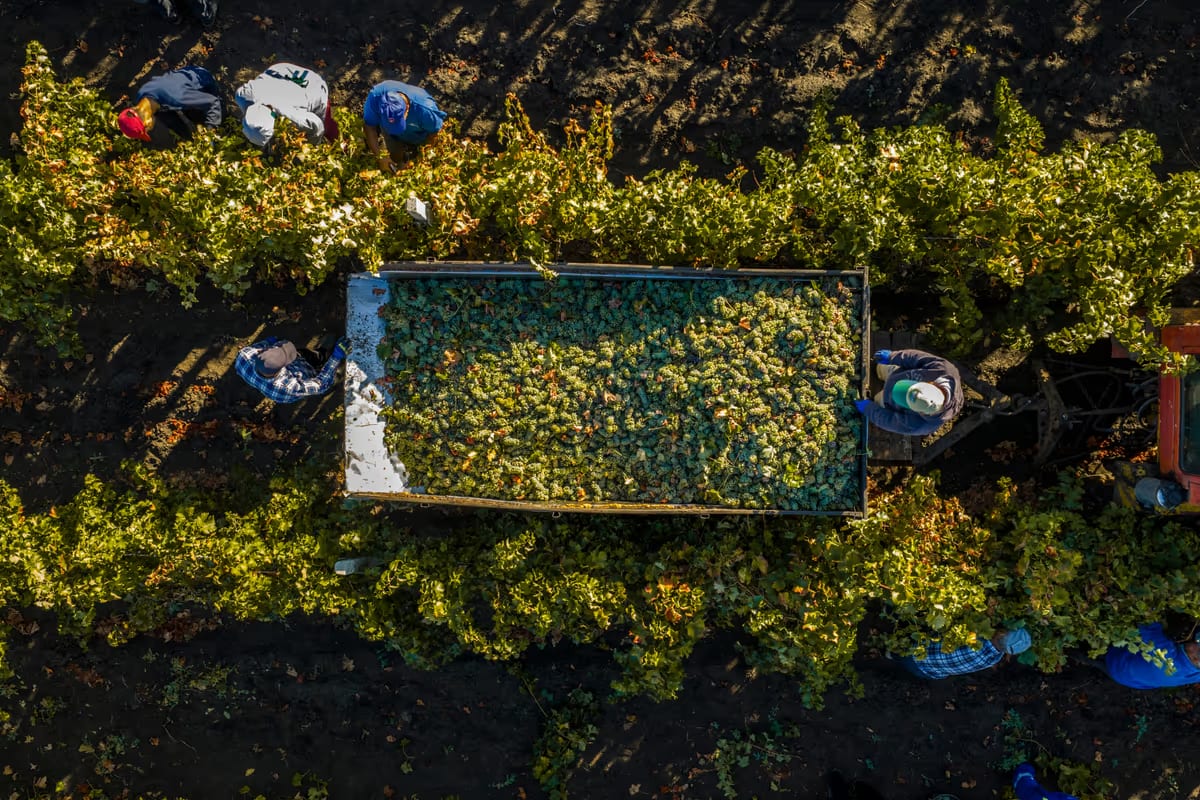
Harvest begins early from Sicily to Alto Adige
Italy’s 2026 wine grape harvest is starting earlier than expected in several producing regions as high temperatures accelerate the vines’ growing cycle. Italia a Tavola reports that harvesting is already under way in parts of the country, although timing varies by territory and grape variety. Initial assessments point to grapes in good condition, but producers say it is still too early to determine the size of the national crop.
The shift is visible across a geographically diverse wine industry. Italy has 670,000 hectares of vineyards, supports about 870,000 jobs and records an annual wine trade surplus of €7.2 billion. Its 2025 wine production reached 44.383 million hectolitres. No definitive estimate is yet available for 2026, because the final result will depend on weather and the progress of ripening during the remaining weeks of the campaign.
Good quality signals come with yield risks
In Sicily, Cantine Ermes has begun harvesting early white varieties in the province of Trapani. Rosario Di Maria, president of the cooperative, said the first deliveries showed interesting quality characteristics, but yields would probably be below those of a normal year. Heat therefore presents a mixed picture: it has advanced maturity and allowed harvesting to begin, while potentially limiting the quantity of grapes available to wineries.
In Alto Adige, the harvest is among the earliest recorded in the region. At San Paolo, in the municipality of Appiano sulla Strada del Vino, grapes are running approximately 7–10 days ahead of 2025 following above-average temperatures during the past three months. Eduard Bernhart, director of the Alto Adige Wine Consortium, said the area’s small vineyards and manual viticulture would allow growers to harvest quickly and precisely. Philipp Zublasing, winemaker at Cantina Sankt Pauls, reported satisfaction with grape development.
August weather remains decisive
Prospects in Piedmont remain positive for quality, but possible heat peaks in August could reduce bunch size. Giacomo Pondini, director of the Asti DOCG Consortium, said production was expected to be of good quality while warning of a potential loss of volume. Growers are closely monitoring the balance between sugar, acidity and aromatic maturity, particularly for high-value denomination wines.
Conditions differ elsewhere. The Bardolino Consortium in Veneto expects a particularly favourable vintage because vines are in very good health and grapes show a sound balance between sugar and acidity. In Abruzzo, however, the regional wine consortium says reliable volume forecasts would be premature after a violent hailstorm affected parts of the Teramo area. Prospects remain open in other zones of the region.
Production estimate will follow the harvest
Assoenologi believes 2026 could deliver good-quality wine if favourable weather persists, supported by a positive balance between grape maturity and organoleptic characteristics. That assessment remains conditional. Further heat could reduce berry or bunch size, while severe local weather can quickly alter regional yields even when grape health is generally strong.
The early start gives wineries more urgency in decisions on picking dates, labour and cellar capacity. Producers must preserve acidity and aromatic development while avoiding losses caused by excessive heat. For buyers, processors and traders, the central unanswered question is whether good grape quality will be accompanied by sufficient volume. The next few weeks will determine whether the accelerated season produces a valuable vintage or a smaller crop across parts of Italy.