Italian table grape exports reach record €973 million, led by Puglia
Italy’s 2025 table grape export campaign generated a record €973 million, according to Ismea data reported by ANSA. Puglia supplied 60% of exported product, while expanding seedless varieties are strengthening the region’s position in the market.
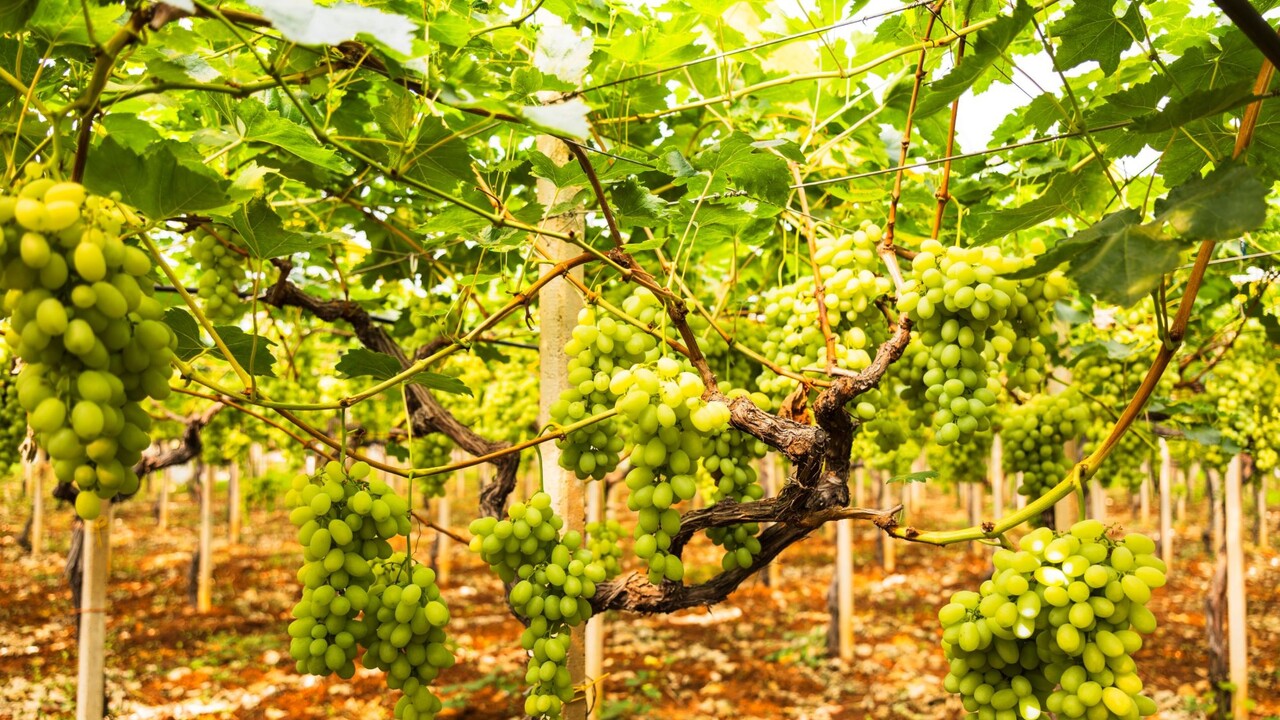
Exports approach the €1 billion mark
Italy’s table grape exports reached a record €973 million during the 2025 campaign, bringing the sector close to the €1 billion threshold. The result places table grapes immediately behind apples in the hierarchy of Italy’s fruit assets, according to data from the Institute of Services for the Agricultural and Food Market, Ismea, presented at the fourth Regina di Puglia event and reported by ANSA.
Puglia was the origin of 60% of the product sold abroad, confirming the southern region as the principal base of the Italian table grape industry. The figure highlights the concentration of export supply in an area where cultivation, packing and commercial operations are closely connected to demand from European retailers and importers.
The Regina di Puglia event was promoted by the municipality of Noicattaro, in the province of Bari, and supported by the Le Terre dell’Uva network. The network also includes Rutigliano, Mola di Bari, Casamassima, Castellaneta, Adelfia and Polignano a Mare. Its stated objective is to raise the profile of production and expand its commercial reach.
Puglia and Sicily extend Italy’s supply season
Ismea attributed the export result to production continuity across Italy’s two main growing areas. Sicily supplies the first harvests between May and June and covers 39% of the market. Puglia accounts for 55% and keeps grapes available until the beginning of winter, giving Italian suppliers a prolonged marketing window.
Puglia also ranks first for planted area. Production is concentrated in the provinces of Bari, Taranto and Barletta-Andria-Trani. The sequence from Sicily’s early crop to Puglia’s later supply allows packers and sellers to serve buyers for much of the year rather than relying on a short harvest period.
The recently concluded Regina di Puglia edition attracted buyers from eight European countries and the United Arab Emirates. Dutch and Swedish importers participated for the first time, alongside major large-scale retail chains. Their presence provided producers and commercial operators with direct access to established and prospective sales channels.
Seedless varieties drive market development
Seedless grapes are leading the sector’s growth. These varieties are becoming more widespread in Puglia and are increasingly sought by consumers. Ismea analyst Mario Schiano Lo Moriello, citing Ismea-Niq data, said the preference is particularly evident among Italian households with children under 16, the alpha generation, and in northern Italian regions.
No exact production figures are currently available. However, an estimate by an association in Puglia indicates that seedless grapes have overtaken traditional varieties in the region both by planted area and by output. That change matters for growers deciding which varieties to plant and for packers supplying retail formats shaped by convenience and household preferences.
The Uva di Puglia protected geographical indication is another potential avenue for market development. It is one of three nationally recognized grape geographical indications, although its current volumes remain limited. Schiano Lo Moriello said the label deserves a place among Italy’s top 10 fruit and vegetable products with a designation of origin. Building that position will depend on converting Puglia’s production scale and export presence into greater recognition for the certified product.