Italian paddy rice prices fall over 50% as imports rise 20%
Italian producer prices for paddy rice have fallen by more than 50% during the 2025-2026 marketing year as foreign rice imports increased 20%, according to Coldiretti. The farmers’ association is seeking €12 million for Italian rice purchases, tighter origin controls and stronger support for growers facing high costs, drought and Asian competition.
Imports add pressure to Italian paddy prices
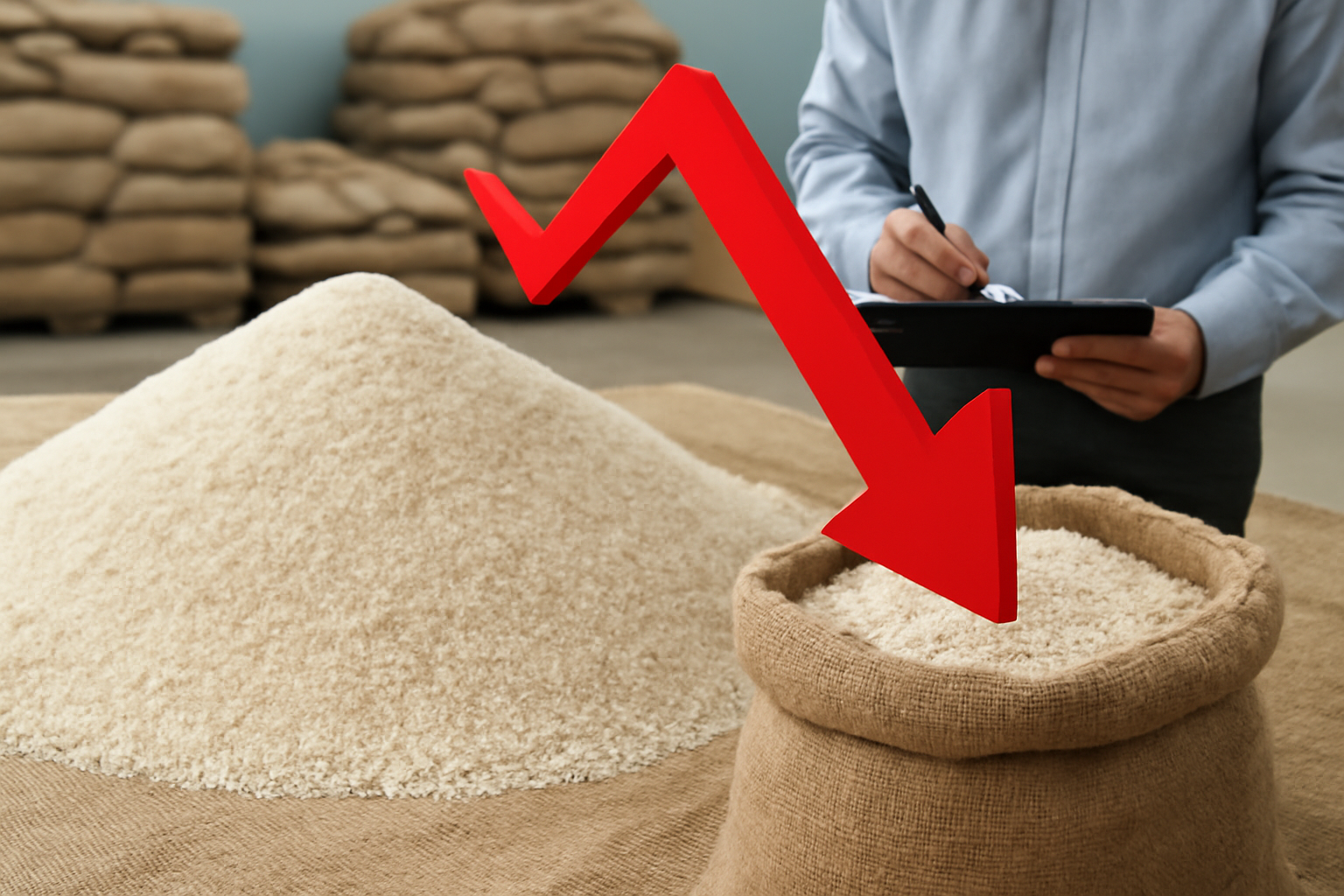
Italian producer prices for paddy rice have fallen by more than 50% during the still-unfinished 2025-2026 marketing year, while foreign rice imports have increased by 20%, according to the agricultural association Coldiretti. The group raised the issue at a rice supply-chain meeting convened by Italy’s Ministry of Agriculture, Food Sovereignty and Forestry, known as Masaf.
More than 190 million kilograms of foreign rice have entered Italy during the campaign, Coldiretti said. Four out of every five imported packages came from Asia. The association argues that this additional supply has contributed to the sharp decline in prices paid to Italian growers, whose margins are also being compressed by higher production costs.
The deterioration affects a strategically important producing country. Italy accounts for more than 50% of all rice cultivation in Europe, according to Coldiretti. Lower farmgate prices therefore have implications beyond individual farms, potentially influencing planting decisions, processing volumes and the availability of European-grown rice for millers and buyers.
Drought compounds the pressure on farms
The import increase has coincided with heat and water shortages in Italian production areas. Coldiretti said crop losses could exceed 30% in some locations. Growers are consequently facing the combination of reduced output, weaker paddy prices and elevated production expenses rather than benefiting from higher prices during a difficult harvest period.
Coldiretti has requested an extraordinary support plan. Its central proposal is a €12 million tender to purchase rice of entirely Italian origin for distribution to families in financial difficulty. The measure is intended both to support vulnerable households and to create demand for domestic production, strengthening growers’ income.
The association also wants regional resources for rice businesses and a dedicated fund for supply-chain contracts under Italy’s Food Sovereignty Fund. For the longer term, it is seeking a national reservoir plan to manage water emergencies, investment in research and Assisted Evolution Techniques, and stronger rice support in the future Common Agricultural Policy for farms investing in quality, innovation and sustainability.
Origin controls and EU trade policy
Origin verification is another part of the proposed package. Coldiretti called for tighter controls to certify where rice was produced and prevent consumer fraud. Its proposals include the use of magnetic resonance, genomic maps and isotopic mapping to distinguish products and strengthen traceability.
On trade policy, the association is demanding reciprocity in agreements with countries outside the European Union. Coldiretti contends that imported rice may be produced under environmental, health and social rules that differ substantially from the requirements imposed on Italian farmers. The group characterizes stronger reciprocity as necessary to prevent unequal competition, although the supplied material does not identify the Asian origins involved or compare their individual production standards.
Negotiations for an EU free-trade agreement with Thailand are a further concern for the organization. Thailand is one of the world’s largest rice exporters, and Coldiretti fears an agreement could open the European market to additional supplies. For Italian growers, processors and traders, the immediate question is whether support purchases and origin controls can absorb part of the current pressure while European trade policy determines the sector’s longer-term exposure to imported rice.