Italian craft brewers gain ground as overall beer consumption declines
Italy has 1,008 breweries, including 850 microbreweries, while craft output has reached about 480,000 hectolitres. Craft beer represents 2.5% of the market and continues to grow despite declining overall consumption.
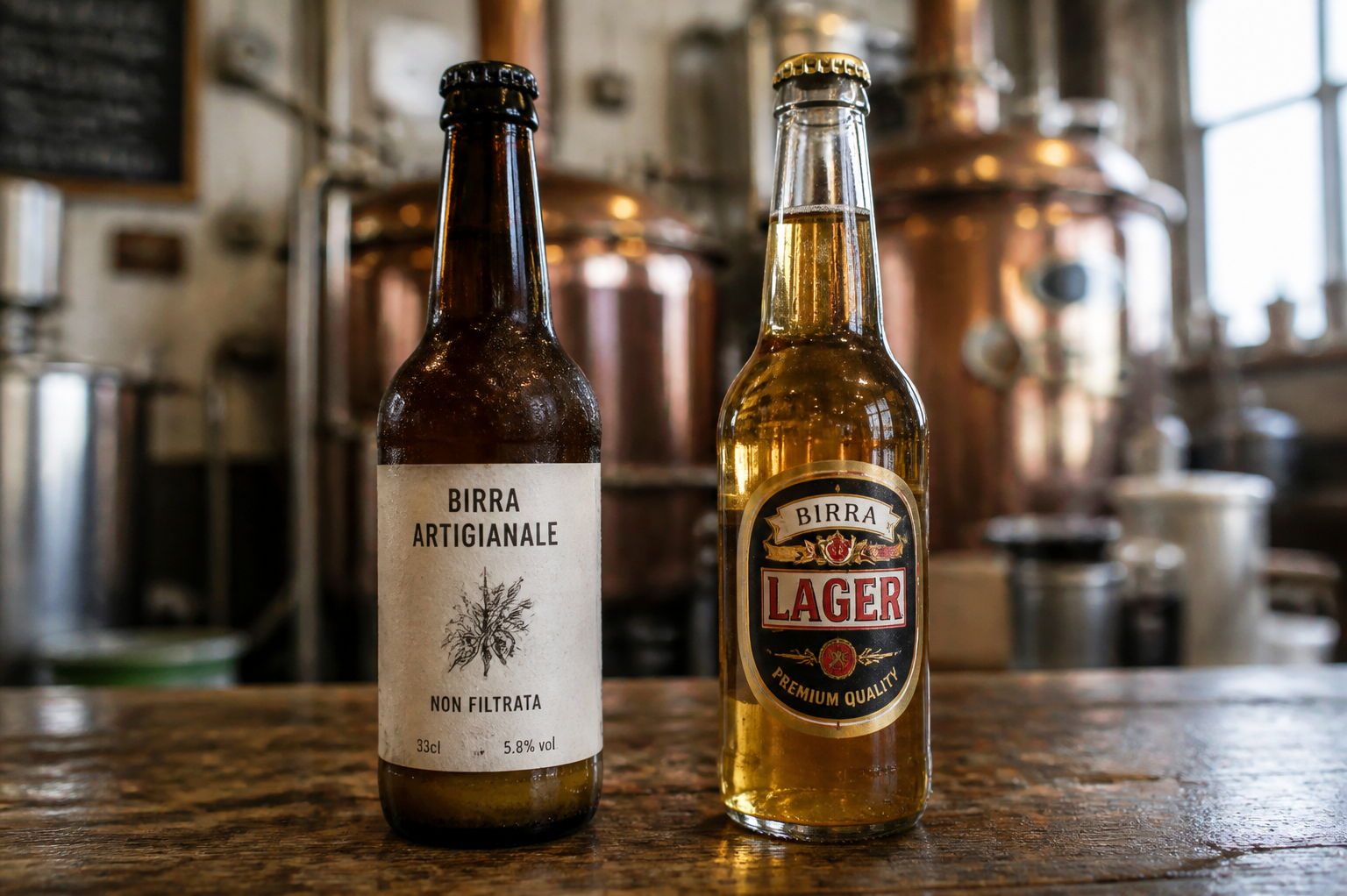
Craft production expands in a contracting market
Italy’s craft beer sector is gaining ground even as the country drinks less beer overall. BusinessOnline, citing Unionbirrai, reports that Italy now has 1,008 breweries, including 850 microbreweries. Craft production has reached about 480,000 hectolitres, equivalent to 2.5% of the total market. The share has continued to rise during a period in which national beer consumption has declined.
The industry has changed substantially since the 1990s, when Italy had only a few dozen microbreweries and the market was dominated by three or four industrial brands. Today, large brewing groups are losing share as consumers show greater interest in product variety, production methods and perceived quality. Industrial producers remain dependent on high volumes, while small brewers generally compete through differentiation and higher value per unit.
Legal definition protects independent brewers
Italy formally defined craft beer under Law 154/2016. To use the designation, beer must be produced by a small independent brewery and cannot be pasteurised or microfiltered. Unionbirrai President Vittorio Ferraris said the legislation was intended to protect brewery independence, production practices and consumers’ ability to understand what they are buying.
The production distinction has commercial consequences. Pasteurisation and microfiltration extend shelf life and make beer more suitable for mass distribution, but they can alter its sensory profile. Craft beer commonly relies on water, barley malt, hops and yeast, with variations in ingredients and fermentation determining flavour. The craft label, however, is not an automatic guarantee of quality: production controls, raw materials and brewery expertise remain decisive.
Industrial demand weakens while no-alcohol grows
The wider Italian beer supply chain is worth more than €10 billion, according to the Consumerismo Observatory. Household consumption is falling in line with a broader European trend. Eurostat recorded a 2.2% decline in real European household spending on alcoholic beverages in 2024, making alcohol one of the relatively few contracting consumption categories.
Low- and no-alcohol beer is moving in the opposite direction. Its share of the Italian market rose from 2.1% in 2024 to 3.9% in 2025, an increase of more than 85%. Younger consumers seeking to moderate alcohol intake are encouraging both industrial groups and microbreweries to invest in the category. Smaller and more flexible producers may be well placed to test niche recipes, although larger groups retain advantages in distribution and marketing.
Excise relief supports small producers
Reduced excise duties are an important part of the competitive framework. Independent breweries producing up to 10,000 hectolitres annually receive a 50% reduction. The discount is 30% for output between 10,000 and 30,000 hectolitres and 20% between 30,000 and 60,000 hectolitres. Breweries producing no more than 240 hectolitres can also use a simplified flat-rate system.
These measures help offset the higher unit costs faced by small breweries, but the sector’s 2.5% market share leaves substantial distance from industrial beer. The immediate opportunity lies less in replacing mass-market lager than in capturing higher-value demand and emerging categories such as low- and no-alcohol beer. For producers and distributors, future growth will depend on balancing product differentiation with consistency, shelf life and access to sales channels.