Italian household energy bills could reach €982 in autumn as gas costs rise
Italian households on indexed free-market contracts could spend €982 on electricity and gas from September through December 2026, Facile.it estimates. Gas accounts for €709 of the forecast bill as constrained LNG supply, geopolitical risk and low European storage levels lift wholesale prices.
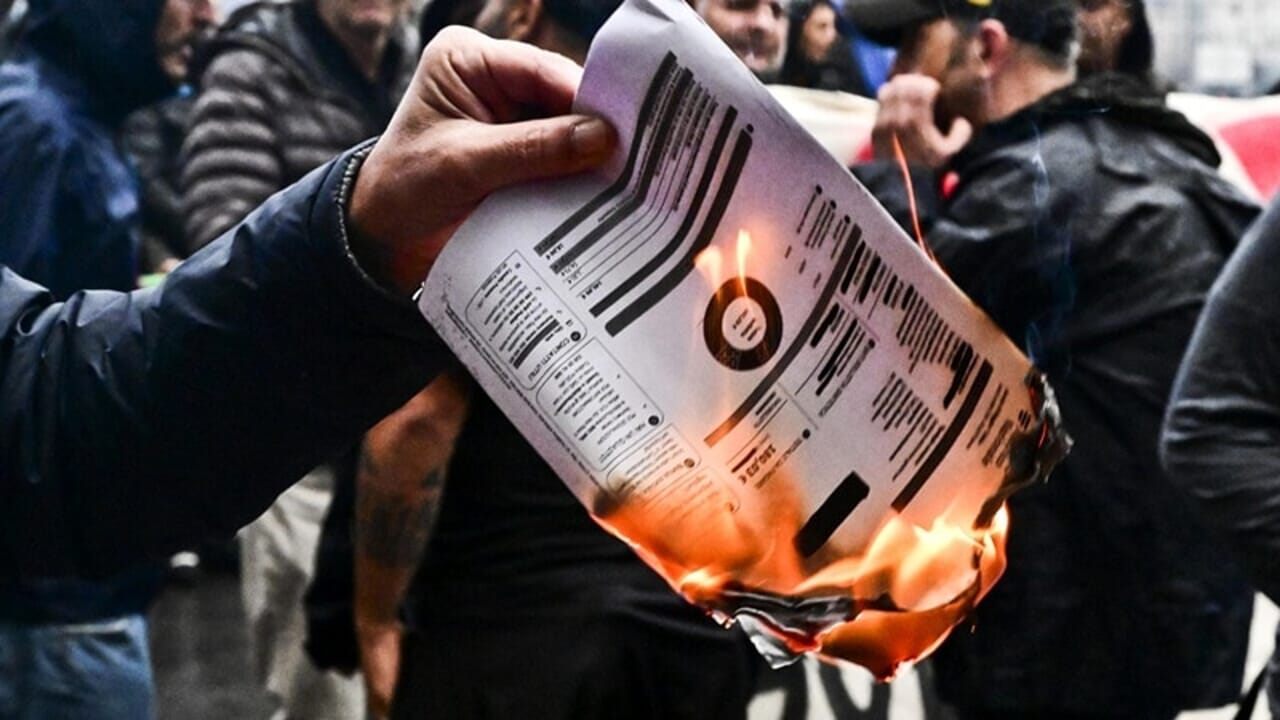
Gas drives a projected 38% increase
Italian households with indexed electricity and gas contracts in the free market could spend €982 between September and December 2026, according to an estimate published by Facile.it and reported by Today.it. That would be about €270 more than in the same four months of 2025, when the implied expenditure was approximately €712, representing an overall increase of about 38%.
Gas is expected to account for most of the pressure. Facile.it estimates a four-month gas bill of €709, up 43% year on year, while electricity expenditure could reach €273, an increase of 27%. The figures apply to indexed contracts, whose prices respond more directly to movements in wholesale energy markets.
The increase is already visible in regulated-market indicators. Arera said the raw-material gas price used for its vulnerability protection service rose to €56.69 per megawatt-hour in July, from €47.18 in June and €46.89 in May. The July movement increased the typical customer’s total monthly gas expenditure by 9.7%. For the third quarter, the regulator also raised the electricity bill of a typical vulnerable customer under the Maggior Tutela service by 4.6%.
Hormuz disruption cuts LNG availability
Arera strengthened its surveillance unit on 6 August after what it described as a sharp rise in electricity prices, with Italy’s national single electricity price, the PUN, reaching about €207 per megawatt-hour. The regulator attributed the increase mainly to persistent shortages of gas supply in international markets, stronger electricity demand during high temperatures and climate-related production restrictions in several European countries.
The main external risk is the disruption around the Strait of Hormuz. Before the war, almost 20% of global LNG supply passed through the waterway. Reuters data cited by Today.it show that Qatar’s LNG exports fell 96% during six months of war, to 18 cargoes from 509 in the corresponding period a year earlier. Several deliveries intended for Italy were cancelled under force-majeure provisions, while LNG and oil flows through Hormuz remained at around one quarter of pre-war levels.
Additional US supplies have partly offset losses in Italy and the wider European market, but have not restored balance. The European TTF gas benchmark averaged 32% above its year-earlier level in the second quarter. Gas prices also feed into electricity costs because methane-fired plants remain important in setting Italian power prices when renewable generation cannot meet demand.
Storage improves security but not price protection
European gas storage was about 63% full at the end of August, an unusually low level for the time of year. Italy was in a stronger position at around 80%, compared with roughly 50% in Germany and a still lower level in the Netherlands. Snam has allocated enough capacity to bring Italian storage to at least 90%, covering about 17.5 billion cubic metres of gas already held or contractually secured. Those reserves reduce supply risk but do not insulate consumers from wholesale price increases.
The outlook depends heavily on Hormuz and winter temperatures. Uniper chief executive Michael Lewis estimated on 11 August that European gas could remain at €50-€60 per megawatt-hour while the strait stayed closed. In a stress test involving heavily restricted transit through the end of 2026, the European Commission’s Joint Research Centre projected European gas at around €80 per megawatt-hour, compared with a May baseline of €42.2, and oil at about $180 per barrel.
That stress scenario would extend the impact beyond household bills. The Commission simulation estimated European inflation would be 0.3 percentage points higher in 2026 and 1.1 points higher in 2027, with economic growth below the baseline. Facile.it said consumers should compare offers before autumn and consider whether fixed-price contracts provide suitable protection. Arera’s Offers Portal allows customers to compare estimated annual costs, and suppliers can be changed without additional charges.