Iron ore prices fall as Guinea's Simandou project ramps up exports
Iron ore prices are sliding as Guinea's Simandou project increases exports, according to MSN. The West African deposit is adding new seaborne supply and challenging the long-standing dominance of Australia and Brazil.
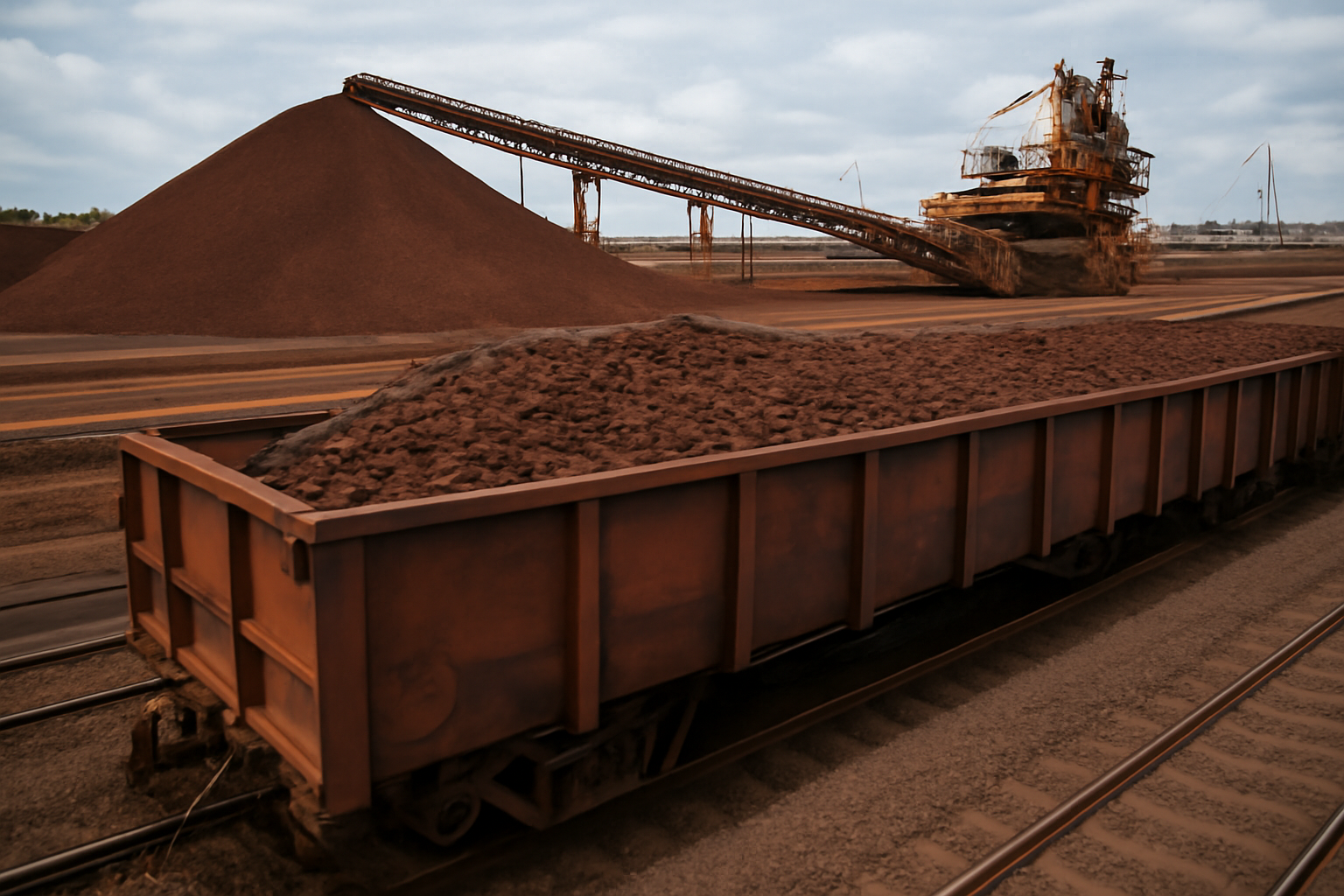
Simandou adds new iron ore supply
Iron ore prices have slipped as Guinea's Simandou project ramps up exports, according to MSN. The start of larger shipments from the West African deposit is adding fresh tonnes to a market that has long been supplied mainly by Australia and Brazil.
Simandou is one of the largest iron ore developments to come online in decades. As output builds, the project introduces a new source of ore into global seaborne trade, gradually widening the pool of suppliers competing for buyers and opening export routes from a region that has played only a marginal role in the trade until now.
Benchmark prices under pressure
The additional volume is weighing on benchmark prices. MSN reports that the ramp-up of Simandou exports coincided with a slide in iron ore quotations, as traders factor in the prospect of more material reaching the market.
For a commodity where relatively small shifts in supply can move prices, the arrival of a major new mine matters. Key considerations for the market include:
- Rising seaborne supply from a new origin outside the traditional Australia-Brazil axis.
- Downward pressure on benchmark iron ore prices as extra tonnes are absorbed.
- A gradual challenge to the market share long held by established producers.
Implications for trade flows
A new large-scale supplier reshapes the logistics of the seaborne iron ore trade. Ore leaving West Africa opens fresh routes to Asian and other steelmaking hubs, giving buyers an additional origin alongside cargoes from Australia and Brazil. Greater choice tends to strengthen the hand of importers in price negotiations.
For established exporters, the ramp-up represents a longer-term competitive test. Producers in Australia and Brazil have dominated global supply, and the entry of Simandou volumes challenges that position. How prices settle will depend on the pace at which Guinea's output scales and on how steel demand evolves.
MSN's report does not detail the full scale of the price move or the volumes involved, but the direction is clear: more supply from a new origin is pushing benchmark iron ore prices lower, a shift that importers, exporters and steelmakers will watch closely in the months ahead.