Ires Opens €3 Million Rice-Seed Selection Plant in Vercelli
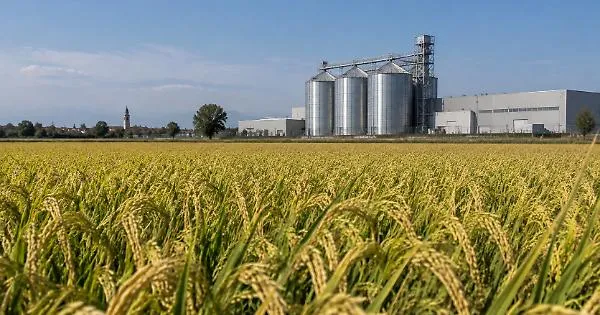
Ires has opened a 10,000-square-metre rice-seed processing and selection plant in Vercelli after investing about €3 million. The facility has three 3,000-quintal silos and optical-electronic technology for supplying Italian and European growers.
New production hub in Italy’s rice-growing heartland
Ires, the Italian Rice Experiment Station, has inaugurated a rice-seed processing and selection plant in Vercelli, in the northern Italian region of Piedmont. According to Giornale La Voce, the company invested about €3 million in the 10,000-square-metre facility, which is intended to serve both the Italian and wider European markets.
The new plant places Ires’s production operations close to one of Italy’s principal rice-growing areas. Vercelli and other parts of Piedmont support a supply chain encompassing farmers, seed companies, researchers and processors. Locating industrial seed preparation in this region is intended to connect the company’s production capacity more directly with its agricultural customer base.
Ires was established in 2017 in Nibbiola, in the province of Novara. Its research, genetic improvement, field trials and development of new rice varieties will remain there. The Vercelli site will handle the production side of the business, creating a division between scientific work in Nibbiola and commercial-scale seed preparation in Vercelli.
Three silos and infrared seed analysis
The facility is equipped with three silos, each holding 3,000 quintals, as well as machinery designed to process large volumes of rice seed. Its production system covers the successive stages of seed preparation, including the removal of residues, waste material, impurities and grains that do not meet the required specifications.
A central component is a new optical-electronic sorter that uses infrared systems to analyse individual grains. Giornale La Voce reports that the equipment can detect characteristics that are not visible to the human eye. It can distinguish grains by colour, separating coloured kernels from white ones or performing the reverse selection, depending on the required seed lot.
The sorter can also identify potential signs of seed disease. This gives the plant an additional quality-control tool before seed reaches growers. More precise separation is intended to improve the uniformity and health of planting material, although the available source does not specify the plant’s annual throughput or the number of varieties it will process.
Targeting Italian and European seed markets
Ires intends to use the additional production capacity to strengthen its position in rice seed selection in Europe. The arrangement links the company’s breeding programme with an industrial facility capable of preparing the resulting varieties for sale. For farmers, the relevant benefit is access to seed lots subjected to more detailed sorting and impurity removal before planting.
The investment also reinforces the industrial role of Vercelli within Piedmont’s rice sector. Giornale La Voce says the plant is expected to create employment opportunities connected with facility management and production, but does not provide a specific headcount or timetable for recruitment.
Local and regional officials attending the inauguration included Vercelli Mayor Roberto Scheda, provincial president Davide Gilardino and Piedmont environment councillor Matteo Marnati. The project gives Ires a dedicated production base alongside its existing research operation, while preserving Nibbiola’s role in breeding, experimentation and the creation of new varieties. Its commercial impact will depend on how effectively the company converts the new sorting and storage capacity into reliable supplies for Italian and other European rice growers.