Iran War Pushes Global Food Prices to Three-Year High, FAO Warns of More Gains
Global food prices have climbed to their highest level in three years as the Iran conflict disrupts energy, freight and fertilizer flows through the Strait of Hormuz. The FAO warns further increases are likely if the war continues, while soybean futures have rallied on renewed Chinese demand and higher crude oil prices.
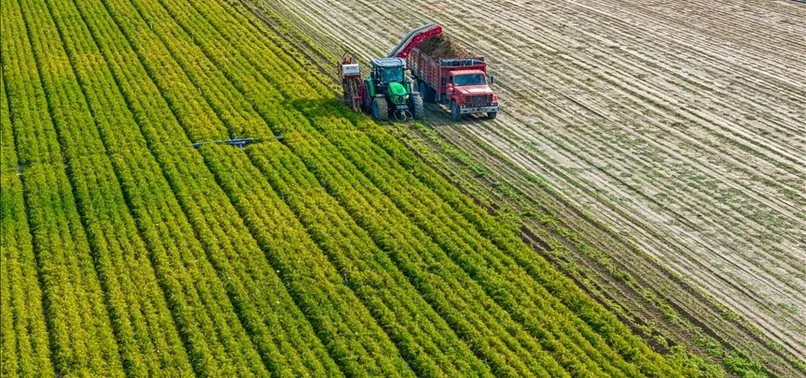
Agriculture markets absorb a second energy shock
Global food prices have risen to their highest level in three years, according to Bloomberg, as the war triggered by US and Israeli strikes on Iran that began on Feb. 28 continues to disrupt energy, fertilizer and shipping costs. S&P Global reported that food prices rose across the basket in March amid what it described as Middle East energy shocks, while Reuters cited the UN Food and Agriculture Organization (FAO) as warning that the increase is set to continue if the war persists.
The S&P GSCI Agriculture index, which tracks spot prices across the agriculture complex, rose about 4.1% since the conflict began, climbing from 345.47 on Feb. 27 to 368.83 on March 27, according to A News. Over that period wheat gained 2.3%, corn 4.1% and rice 3.2% per bushel, while soybeans slipped 0.3%. Sugar jumped 13.7%, cotton 7.3% and coffee 6% per pound, while cocoa fell 11.9% per ton, the outlet reported.
Soybeans buck the trend on Chinese demand
Separately, soybean futures climbed above $11.9 a bushel, extending a rally to a seven-week high, according to Hellenic Shipping News. The gains were supported by renewed Chinese demand for US supplies and higher crude oil prices following a fresh wave of US strikes on Iran, which came after earlier attacks on ships transiting the Strait of Hormuz raised concerns about further energy-supply disruptions.
Fertilizer trade through Hormuz at risk
Analysts told Anadolu, as reported by A News, that the Strait of Hormuz sits at the center of global fertilizer trade, magnifying the war's impact on food supply. Rahmi Incekara of Istanbul's Bahcesehir University said around 39% of the world's fertilizers transit the strait, with Qatar, Iran, the United Arab Emirates, Saudi Arabia and Bahrain accounting for nearly half of global urea exports. He said the route also carries about 20% of diammonium phosphate, 10% of monoammonium phosphate, 25% of ammonia and 30% of sulfur shipments, and that the disruption has already cut 38% of the world's nitrate-based fertilizer supply and 20% of phosphate-based supply. Incekara added that Australia, which sources more than 60% of its urea from the Middle East, could see stockpiles depleted by mid-April.
Kenan Aslanli of Ankara Yildirim Beyazit University said the effective closure of the strait and attacks on regional energy infrastructure have brought crude oil, LNG, fertilizer and metals shipments from the Persian Gulf to a standstill, noting Gulf producers' outsized role in nitrogen fertilizers, sulfur, aluminum, helium and bromine. Kaan Devecioglu of the Ankara-based Center for Middle Eastern Strategic Studies said rising tanker insurance premiums and freight costs are also weighing on container trade, with fertilizer and fuel cost increases hitting import-reliant African and South Asian countries hardest.
Second-round shock still ahead, professor says
- Zeki Bayramoglu of Selcuk University said global food indexes have not yet fully reflected the war's impact, describing current conditions as the foundation for a "second-round shock in food prices" rather than a full-blown surge.
- He said the sharpest price reaction so far has come in the fertilizer market, and that a continued lack of alternative trade routes would put pressure on the full chain of fertilizers, feed, grains, vegetable oils and animal proteins.
- Devecioglu said the war's first month brought limited but high-risk impacts, warning effects "could be exponentially devastating" if the conflict drags on.