Iran’s Rimdan Border Handles 470,000 Tons of Goods on 21,000 Trucks
Around 21,000 trucks transported 470,000 tonnes of goods through Iran’s Rimdan border crossing, IRNA reported. The figures point to a growing logistics role for the crossing and the Chabahar area, although the report excerpt does not identify the cargo mix or measurement period.
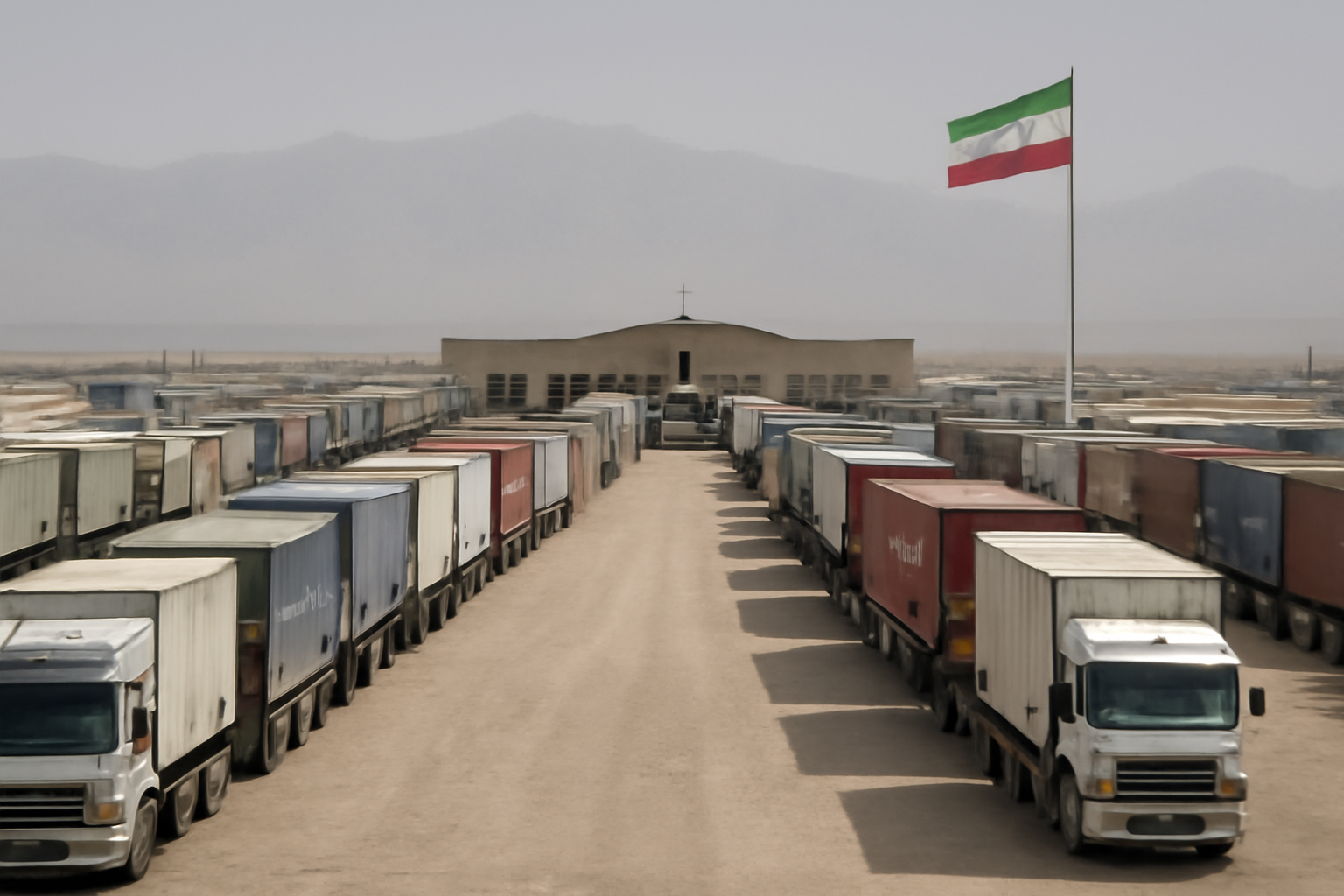
Freight volume reaches 470,000 tonnes
Iran’s Rimdan border crossing handled 470,000 tonnes of goods transported by 21,000 trucks, according to Iran’s official news agency IRNA. The agency presented the traffic as evidence of a transformation in cross-border commerce and a new opportunity to expand commercial activity connected with Chabahar.
The two reported figures imply an average load of slightly more than 22 tonnes per truck. That ratio indicates substantial use of road freight, but it does not reveal how much of the traffic consisted of full loads, empty return movements or vehicles carrying different classes of cargo. The available report excerpt also does not state the period over which the volume was recorded.
Rimdan gains weight in Chabahar’s logistics network
IRNA described Rimdan as a potentially important operational arm for trade development in Chabahar. For transport companies, cargo owners and border-service providers, 21,000 truck movements represent demand for vehicle scheduling, customs processing, cargo inspection and supporting services. The commercial effect will depend on whether the crossing can process those movements consistently and avoid delays during periods of heavier traffic.
The volume is also relevant to warehouse operators, freight forwarders and firms providing fuel, maintenance and driver services. A sustained flow of 470,000 tonnes can support investment in handling capacity and logistics facilities. However, the source excerpt provides no information on terminal capacity, processing times, infrastructure investment or planned expansion, so it is not possible to determine how close Rimdan may be to its operational limits.
Cargo details remain essential for market assessment
The report does not identify the products transported through Rimdan, their value, their direction of travel or the companies involved. Those details matter because bulk commodities, food products, manufactured goods and higher-value cargo generate different requirements for storage, inspection, security and delivery schedules. Without a cargo breakdown, the 470,000-tonne figure measures physical throughput but cannot show which producers, processors or trading sectors benefited most.
The figures nevertheless establish a measurable base for assessing Rimdan’s future performance. Subsequent reporting on annual volumes, inbound and outbound shares, customs clearance times and the number of repeat commercial users would show whether the crossing is securing lasting freight flows. For market participants around Chabahar, the central question is whether the reported truck traffic develops into predictable volumes that justify additional vehicles, warehouses and border-handling capacity.