Iranian premium rice prices rise as output is forecast at up to 2.4 million tonnes
Iran’s rice production is forecast to increase by 150,000-200,000 tonnes to 2.3-2.4 million tonnes this season. Consumer prices for premium domestic varieties range from 450,000 tomans per kilogram for Tarem Hashemi to 550,000 tomans for Gilan Domsiah, while the country is still expected to require 500,000 tonnes of imports.
Larger harvest expected under favorable conditions
Iran’s rice production is forecast to rise by 150,000-200,000 tonnes this season, taking total output to between 2.3 million and 2.4 million tonnes. Khabar Online reported that favorable weather and sufficient water supplies for paddy fields are expected to support a strong harvest.
The estimate was presented by a representative of Iran’s rice producers and suppliers. Despite the projected increase in domestic output, the country is still expected to need 500,000 tonnes of imported rice to balance supply and demand. The figures indicate that a better harvest will reduce pressure on the market but will not eliminate Iran’s import requirement.
Premium varieties command high consumer prices
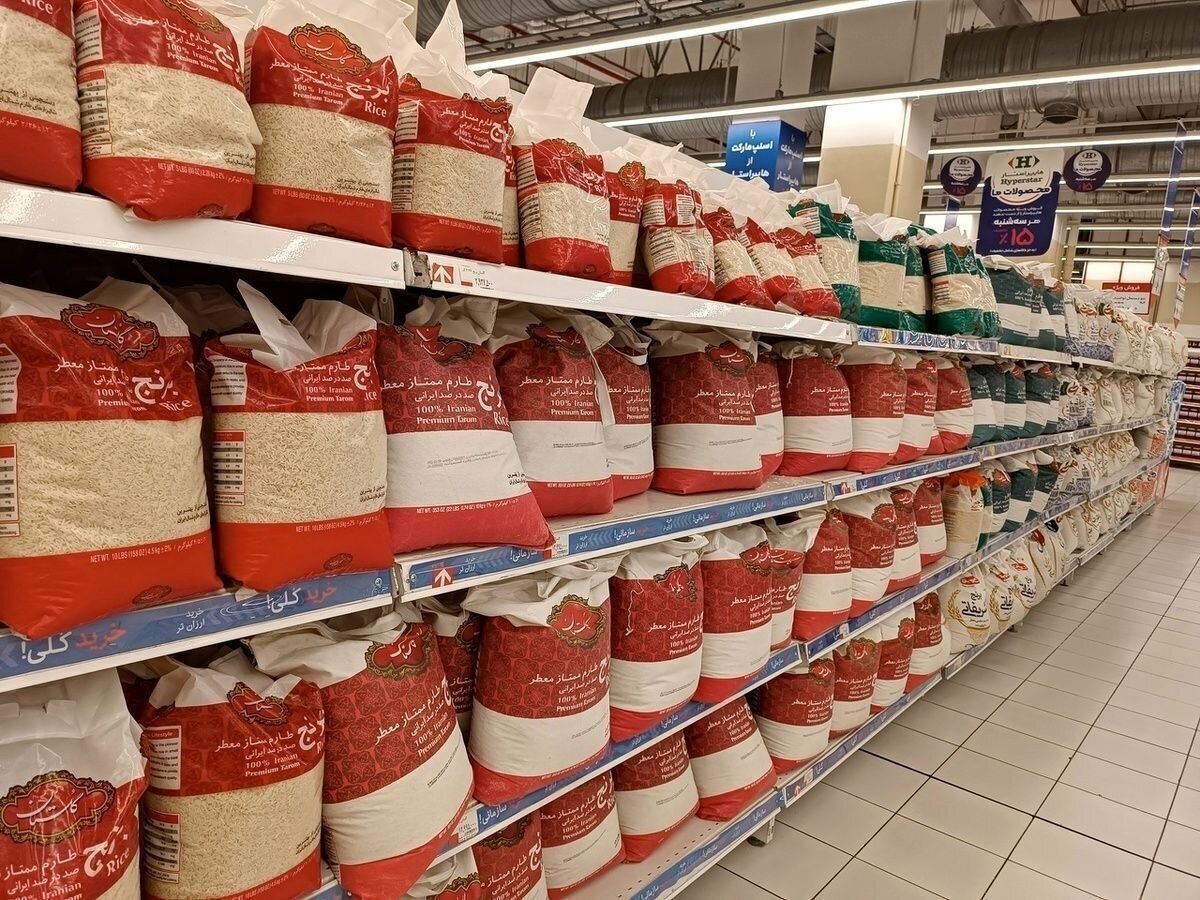
New consumer prices show a wide gap between premium traditional varieties and higher-yielding rice. Tarem Hashemi is priced at 450,000-470,000 tomans per kilogram, while Gilan Domsiah is quoted at 550,000 tomans per kilogram. Second-crop rice costs 520,000 tomans per kilogram and smoked rice 538,000 tomans. Higher-yielding varieties are considerably cheaper at 340,000-350,000 tomans per kilogram.
The price range reflects differences in quality, origin and production characteristics. For processors and distributors, the premium attached to northern varieties remains significant even as a larger crop approaches the market. Domestic stocks could provide some additional supply: according to the industry representative cited by Khabar Online, mills in Iran’s northern provinces currently hold 300,000 tonnes of rice.
Import timing raises concern among producers
Import policy has become a point of tension during the harvest period. Khabar Online reported that the agriculture minister lifted the seasonal rice import ban one month earlier than expected. The industry representative argued that farmers should not bear the cost of market regulation and said imports should be managed without undermining domestic producers during harvest.
According to the report, monthly imports in recent months reached no more than 20,000-30,000 tonnes. Market participants have nevertheless heard that authorities may seek to bring in 500,000 tonnes during the current period. That volume matches the estimated annual import requirement, making its timing particularly important for farmgate prices and the release of stocks held by mills.
The domestic market had been weakening, but conditions became more volatile amid what the source described as a critical situation and a maritime blockade. No revised price or import forecast linked to those conditions was provided.
Efficiency remains a barrier to self-sufficiency
The head of the rice producers and suppliers association in Gilan said self-sufficiency depends on more than weather. He called for modernization of milling operations to reduce broken and fragmented grains, alongside research into varieties capable of delivering both higher yields and suitable quality.
For Iran’s rice chain, the season therefore combines stronger production prospects with unresolved questions over import scheduling, milling efficiency and consumer affordability. A crop of up to 2.4 million tonnes would expand domestic availability, but the projected 500,000-tonne import need and large price premium for traditional varieties show that supply growth alone will not remove the market’s structural constraints.