Iran's Nuclear Dossier Referral Raises the Risk Level for an Already Strained Car Industry
The referral of Iran's nuclear dossier to the Security Council has reached a car market already constrained by currency shortages, inflation, disrupted foreign trade and parts supply problems. Asbe Bokhar reports the move does not by itself trigger new sanctions, but it raises Iran's political and commercial risk level. The likely outcome is higher production costs, tighter supply and a smaller real market rather than a boom.
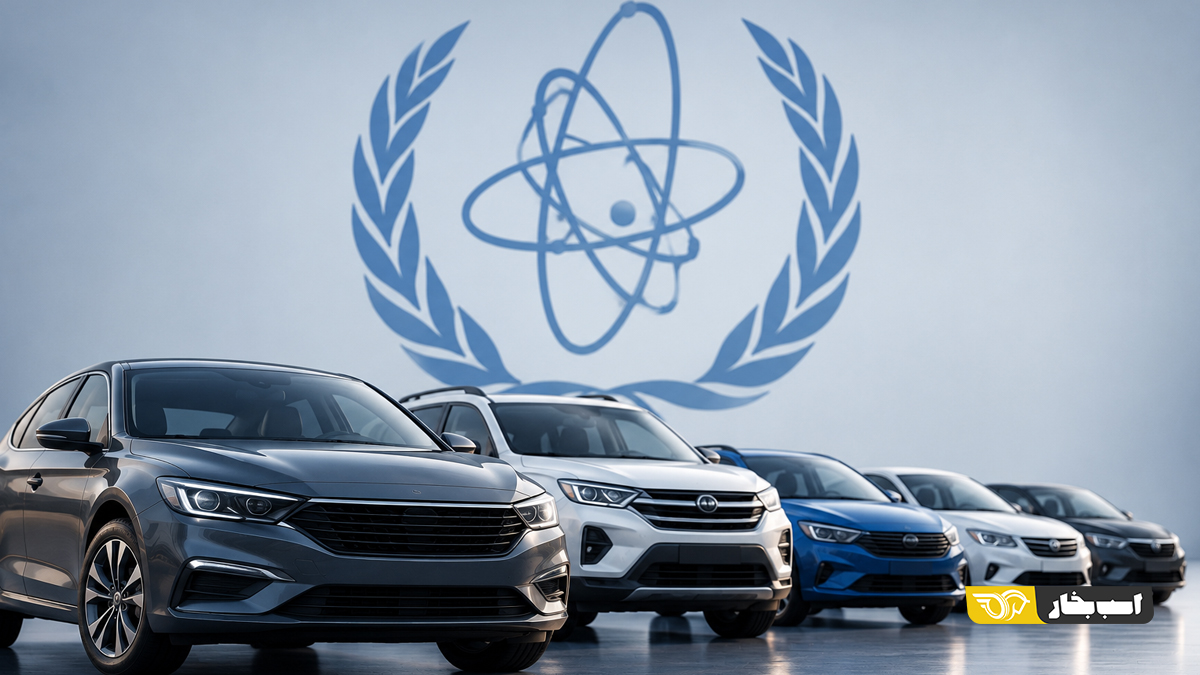
The referral of Iran's nuclear dossier to the Security Council has reached a car market that was already operating under several simultaneous constraints: a shortage of foreign currency, inflation, disrupted foreign trade, rising transport costs and persistent difficulty securing components. According to the Iranian automotive outlet Asbe Bokhar, the intensification of political pressure could push the country's vehicle production and import problems into a new phase.
Asbe Bokhar stresses that the referral does not in itself mean the immediate imposition of new sanctions or the start of a military crisis. Its economic message is narrower but clear: Iran's political and commercial risk level has moved higher. For an industry already contending with falling output, a liquidity squeeze, currency access problems and interrupted parts supply, that is not good news.
Foreign exchange is the main transmission channel
The publication identifies currency as the primary route through which political pressure reaches the car market. The issue is not only a more expensive dollar; the more important problem is that access to foreign exchange becomes harder and the pool of available currency resources becomes smaller.
If oil revenues decline and access to currency narrows, the government will have to prioritise how it is allocated. Despite its economic weight, the automotive sector cannot assume it will always sit at the top of the allocation list, Asbe Bokhar writes.
Localisation offers only partial protection. Even models with a high share of domestic content remain tied to foreign trade through:
- electronic components;
- specific raw materials;
- production equipment and machinery;
- specialised parts.
A currency crisis therefore shows up on the factory floor sooner or later.
Assemblers first, parts makers close behind
Large domestic automakers are less exposed to direct imports than assembly operations, but they are not immune. Any interruption in component supply can slow production, increase the number of unfinished vehicles or halt lines temporarily. The shock is not arriving at a healthy industry: output was already falling before it, so the pressure lands on a sector that is already cracked. The probable result is higher production costs and lower supply, a combination that ultimately adds to price pressure in the market.
Assembly companies are likely to be among the first to feel rising external pressure. Their reliance on imported CKD kits, engines, gearboxes, electronic equipment and other imported assemblies transmits currency and trade restrictions directly to their production lines.
Extensive commercial ties with China do not confer full immunity either, the report notes. Buying goods is one question; transferring money, arranging insurance and shipping, and finding counterparties willing to accept the transaction risk is another. Under sanctions conditions, the gap between "we can buy" and "we can import" may widen.
Parts manufacturers may be the most important link in this chain. They face rising raw material prices, growing production costs, a liquidity shortage and currency problems at the same time. If automakers also delay payment of what they owe their suppliers, the pressure doubles.
Higher asking prices, a thinner real market
The imported vehicle segment will naturally be more sensitive. The tighter currency resources are and the higher the risk attached to foreign trade, the more likely it becomes that imports slow down. Fewer imports mean narrower supply, and in a market where inflation expectations are high, narrower supply usually translates into higher prices. In such conditions even used foreign cars may absorb part of the investment demand as an alternative store of value.
Asbe Bokhar cautions against assuming that greater political risk automatically means a stronger car market. Speculative demand may rise in the short term, but if the crisis persists, weakening household purchasing power will become the dominant effect. Prices may go up while the number of transactions falls: advertised prices and listings can trend higher even as the real market sinks into a deeper slump.
The effect of the nuclear file referral should therefore not be analysed in isolation from the other pressures already in place — lower oil revenues, restrictions on maritime trade, higher freight and insurance costs, inflation, currency jumps and money transfer problems. If political tensions ease, part of this risk can recede. If they intensify, the outlet argues, the problem moves beyond cars simply becoming more expensive and turns into a crisis of supply, production and component sourcing, with the larger danger being shrinking purchasing power and a smaller real market.