Iran letter to customs revives Korean appliance imports without lifting restrictions
A letter from the Trade Promotion Organization of Iran to the country's customs administration has returned Korean household appliances to the import agenda. According to the business daily Donya-e-Eqtesad, the document is narrower than the phrase "import liberalization" suggests, and the report identifies no tariff headings, volumes or effective dates.
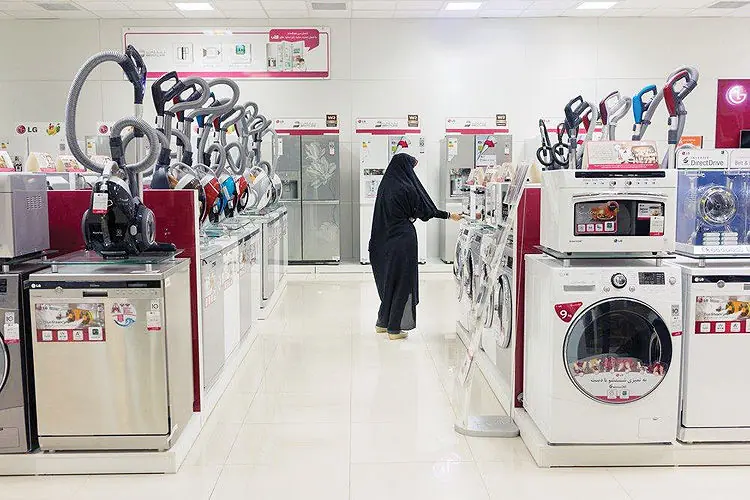
A letter from the Trade Promotion Organization of Iran to the country's customs administration has put Korean household appliances back on the import agenda, but it does not deliver the market reopening that the phrase “import liberalization” implies, according to the Iranian business daily Donya-e-Eqtesad.
The paper set the question out as an open one: have appliance imports from Korea been freed? Its answer is qualified. The letter, it reported, has once again placed Korean appliances in the import market — in name. Contrary to the reading that the words “import liberalization” invite, the document is narrower than a removal of restrictions, and the report cautioned against treating the two as equivalent.
An instruction to customs, not a rewrite of the rules
Correspondence between a trade authority and a customs service normally governs how goods are handled under rules already in force. It sits between policy and the border: it can change what officers do with a declaration without changing what is permitted to enter. That gap is the substance of Donya-e-Eqtesad's caution. A product category appearing in a letter to customs is not the same thing as the removal of the barriers that kept it off the market.
The available account of the report does not identify the tariff headings covered, does not say whether the letter concerns finished appliances, components for local assembly, or both, and does not state whether registration of import orders — the administrative step at which restrictions on consumer goods are usually enforced — has been reopened for these goods. No volumes, values, brands or effective dates are given, and Iranian customs is not quoted.
Why the distinction matters commercially
The wording the report uses — once again — signals a recurring file rather than a new one. Korean appliances have moved in and out of Iran's import debate before, and each cycle tends to move expectations faster than it moves cargo. That asymmetry is the commercial risk. Purchase orders, letters of credit and shipping bookings are committed against published tariff and licensing decisions, not against press coverage of internal correspondence.
For importers and distributors inside Iran the practical test is procedural rather than rhetorical: whether an import order can actually be registered and cleared under these headings. Until that is demonstrable, positioning inventory on the strength of a headline transfers the entire risk onto the buyer.
For Iranian appliance manufacturers the question runs the other way — whether competition from Korean brands returns to the domestic market, and on what terms. Korean producers and their regional distributors face the same evidentiary problem in reverse: without a confirmed customs procedure there is nothing concrete to plan a shipment around. Analysts covering the sector are left weighing a document whose text has not been published.
What to watch next
- The full text of the letter and the tariff headings it names.
- Whether registration of import orders is opened for those headings.
- Whether the measure covers complete units, parts for local assembly, or both.
- Any confirmation or contradiction from Iranian customs.
- Whether Korean manufacturers or their regional distributors confirm new shipping and distribution arrangements.
For now the confirmed facts are narrow: a letter exists, it names Korean household appliances, and the publication that reported it says the description circulating around it overstates what the document actually does. Donya-e-Eqtesad's own framing — a question mark rather than a declaration — remains the most accurate summary of the position.