INTA and Gensus line up 12 Argentine cotton varieties for sale in Europe via Spain's Guadalsem
Argentina's INTA and seed company Gensus have agreed with Spain's Guadalsem to evaluate 12 Argentine cotton varieties under Spanish growing conditions, with the best performers advancing toward registration and commercial sale in Europe. The three parties are targeting a non-GMO market of close to 800,000 hectares across Spain, Greece and Turkey. The deal also provides for two-way germplasm exchange.
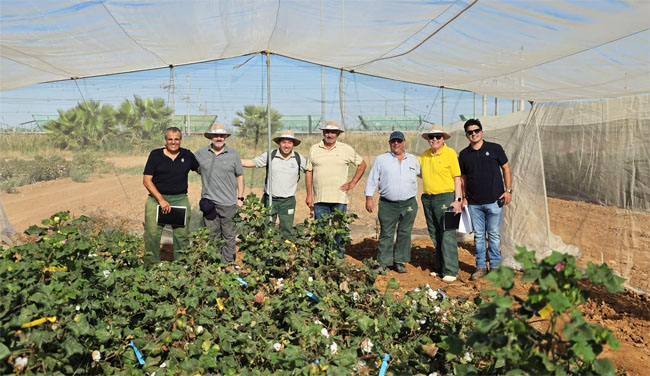
Argentina's National Institute of Agricultural Technology (INTA) and the seed company Genética Sustentable (Gensus) have established an international alliance with Spanish seed firm Guadalsem covering 12 Argentine cotton varieties, according to Agroperfiles. Under the agreement, the three parties will evaluate germplasm developed by INTA to determine how it adapts to Spanish production conditions. The materials with the best performance could move toward registration and eventual commercialisation in the European market.
The agreement followed a visit by an Argentine delegation to strategic cotton-growing locations in southern Spain. INTA vice-president Carlos Vera, geneticist Mauricio Tcach and Gensus board chairman Pablo Vaquero met Guadalsem representatives in Cádiz and Seville. Guadalsem produces and markets cotton, sunflower and cereal seed and, until now, has carried only five cotton seed varieties in its portfolio, with staff drawn from the sector.
A target market of some 800,000 hectares
Spain, Greece and Turkey together form a potential market of close to 800,000 hectares of cotton, a scale that widens the opportunities for the conventional varieties developed in Argentina. During the trip the delegation toured cotton areas of Seville province, including Alcalá del Río and Lebrija, as well as Rota in Cádiz. The visits were used to assess local production conditions and to identify the specific demands of the European seed market.
Non-GMO genetics as the entry requirement
Recent work in INTA's breeding programme includes the evaluation of previously untested germplasm obtained through modern selection techniques, alongside experimental lines produced by induced mutagenesis. “This line of research gave rise to Arandú INTA BGRR IMIcott, presented in 2026 as the first imidazolinone-resistant variety to be grown in Argentina,” Tcach said.
The fact that the variety was obtained through mutagenesis rather than transgenesis is central to any attempt to enter Europe, a demanding market that requires traceability from origin and cotton genetics free of genetically modified organisms. The outlook also covers other lines from the INTA Sáenz Peña breeding programme, including extra-long fibre materials aimed at the quality characteristics sought by the textile industry.
From licensing to co-creation
“Historically, INTA developed a technology and then licensed it. In this case it is taking part in a process of greater interaction with the private sector, with joint evaluation of materials, germplasm exchange and prospects for co-creation,” Tcach said. The cooperation is two-way: beyond testing Argentine materials in Spain, Guadalsem will send its own varieties for study in Argentine production environments, allowing direct comparison of materials across different conditions. Tcach also underlined the complementary roles of the three participants:
- INTA develops the genetics;
- Guadalsem contributes knowledge of production conditions and of the European market;
- the Argentine private partner adds experience in the multiplication and commercialisation of varieties.
Trade framework and next steps
The link acquires greater reach because of the trade agreement between Mercosur and the European Union, which improves access conditions while at the same time reinforcing the need to comply with rules of origin and technical requirements. The INTA–Gensus partnership has a track record of several years and has already taken Argentine cotton genetics to other markets: varieties developed by the institute were introduced in Paraguay in 2022, at a time when Europe was already identified as one of the destinations for that expansion. “This tripartite scheme allows capabilities to be combined behind a common objective: creating the conditions for INTA's developments to find new markets,” Vaquero said, adding that a Spanish partner brings specific knowledge of the European production and commercial system. The next step will be to analyse the performance of the varieties sent to Spain, identify those with the best adaptation and, where appropriate, advance the procedures required for registration and eventual sale.