Indonesian Seafood Suppliers See $198.33 Million Sales Opportunity in Japan
Indonesian seafood companies recorded prospective transactions worth $198.33 million at JISTE 2026 in Tokyo. The opportunity comes as zero tariffs under the amended IJEPA support processed fish exports, although Indonesia’s total fisheries shipments to Japan declined in January-June 2026.
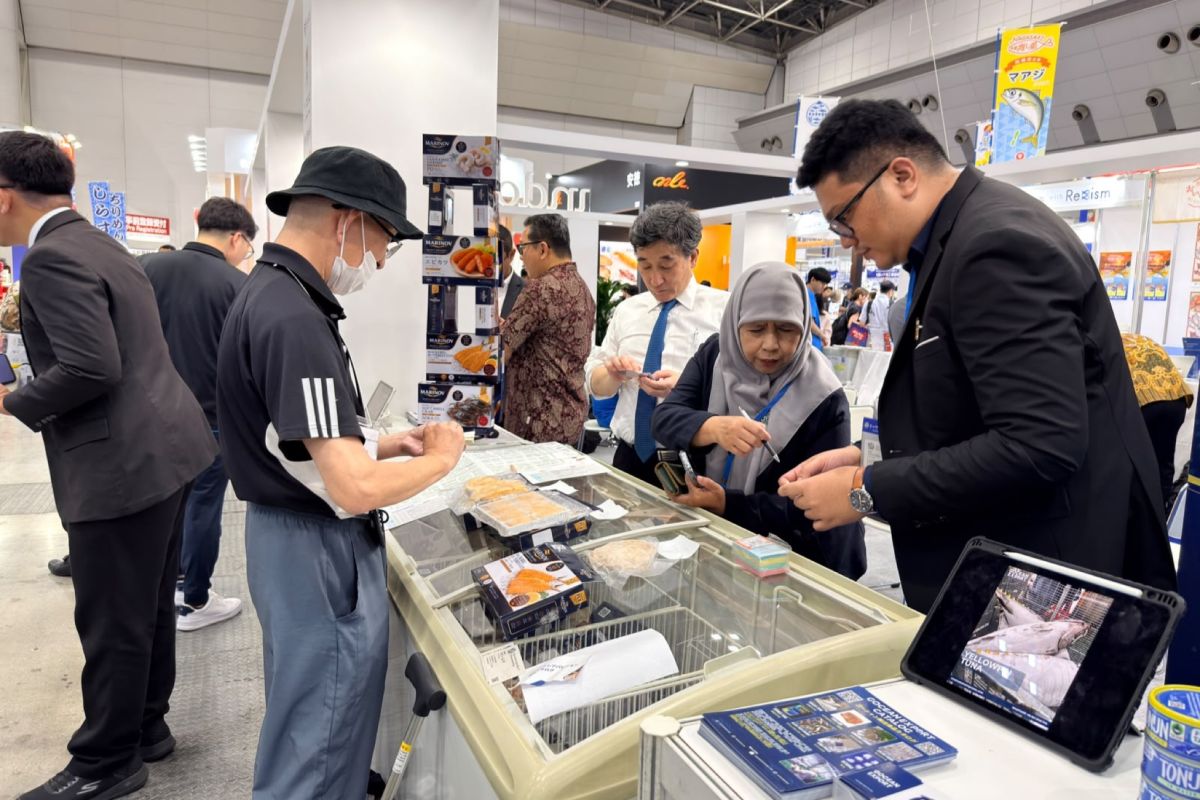
Business matching generates $198.33 million pipeline
Indonesian seafood suppliers recorded prospective transactions worth $198.33 million, equivalent to Rp3.49 trillion, during the 28th Japan International Seafood & Technology Expo (JISTE) 2026 in Tokyo. The figure was announced by Indonesia’s Ministry of Trade following business-matching meetings between Indonesian exporters and Japanese buyers at the exhibition, held on August 19-21, 2026.
According to ANTARA and Koran Jakarta, tuna in multiple forms, including processed products, accounted for the largest share of the potential transactions. Japanese buyers also responded positively to octopus, sillago fish and fried shrimp products known as ebi fry. Other products attracting interest included skipjack tuna, blue swimming crab, squid, cuttlefish, processed anchovy known as chirimen, fish roe marketed as tobiko, sea urchin or uni, and a range of other processed seafood.
Zero tariffs improve access for processed fish
Fajarini Puntodewi, director general of national export development at Indonesia’s Ministry of Trade, said the prospective deals demonstrated the scale of Japan’s market potential for Indonesian fisheries products. She urged exporters to make greater use of the amended protocol to the Indonesia-Japan Economic Partnership Agreement, or IJEPA, which provides a zero tariff for processed fish products originating in Indonesia.
Indonesia’s ambassador to Japan, Nurmala Kartini Sjahrir, said implementation of the amended IJEPA protocol had widened market access. She also stressed that Indonesian companies must maintain commitment, consistency and continuity of supply to retain the confidence of Japanese partners. Product quality alone is insufficient, she said, because buyers also assess suppliers’ reliability and transparency in meeting commercial commitments.
The Indonesia Trade Promotion Center in Osaka plans to continue promoting Indonesian fisheries products through marketing, trade facilitation and broader connections with Japanese buyers. For suppliers, converting the exhibition pipeline into completed orders will therefore depend on commercial follow-up as well as the ability to meet Japan’s expectations for dependable supply.
Processed exports grow as total shipments decline
Japan is a strategic market for Indonesia’s fisheries sector, but recent trade data show contrasting trends. Indonesia exported $173.00 million of fisheries products to Japan in January-June 2026, down 7.99% from the same period of 2025. ANTARA attributed the decline to weaker shipments of products including frozen shrimp and skipjack tuna. Tuna, seaweed and processed fish products nevertheless continued to record positive growth.
Processed fisheries exports performed particularly strongly. Their value reached $45.81 million, or approximately Rp807.67 billion, in January-June 2026, an increase of 29.05% year on year. Processed tuna and skipjack generated $41.12 million and represented 89.75% of the category. Other processed fish contributed $2.22 million, or 4.85%; processed squid generated $1.16 million, or 2.52%; and processed octopus reached $953,000, or 2.08%.
The $198.33 million transaction pipeline is larger than Indonesia’s entire reported fisheries export value to Japan during the first six months of 2026, although prospective transactions are not the same as completed sales. If a substantial share turns into firm orders, the deals could reinforce the shift toward processed, higher-value seafood. The combination of zero-tariff access and Japanese interest across a broad product range creates room for diversification, while the weakness in frozen shrimp and skipjack shipments underlines the need for exporters to secure reliable volumes and sustain buyer relationships.