Indonesian Coffee SMEs Secure $2.17 Million in Potential Orders After US Trade Expo
Six Indonesian coffee SMEs presented regional arabica and robusta varieties at Specialty Coffee Expo 2021 in New Orleans. The event generated estimated potential arabica orders worth $2.17 million, with interest from buyers in the United States and six other countries.
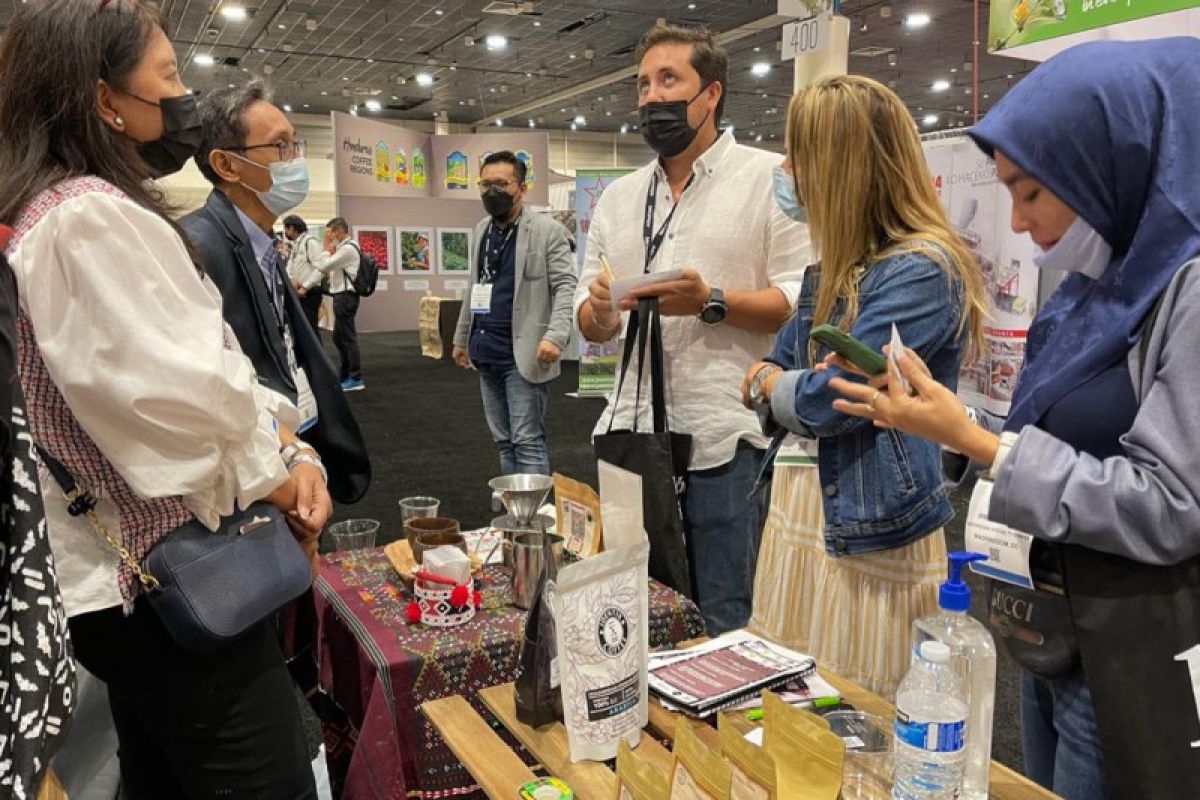
Six SMEs bring regional coffee to New Orleans
Indonesian small and medium-sized coffee businesses gained access to prospective buyers in the United States through Specialty Coffee Expo 2021, according to Indonesian news agency ANTARA. Six SMEs from Central Java, West Java, South Sulawesi, East Nusa Tenggara and North Sumatra took part in the event, presenting coffees from several of Indonesia’s established producing regions.
The products on display included both arabica and robusta. The exhibitors showcased Mandhailing coffee from Sipirock Coffee–Koperasi Lestari, Toraja coffee from PT Madalle–Kopinta, Temanggung coffee from Identix Coffee and products from Sundanika Coffee. Their participation gave regional producers an opportunity to present distinct origins directly to specialty-coffee companies and equipment businesses attending the exhibition.
The Specialty Coffee Expo ran from September 30 to October 3, 2021, at the Ernest N. Morial Convention Center in New Orleans. Around 200 coffee producers and processing-equipment businesses from 30 countries participated. The represented origins and markets included Colombia, Guatemala, Honduras, Ethiopia, Puerto Rico, Turkey, Rwanda, Belgium and South Korea.
Potential arabica orders reach $2.17 million
ANTARA reported that the Indonesian delegation recorded estimated provisional order potential of $2.17 million, or more than Rp31 billion, for arabica coffee. The figure represented prospective business rather than confirmed completed sales, making follow-up with buyers and successful sample evaluation central to converting the exhibition contacts into shipments.
Orders and sample requests came from Turkey, Saudi Arabia, Peru, Japan, South Korea, Finland and the United States. The geographical spread indicates that the event created opportunities beyond its US venue, connecting the participating SMEs with prospective customers in the Middle East, Asia, Europe and the Americas.
For smaller suppliers, those contacts can help test demand for specific origins without requiring an immediate large-scale commercial commitment from buyers. Samples allow importers and roasters to evaluate cup profiles and consistency before negotiating volumes, prices and delivery terms. The provisional value also gives the SMEs a measurable pipeline, although the source did not specify volumes, prices by origin or delivery schedules.
Government support focuses on sustained market access
Indonesia’s Ministry of Cooperatives and SMEs facilitated the companies’ participation as part of an effort to widen market access for Indonesian coffee. The initiative was conducted in cooperation with the agricultural attaché at the Indonesian Embassy in Washington, DC. Luhur Pradjarto, an expert staff member at the ministry and head of the Indonesian delegation, said he expected the exhibition to increase demand for Indonesian coffee in the United States and other countries.
Indonesia’s Consul General in Houston, Andre Omer Siregar, welcomed the cooperation among government bodies to strengthen the marketing of Indonesian products, particularly coffee, in the US market. He also linked participation to raising the international profile of Indonesian coffee and opening broader access for products from different producing regions.
The commercial test begins after the exhibition. Participating SMEs must turn sample requests and provisional orders into repeat transactions while maintaining quality across harvests and meeting buyers’ specifications. For importers and roasters, the delegation offered access to several Indonesian origins through a limited group of suppliers, creating a basis for further evaluation of arabica and robusta offerings.
The $2.17 million pipeline provides an initial measure of buyer interest, but sustained exports will depend on how many inquiries become firm orders. The range of countries requesting coffee or samples gives the SMEs several possible markets, reducing reliance on a single destination while they build relationships with specialty buyers.