Indonesian chili prices surge 103% as El Niño squeezes supply
Indonesian chili prices have risen as much as 103% as El Niño worsens supply conditions, Bisnis.com reports. Consumers are switching to other chili varieties to reduce spending, while calls are growing for government intervention in distribution.
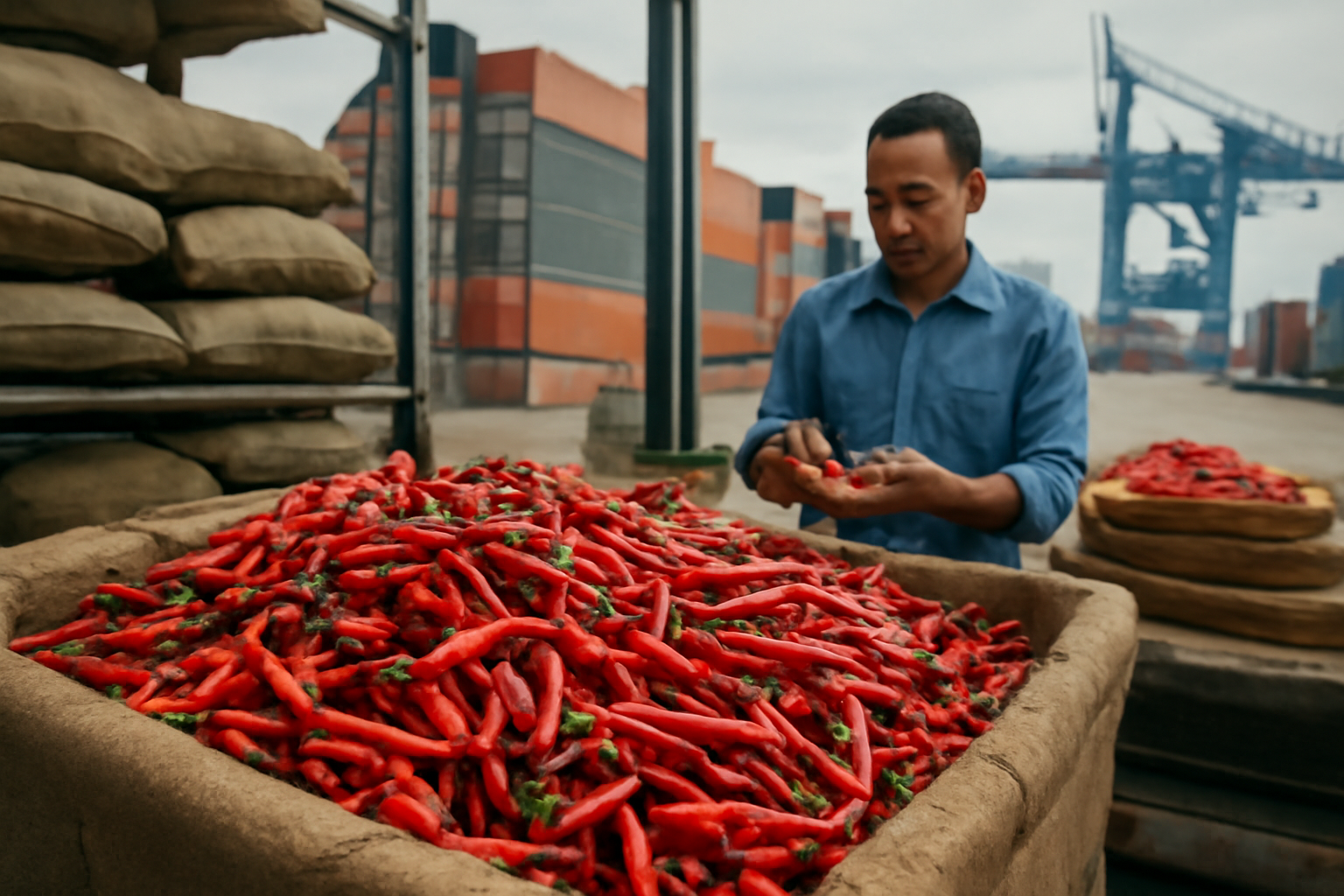
Weather disruption drives a sharp price increase
Chili prices in Indonesia have surged by as much as 103% as the effects of El Niño begin to disrupt supplies, according to Bisnis.com. The increase puts a widely used food commodity at the center of renewed concern over availability, household costs and the movement of produce through domestic distribution channels.
The reported rise reflects a deterioration in supply conditions rather than a demand-led expansion. El Niño has worsened the availability of chili, leaving buyers to compete for tighter volumes. Bisnis.com did not provide a production estimate, a regional breakdown or separate price levels for individual varieties in the material available for this report.
A 103% increase means the market price has more than doubled from its earlier level. For growers able to bring chili to market, the rise can support higher revenue per unit sold. That benefit depends on having sufficient harvestable output, while producers affected by the same weather disruption may have fewer volumes available to capture the higher price.
Consumers move toward alternative varieties
Consumers are responding by switching to other types of chili in an effort to save money, Bisnis.com reports. The substitution shows that buyers remain price-sensitive even within the chili category. Demand can move between varieties when the price gap becomes large enough, shifting pressure from the most affected chili toward available alternatives.
That response matters for traders and retailers as well as households. Sellers must adjust purchasing and stocks when customers change varieties, while price pressure can spread if demand for cheaper alternatives rises faster than their supply. The information provided does not identify which varieties are gaining demand or quantify the volumes being substituted.
Processors and food-service operators also face a direct cost issue when chili prices more than double. Their immediate options are limited to absorbing the increase, passing it through to customers or changing the chili variety used. The consumer shift reported by Bisnis.com indicates that substitution is already taking place at the household level.
Calls grow for government action on distribution
The supply squeeze has prompted calls for the Indonesian government to intervene in distribution. The proposed focus on distribution suggests concern that available chili needs to move more effectively between producing areas and consumer markets. The source material does not specify the form, scale or timing of any requested intervention, and it does not report that a government measure has been adopted.
Distribution action cannot by itself replace output lost to adverse weather, but it can influence where limited supplies are available and how quickly they reach buyers. For producers and traders, any intervention could affect procurement routes and market access. For consumers, the immediate test is whether alternative chili varieties remain available at prices below those showing the 103% surge.