Indonesian cane farmers seek 16.38% increase in government sugar purchase price
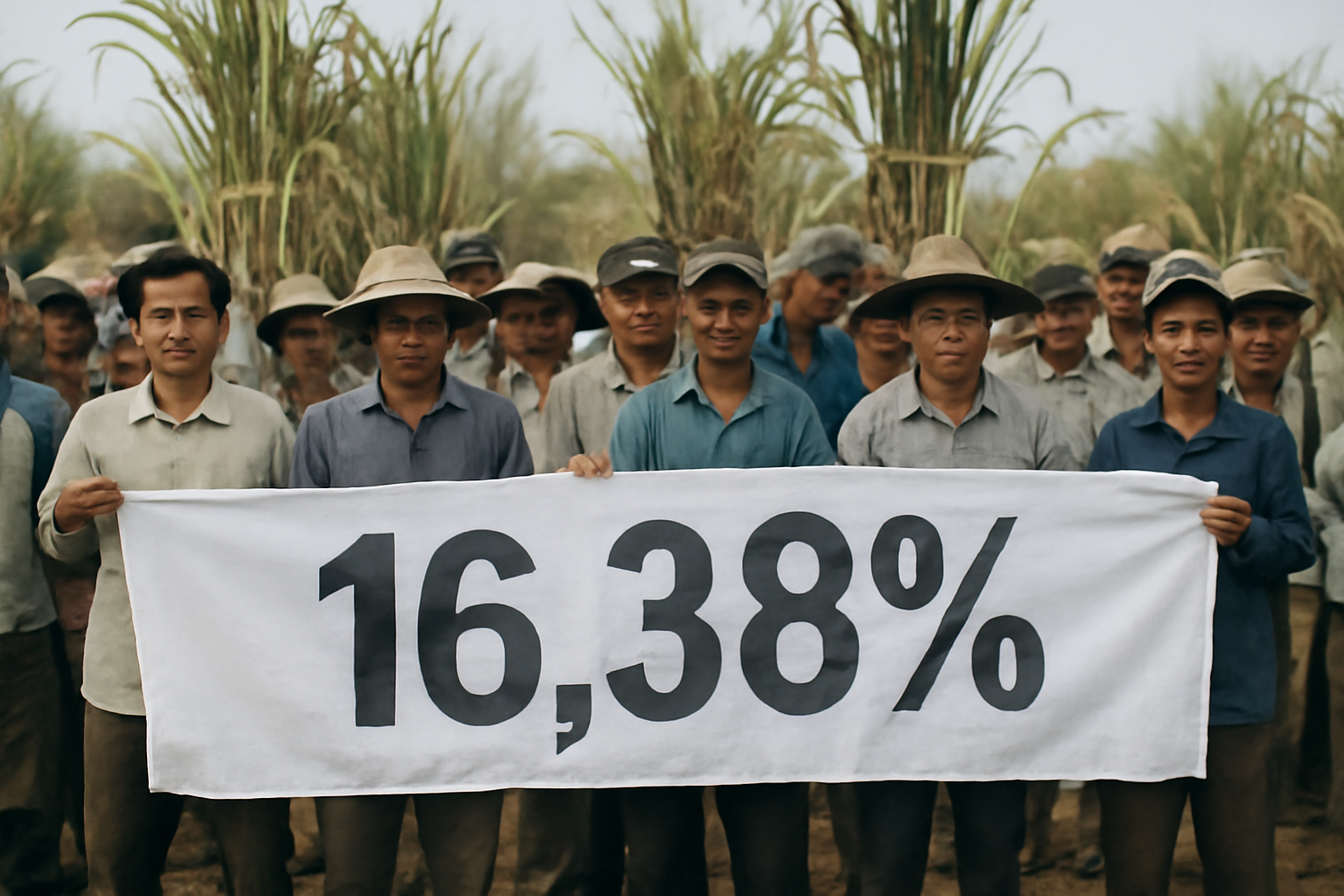
Indonesian cane farmers are asking the government to raise the purchase benchmark for cane sugar by 16.38% to at least Rp16,875 per kilogram. Growers also want the retail price ceiling abolished, arguing for a different approach to price formation.
Growers press for a higher benchmark
Indonesian cane farmers are renewing pressure on the government to raise the official purchase benchmark for cane sugar. According to Investor.id, growers want the Harga Pokok Pembelian or Harga Pembelian Pemerintah increased by 16.38% to at least Rp16,875 per kilogram.
The proposal places a specific minimum value on the farmers’ demand. If adopted, the higher benchmark would directly affect the price reference used in transactions involving growers and buyers of domestically produced sugar. For cane producers, the central issue is whether the regulated price provides sufficient revenue for continued production.
The request also signals that growers do not consider the purchase benchmark in isolation. They are seeking a change at the production end of the market while simultaneously challenging the rule governing prices paid by consumers.
Farmers also target the retail ceiling
Investor.id reports that cane farmers want the government to eliminate the Harga Eceran Tertinggi, Indonesia’s retail price ceiling. The two requests address different parts of the sugar chain: the purchase benchmark concerns the value received around the producer level, while the ceiling limits the final retail price.
Removing the ceiling could give sellers more room to pass higher procurement costs through the supply chain. It could also expose consumers to greater price variation. The effect would depend on how buyers, processors, distributors and retailers set prices after any regulatory change. No replacement mechanism was specified in the material provided.
Keeping the ceiling while raising the purchase benchmark would narrow the room available between regulated procurement and retail prices unless other costs or margins adjusted. Removing it would reduce that constraint, but it would also shift more responsibility for price formation to market participants. The growers’ demands therefore raise a broader policy question: how to improve producer returns without weakening control over consumer sugar prices.
Policy decision will affect the domestic chain
The proposal matters beyond farms because sugar moves through processors, traders, distributors and retailers before reaching consumers. A benchmark of at least Rp16,875 per kilogram would become an important reference in purchasing negotiations if the government accepts the farmers’ request. Processors and buyers would then have to assess how the increase affects their costs and selling prices.
For producers, the 16.38% request is a clear attempt to secure a larger share of the value generated in the domestic sugar market. For downstream companies, the combination of a higher purchase price and the possible removal of the retail ceiling would change both cost calculations and pricing decisions. The government must now weigh the growers’ demand against the consequences for processors, merchants, retailers and consumers.