Indonesia withdraws 25 fortified rice brands after lab tests fail label claims
Indonesian authorities are pulling 25 fortified rice brands from the market after tests at four laboratories found their nutrient content did not match label claims. Trade Minister Budi Santoso says retail supply is secure, citing about 4.6 million tonnes of government rice reserves at Perum Bulog and an extra one million tonnes of stabilisation rice. Police are examining whether the case involves criminal conduct.
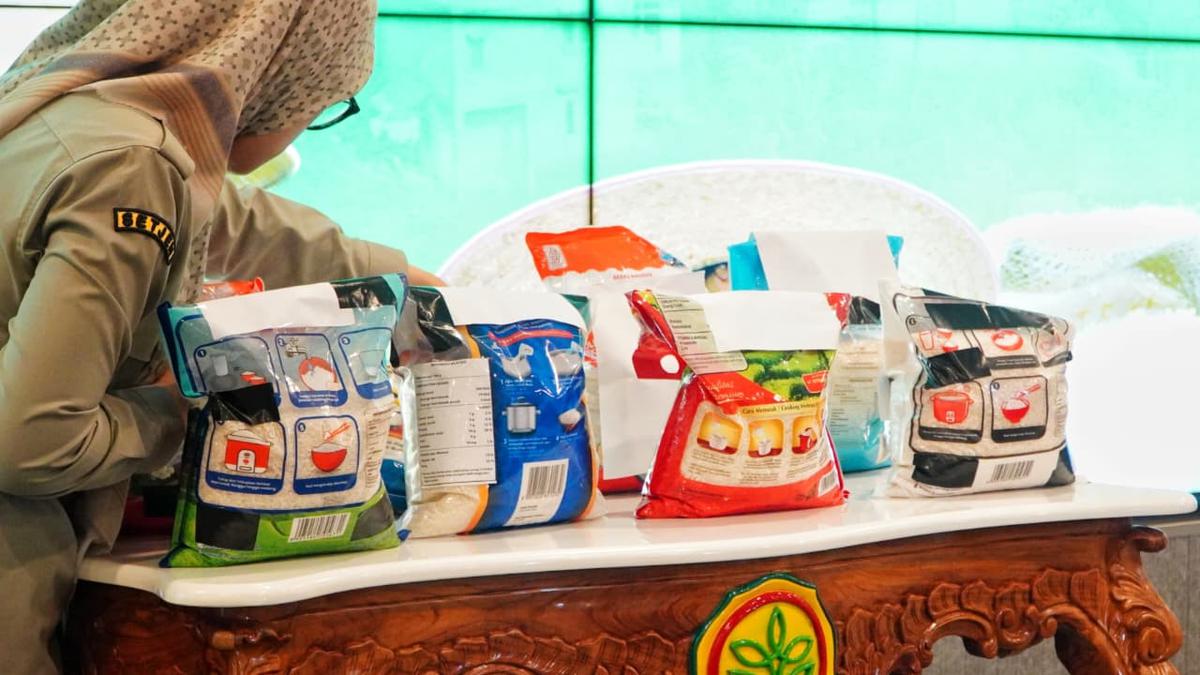
Indonesia is pulling 25 brands of fortified rice from the market after government laboratory tests found their nutrient content fell short of the claims printed on the packaging. Trade Minister Budi Santoso said the recall would not dent availability at retail, pointing to additional volumes already earmarked from state logistics firm Perum Bulog.
Speaking on Thursday, 17 September 2026, in comments carried by the news agency Antara and reported by Liputan6.com, Budi said supply was secure. “No problem, stock is safe, safe,” he said, adding that the government had lined up extra rice through the food supply and price stabilisation programme known by its Indonesian acronym SPHP. “Bulog has already committed to supplying one million tonnes of SPHP rice, at that meeting in the Coordinating Ministry for Food Affairs. So I think there is no problem.”
Twenty-five of 27 brands failed laboratory checks
Agriculture Minister Andi Amran Sulaiman, who also heads the National Food Agency (Bapanas), said the government had tested 27 brands marketed as fortified rice and found that 25 did not meet the nutrient content declared on their labels. Samples were analysed at four laboratories. Distribution permits for the 25 brands will be revoked and the products removed from circulation under existing rules.
Bapanas said all 25 brands have halted production and that stock already on shelves is being recalled. As of the first week of September 2026, 12 brands had completed the withdrawal of their stock, with the remainder still working through the process. The agency also recorded that 11 companies holding the 25 distribution permits had received warning letters from the regional food safety authority, OKKPD, acting in coordination with Bapanas.
Bulog reserves absorb the recall
The Trade Ministry says the volume left by the withdrawn brands will be covered by medium-grade rice released through SPHP and distributed along two channels: modern retail and traditional markets. The ministry will keep coordinating with Bapanas and the Agriculture Ministry to hold product on the shelves while the recall runs, Budi said.
- Government rice reserves (CBP) held by Perum Bulog stood at about 4.6 million tonnes as of 16 September 2026, according to Bapanas.
- SPHP disbursements from March to mid-September 2026 reached roughly 794,000 tonnes.
- An additional one million tonnes of SPHP rice was agreed at a coordination meeting at the Coordinating Ministry for Food Affairs on 7 September 2026.
That extra allocation was set to reinforce supply of medium-grade rice and to keep prices stable. On that basis, the government argues the recall of the fortified rice brands can proceed without disrupting availability for consumers.
Criminal inquiry and oversight gaps
Administrative sanctions are not the only consequence. Law enforcement agencies are examining whether the case involves criminal conduct. The Agriculture Ministry has coordinated with the Directorate of Special Crimes at the national police criminal investigation agency, Bareskrim Polri, and with the police food task force, Satgas Pangan. Prosecution would follow if further examination and scientific testing establish a criminal offence. Budi said the Trade Ministry respects the ongoing legal process.
The case has focused attention on weaknesses in Indonesian food safety supervision. Kontan reported that observers read the recall as evidence of gaps in oversight and are urging the government to tighten control across the chain, from milling and packaging upstream through to retail distribution downstream.