Indonesia's upstream oil and gas push runs into regulatory and capital-competition hurdles
Indonesia's upstream oil and gas potential is not translating automatically into investment, with regulatory certainty, permitting and the lag between discovery and first production cited as the main obstacles. Analysts and operators including bp and ExxonMobil say projects must compete for global capital on returns, risk and execution certainty.
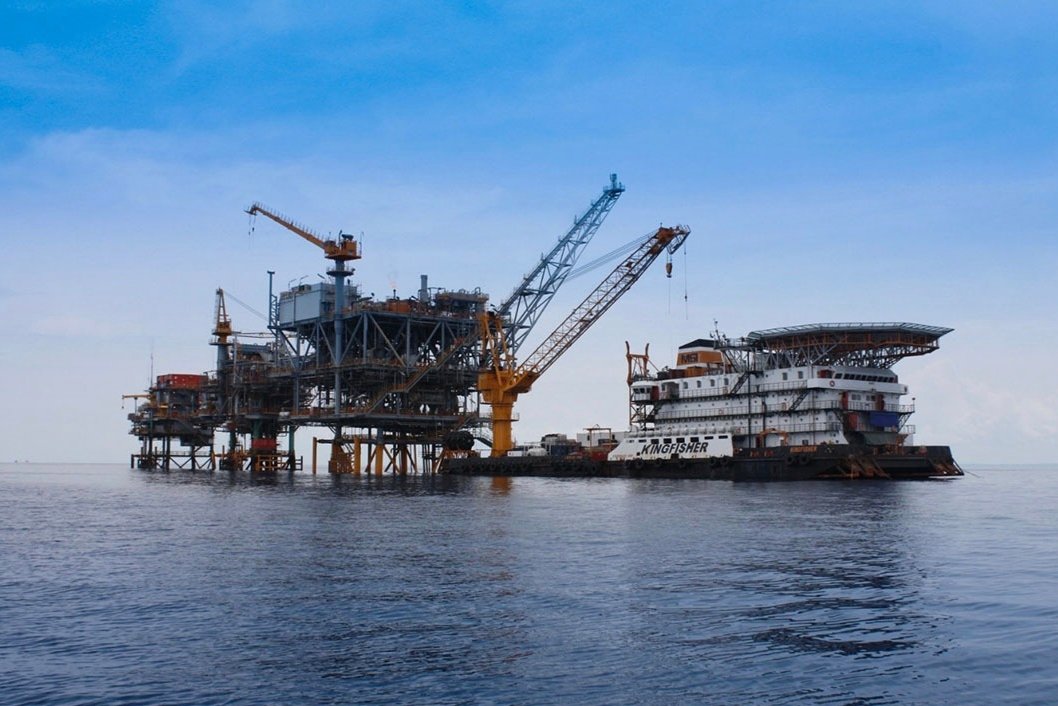
Indonesia's upstream oil and gas sector continues to draw interest from international operators, but reserves in the ground are not enough on their own to secure capital, according to a report by Jejak Kata. Investors want certainty on regulation and permitting, and assurance that a project will produce in line with the economics used to sanction it.
Pri Agung Rakhmanto, an oil and gas analyst at Universitas Trisakti and founder of the ReforMiner Institute, said in remarks on Wednesday, 16 September 2026, that the competitiveness of upstream investment is set by two categories of risk.
Two categories of risk
- Underground risk — the uncertainty involved in finding and developing reserves.
- Above-ground risk — policy, bureaucracy, infrastructure and market certainty.
“From the underground risk side, we are among the top three or four in Asia Pacific,” Pri Agung said. Indonesia's resource potential is large, he added, but it has to be matched by an investment climate able to compete with other countries in the Asia Pacific region. Political certainty, economic direction, regulation and permitting all enter investors' calculations.
International companies including Eni, Petronas and Mubadala still view Indonesia as a potential investment destination, Jejak Kata reported. The challenge is turning that interest into investment decisions and projects that actually move. The question is not only whether oil is found, but how quickly it can be produced.
From discovery to onstream
Pri Agung pointed to the interval between a discovery and the start of production. The longer the lag, the heavier the pressure on project economics and on how investors read the country.
“The longer discovery to onstream takes, the more it sends a signal that is not positive and lowers the economic value of the investor's project,” he said. The government has made a series of fiscal improvements, but competition for global capital does not stop at borders, and Indonesian projects are weighed against alternatives elsewhere. Policy success therefore cannot be measured by the value of investment coming in alone, but also by added reserves, production and lifting.
Operators emphasise partnership
Kathy Wu, bp Regional President Asia Pacific, said strategic partnership with the government is an important element in building investor confidence. Projects in Indonesia, in her view, need to be competitive on rate of return, risk, execution certainty and the realisation of investment results.
Wade Floyd, President of ExxonMobil Indonesia, expressed a similar view, referring to the company's 128 years in Indonesia, including its involvement in developing the Banyu Urip field in the Cepu Block. “Our long history has been built on partnership and collaboration,” Floyd said.
Projects under watch
Strategic projects such as Abadi Masela and North Hub/Geng North–Gehem, together with exploration work by production sharing contractors (KKKS), form part of the upstream development agenda. Those projects still require oversight at every stage so that investment plans do not stop on paper.
The subject was among the topics discussed at FOREK Hulu Migas 2026, a forum that brings together government, industry participants, investors and other stakeholders to address strengthening of the investment ecosystem.
Upstream competitiveness does not rest on a single policy. Contract schemes, fiscal incentives, technology, infrastructure, market certainty and the speed of decision-making are interlinked. The ultimate measure is not the capital committed, but reserves and production added, higher lifting, growing state revenue and wider economic benefit. For government and industry the task is to shorten the distance between potential and production, because in a contest for global capital, reserves still buried underground are not in themselves a reason for investors to wait.