Indonesia’s soybean shortfall keeps tofu and tempeh producers dependent on imports
Low yields, inconsistent quality and limited supplies prevent Indonesian soybeans from meeting the needs of tofu and tempeh manufacturers. Weak incentives for farmers reinforce the sector’s dependence on imported beans.
Domestic beans fall short of industrial needs
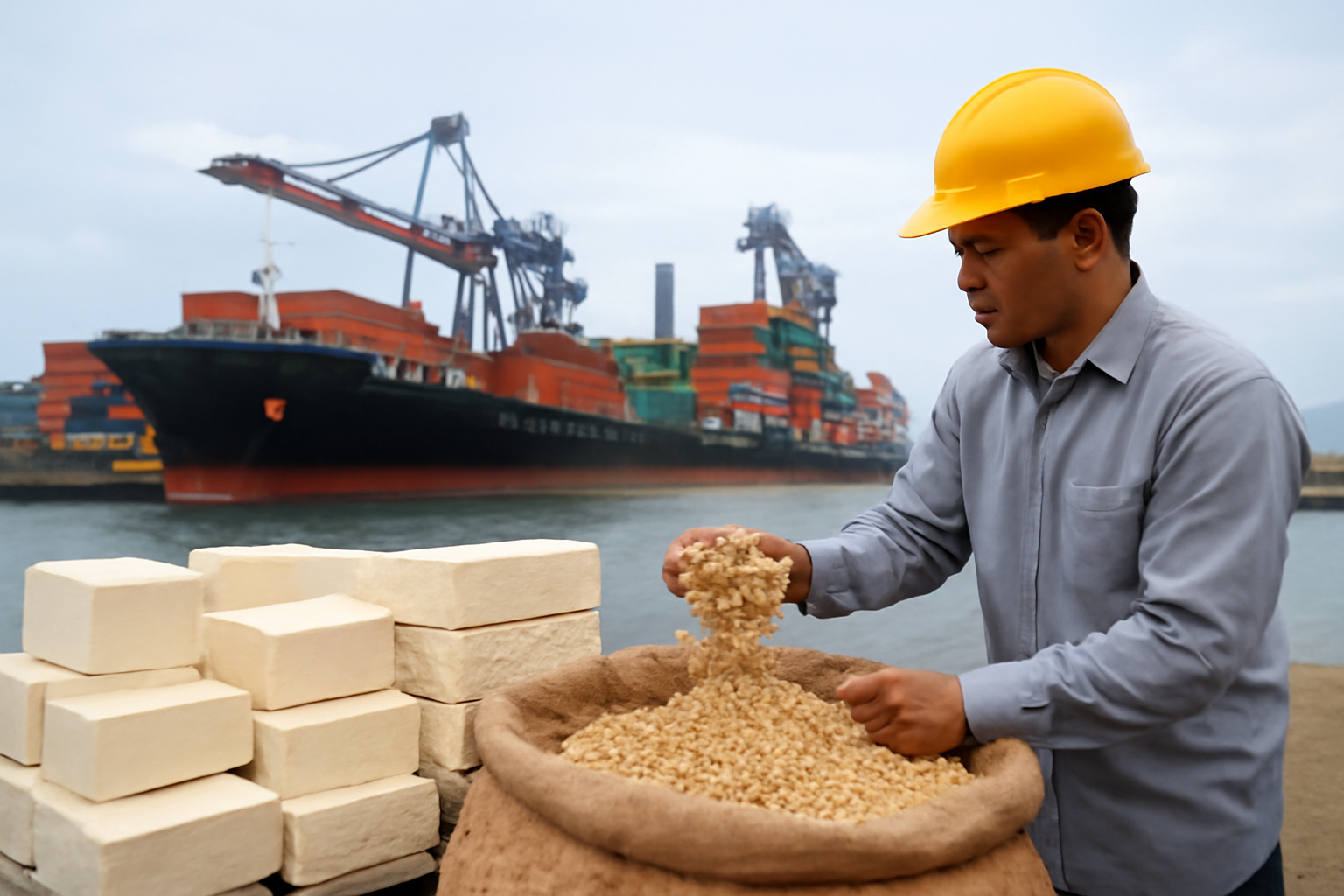
Indonesia’s domestic soybean sector is not yet able to supply the volume and consistent quality required by the country’s tofu and tempeh manufacturers. According to Tirto, local production continues to face low productivity, quality that does not fully match processors’ requirements, limited availability and weak incentives for farmers.
These constraints leave manufacturers dependent on imported soybeans even though Indonesia has its own domestic crop. For processors, the issue is not simply whether local beans are available. Supply must also be sufficiently dependable and suitable for regular production. A shortage or variation in usable raw material can affect procurement decisions across a sector that needs soybeans throughout the year.
Yield and quality problems reinforce each other
Low yields restrict the quantity of domestic soybeans reaching the market. Limited supply, in turn, makes it harder for tofu and tempeh businesses to base their purchasing on local production alone. If the quality of available beans does not consistently meet manufacturers’ needs, the commercially usable portion of that already limited crop becomes smaller.
Consistency matters because processors must plan production, control costs and maintain the characteristics of their finished products. Domestic soybeans do not have to displace imports entirely to gain market share, but they must compete as a reliable industrial input. Without adequate volume and predictable quality, manufacturers have a strong operational reason to retain imported beans in their procurement mix.
Farmer incentives remain the central constraint
Weak incentives for farmers make it difficult to address the shortage at its source. Producers need a reason to allocate land, labour and other inputs to soybeans rather than alternative crops. When those incentives are insufficient, expanding planted area or investing in better productivity and quality becomes less attractive. That limits the domestic sector’s ability to respond to steady demand from tofu and tempeh makers.
The four problems identified by Tirto—productivity, quality, supply and incentives—therefore form a connected chain. Raising output without meeting processors’ specifications would not fully resolve the industry’s procurement problem. Improving quality without increasing supply would also leave manufacturers exposed to shortages. Any effort to reduce import dependence would need to make soybean cultivation more attractive to farmers while ensuring that the resulting crop meets buyers’ requirements.
Until those conditions align, imported soybeans will remain an important source of raw material for Indonesia’s tofu and tempeh sector. Domestic growers still have a potential market, but processors require more than the existence of local production: they need usable beans in sufficient quantities and on dependable terms. The gap between agricultural output and industrial demand is therefore both a farm-level and a supply-chain challenge.