Indonesia Links Soybean Import Dependence to Seed Competitiveness
Indonesia’s reliance on imported soybeans is tied partly to the declining competitiveness of domestic seed varieties, according to remarks by Zulhas reported by finance.detik.com. He said the gap emerged as developed countries adopted genetic engineering, leaving Indonesian production facing higher costs.
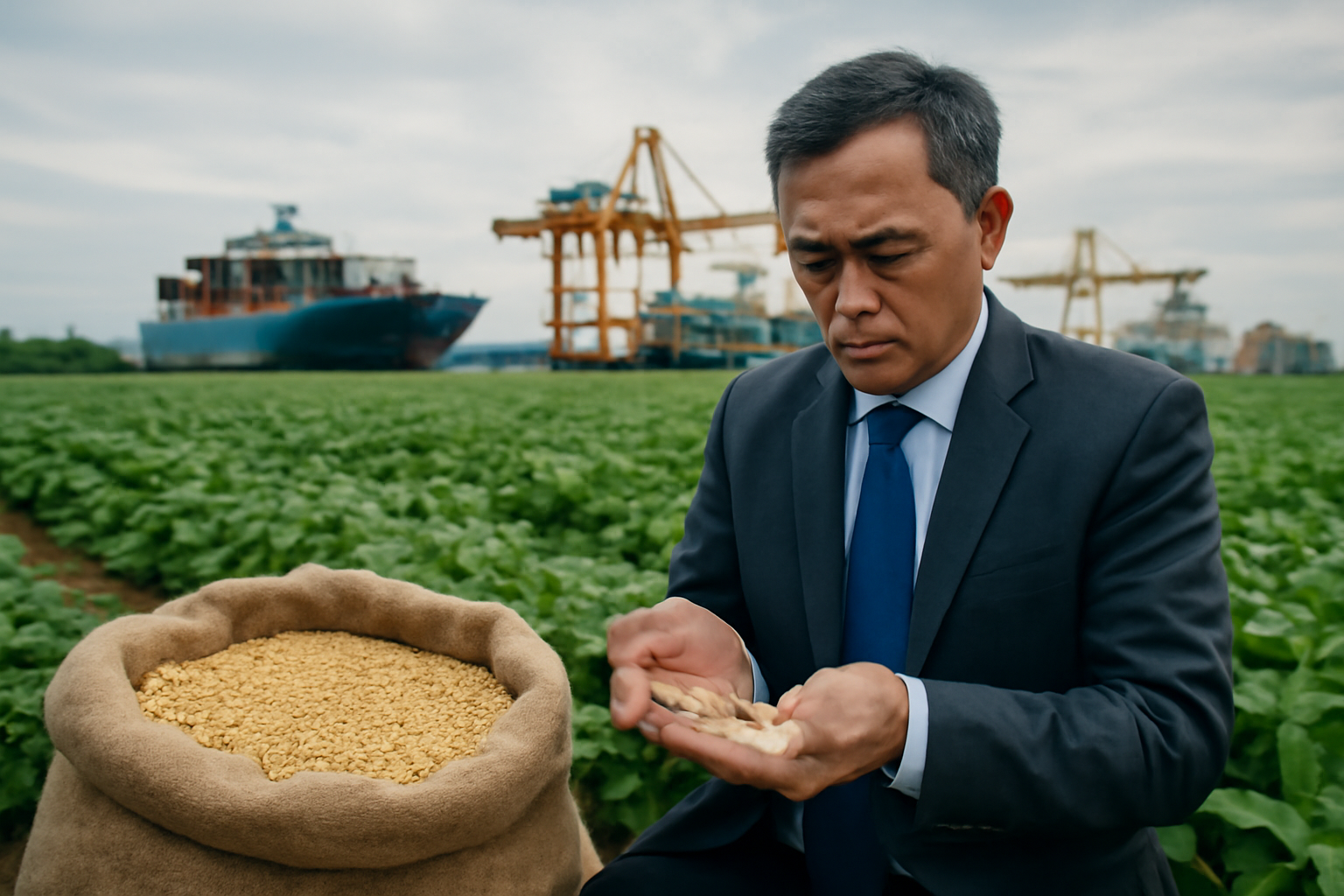
Seed gap cited as a cause of import reliance
Indonesia’s continued dependence on imported soybeans reflects a widening competitiveness gap between domestic seed varieties and crops developed abroad, according to remarks by Zulhas reported by finance.detik.com. He said Indonesian soybean seeds began to lose ground when developed countries started using genetic engineering.
The explanation places agricultural technology and farm-level production economics at the center of Indonesia’s soybean supply problem. When seed performance lags behind competing varieties, domestic growers can face higher production costs, weakening the commercial case for local cultivation relative to imported supplies.
The report did not provide figures for Indonesia’s soybean output, imports, yields or production costs. It also did not identify the foreign producing countries or genetically engineered varieties used as the comparison. The comments nevertheless frame import dependence as more than a short-term trade issue: they point to a structural difference in seed technology and production efficiency.
Production costs shape sourcing decisions
For processors and other industrial soybean buyers, the competitiveness of domestic supply depends on more than the availability of farmland. Seed quality can affect yields and the amount of output obtained from labor, land and other farm inputs. If local varieties generate less competitive production economics, buyers are likely to remain reliant on imported soybeans where those supplies offer a more workable combination of cost and availability.
This dynamic can be difficult to reverse quickly. Expanding domestic planting without addressing the underlying seed disadvantage may increase cultivated area without delivering enough improvement in unit costs. Conversely, stronger seed performance could improve farmers’ incentives to grow soybeans and make local sourcing more attractive to processors.
Zulhas’s assessment also highlights the role of genetically engineered crops in international agricultural competition. According to the account published by finance.detik.com, their development in advanced economies marked the point at which Indonesian soybean seeds began falling behind. The source material does not specify whether Indonesia is considering regulatory changes, new breeding programs, seed imports or other measures in response.
Import dependence remains a structural challenge
For Indonesia’s soybean value chain, the central question is whether domestic production can become cost-competitive enough to displace part of the imported supply. The answer will depend on how the seed issue is addressed and whether improvements reach farmers at a commercially meaningful scale.
Importers may retain an important position while the productivity gap persists. Processors benefit from dependable access to raw material, while domestic producers bear the pressure created by crops grown with more competitive technology abroad. Any policy that changes access to seed technology could therefore affect farmers, processors and importers differently.
The limited details reported so far leave several points unresolved. No timetable, investment plan or production target was included, and no specific policy intervention was described. Market participants will need to watch whether the government’s diagnosis leads to concrete measures involving crop research, seed distribution, regulation or farmer support.
Until such steps are defined, Zulhas’s comments indicate that Indonesia views soybean imports partly as the outcome of a domestic productivity and cost problem. That distinction matters for industry planning because trade restrictions alone would not remove the seed-performance gap identified by the government.