Indonesia Seeks Further Coffee Export Growth in Egypt as Market Share Reaches 41.45%
Indonesia is seeking to expand coffee exports to Egypt, where its products account for 41.45% of the market. A recent delivery of 39.6 tonnes of robusta beans followed a deal reached at Trade Expo Indonesia in October 2024.
Egypt remains a leading market
Indonesia is targeting further growth in coffee shipments to Egypt, already one of the largest international destinations for its coffee products. Indonesian Ambassador to Egypt Lutfi Rauf said the market’s demand for Indonesian coffee continues to rise each year, creating room for exporters to expand sales and deepen relationships with Egyptian buyers.
Egypt’s population of 110 million makes it a priority market for Indonesian suppliers, Rauf said in a written statement from the Indonesian Embassy in Cairo reported by ANTARA. The scale of the consumer market, combined with established commercial links, gives Indonesian producers and traders a substantial base from which to pursue additional business.
Indonesia currently holds 41.45% of Egypt’s coffee market, according to the embassy’s trade attaché, M. Syahran Bhakti. That is the largest share among supplying countries. Vietnam, Brazil, India and Italy follow Indonesia in the Egyptian market, making the country an important competitive arena for major coffee origins and processors.
Robusta delivery follows trade fair deal
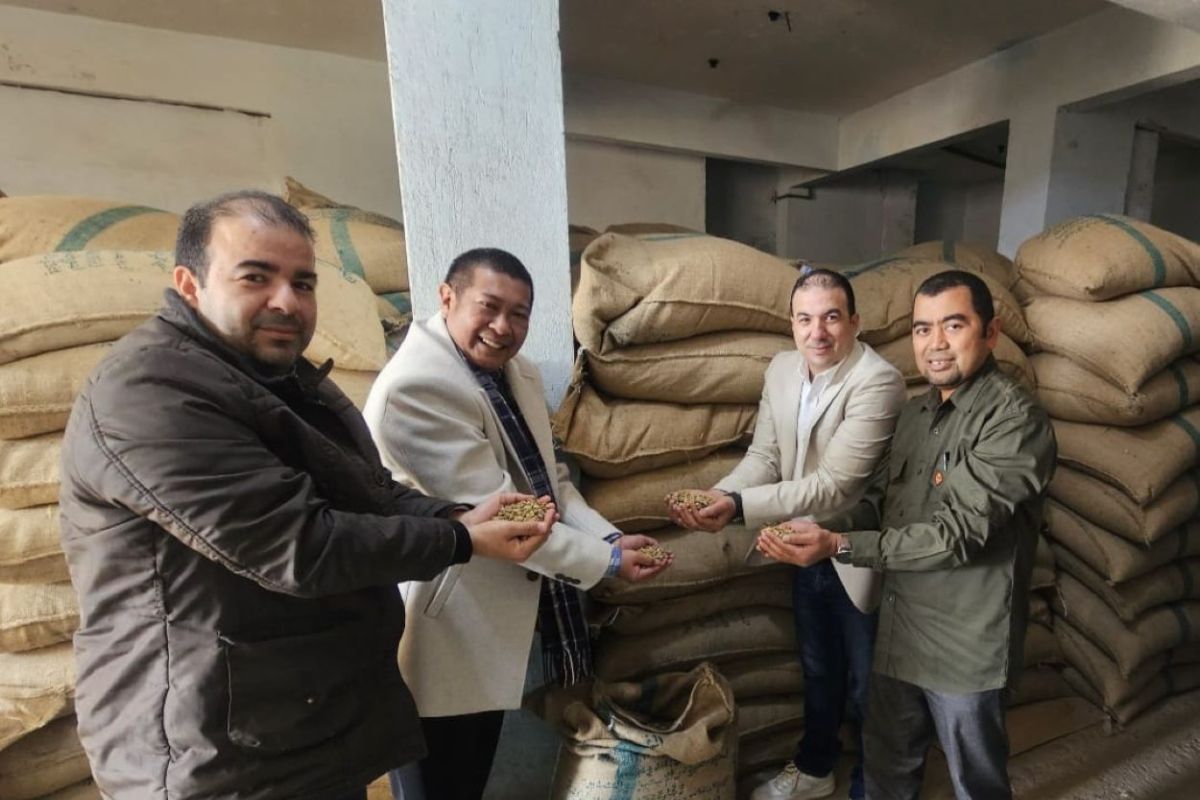
On January 23, Syahran inspected the receipt of 39.6 tonnes of robusta coffee beans produced by PT Asal Jaya of Malang, East Java. The shipment was delivered to the warehouse of food import-export company Fayoumi in Fashn, Beni Suef province. The transaction provides a concrete example of Indonesian robusta moving through an established Egyptian buyer and distribution channel.
According to Syahran, the shipment followed a transaction concluded during the 39th Trade Expo Indonesia in October 2024. The event also generated export transactions with Egyptian buyers for palm oil, spices and paper products, indicating that the commercial relationship extends beyond coffee into several Indonesian commodity and manufactured-product categories.
Fayoumi chief executive Mahmoud Fayoumi said the company was committed to increasing imports of Indonesian products. Its plans cover robusta coffee beans, canned tuna and sardines, and cooking oil, with a combined value exceeding $3 million, equivalent to Rp48.5 billion. The portfolio may give Indonesian suppliers opportunities to consolidate deliveries across several food categories rather than treating coffee as an isolated trade flow.
Quality and delivery will shape expansion
Rauf urged Indonesian coffee businesses to maintain and strengthen partnerships with Egyptian companies as demand grows. He identified compliance with buyers’ quality specifications and delivery according to agreed schedules as essential to preserving trust. For exporters, Egypt’s 41.45% market share is a strong position, but it also raises the commercial cost of inconsistent quality or delayed shipments when competing suppliers are already active.
The 39.6-tonne robusta delivery shows how agreements made at an Indonesian trade event can translate into physical shipments to an inland Egyptian warehouse. Further growth will depend on repeat orders, reliable logistics and suppliers’ ability to match the specifications of local importers. Egypt’s large population and Fayoumi’s planned purchases of more than $3 million provide a measurable opportunity, while competition from Vietnam, Brazil, India and Italy gives Indonesian producers an incentive to protect service standards as they pursue additional volume.