Indonesia Says Rice Supply Is Secure Through June 2027 Despite Extreme El Nino Drought Risk
Agriculture Minister and Bapanas head Andi Amran Sulaiman said on 15 September 2026 that Indonesia's rice supply is sufficient through June 2027 despite the threat of drought from an extreme El Nino. He put total national availability at about 25-26 million tonnes against monthly consumption of 2.5-2.6 million tonnes, including roughly 5 million tonnes of government reserves held by Perum Bulog.
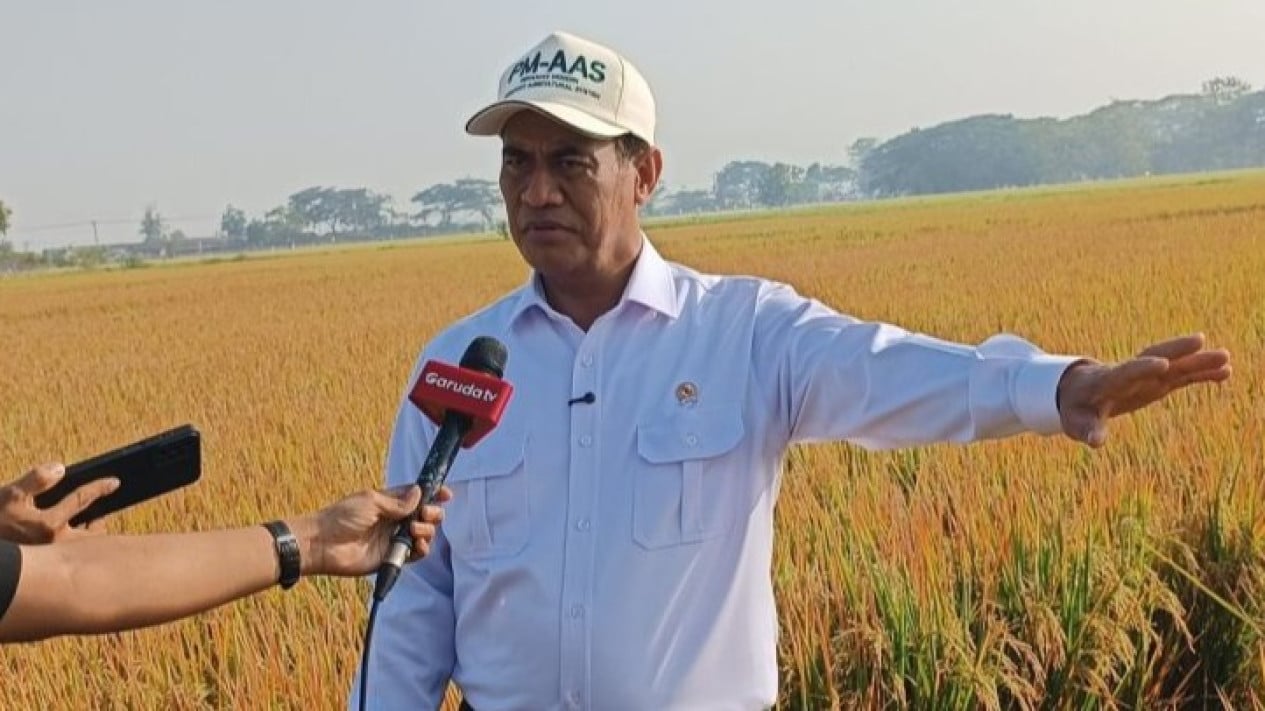
Indonesia's rice supply will remain sufficient through June 2027 even under the threat of drought from an extreme El Nino, Minister of Agriculture and head of the National Food Agency (Bapanas) Andi Amran Sulaiman said in Jakarta on Tuesday, 15 September 2026. The statement was made during a presentation of inspection results and findings on fortified rice at the Ministry of Agriculture's head office, as reported by viva.co.id.
"Today we want to convey several things. The first is that our food, thank God, is secure, particularly rice, amid global shocks, a food crisis, an energy crisis and a water crisis," Amran said.
The numbers behind the assurance
Amran put output from the standing crop — paddy already in the ground and approaching harvest — at about 10 million tonnes of rice, from a planted area of 3.8 million hectares. Government rice reserves (CBP) managed by state logistics company Perum Bulog, which are used to stabilise food prices on the market, stand at around 5 million tonnes. Together with other supply, the minister said total national rice availability reaches roughly 25-26 million tonnes.
Against that, public consumption runs at 2.5 to 2.6 million tonnes a month, which the minister said leaves national stocks adequate for the months ahead. "Our requirement per month is 2.5 to 2.6 million tonnes. What does that mean? We have enough rice for the next 10 months. Say we count from this month, 9 (September 2026), through to month six (June 2027) next year, our rice stock is secure. So it is very secure," Amran said. viva.co.id also reported the minister citing rice requirements from the hotel, restaurant and cafe segment at more than 10 million tonnes, which he described as reinforcing national supply availability.
Infrastructure as the drought defence
Amran said the government has taken anticipatory steps on the instruction of President Prabowo Subianto, centred on building agricultural infrastructure to protect national rice output. The measures he listed were:
- construction of irrigation networks;
- embung, or small water-catchment reservoirs;
- pumped irrigation systems;
- optimisation of existing paddy fields and swampland;
- the cetak sawah programme of opening new paddy fields.
The stated objective is to raise food production capacity, which in a dry cycle means holding irrigated area and yields rather than adding new output. No budget figures, project counts or completion dates for the programmes were given in the report.
Exports to Malaysia, aid to Palestine
Beyond covering domestic requirements, Indonesia has exported rice to Malaysia and channelled 10,000 tonnes of rice as assistance to Palestine, according to viva.co.id. The report did not specify volumes, prices or timing for the shipments to Malaysia, and gave no figures for rice imports.
What the published figures do not show
The supply breakdown as reported does not fully reconcile. The two components stated explicitly — about 10 million tonnes from the standing crop and about 5 million tonnes of government reserves — account for roughly 15 million tonnes of the 25-26 million tonne total, and the remainder is not itemised. The figure of more than 10 million tonnes for the hotel, restaurant and cafe segment is presented as a requirement rather than as available stock.
The assurance also carries no quantified drought scenario. Neither rainfall projections, a harvest calendar, nor an estimate of how much of the 3.8 million hectares now planted is exposed to water shortage was attached to the statement. For processors, traders and importers, that leaves the planting cycle entering the ground in late 2026 — and harvested in the first half of 2027 — as the variable that determines whether the 5 million tonnes at Bulog is a buffer or the primary source of supply.