Indonesia’s rice production cost is three times that of Thailand and Vietnam, minister says
Indonesia spends about Rp12,000 to produce one kilogram of rice, compared with roughly Rp3,800 in Thailand and Vietnam, Food Coordinating Minister Zulkifli Hasan said. The cost gap poses a challenge to the competitiveness of Indonesian farmers and the country’s food self-sufficiency policy.
Minister highlights a wide regional cost gap
Indonesia’s rice production cost is about three times that reported for Thailand and Vietnam, creating a major obstacle to agricultural competitiveness and national food self-sufficiency, according to Food Coordinating Minister Zulkifli Hasan.
Zulkifli, widely known as Zulhas, said producing one kilogram of rice in Indonesia costs approximately Rp12,000. He put the corresponding cost in Thailand and Vietnam at about Rp3,800 per kilogram. He presented the comparison at the launch of a book on Indonesian food at the Jakarta Convention Center on September 4, 2026, iNews.id reported.
The figures imply a gap of Rp8,200 per kilogram between Indonesia and the two regional competitors. On the minister’s comparison, Indonesian production is slightly more than three times as expensive. Zulhas warned that Indonesia would continue to fall behind if its production costs remained substantially higher.
Competitiveness pressure extends beyond the farm
The cost difference matters throughout the rice supply chain. Farmers operating with a higher production base have less room to absorb weaker prices, while processors and distributors face greater difficulty offering domestically produced rice on competitive terms. For importers and traders, the comparison underlines the potential price advantage of supplies originating in Thailand and Vietnam.
The source report did not provide a methodology for the three national cost estimates or specify whether they were calculated at farm, milling or fully processed-rice level. It also did not break down the contribution of seed, fertilizer, labor, land, irrigation, energy, milling or logistics. The figures should therefore be treated as an official comparison rather than a harmonized cost study.
Even with that limitation, the scale of the stated gap gives policymakers a clear benchmark. Closing an Rp8,200-per-kilogram difference would require attention to the cost components that determine productivity and the final cost of marketable rice. Without such improvements, policies designed to support domestic output may have to carry more of the burden of protecting farmers from lower-cost regional competition.
Food availability is only part of the policy question
Zulhas said Indonesia’s food challenges should not be assessed solely by whether products are available in the market. Almost every food commodity, he argued, involves strategic questions connected to the economy and national resilience. For rice, that means policy must consider not only supply volumes but also whether domestic production can remain economically viable.
The comparison is particularly relevant because Thailand and Vietnam are major regional reference points for the rice industry. A large cost disadvantage can shape decisions across planting, processing, procurement and trade, even when the government’s primary objective is self-sufficiency rather than dependence on foreign supply.
Policy choices depend on better cost detail
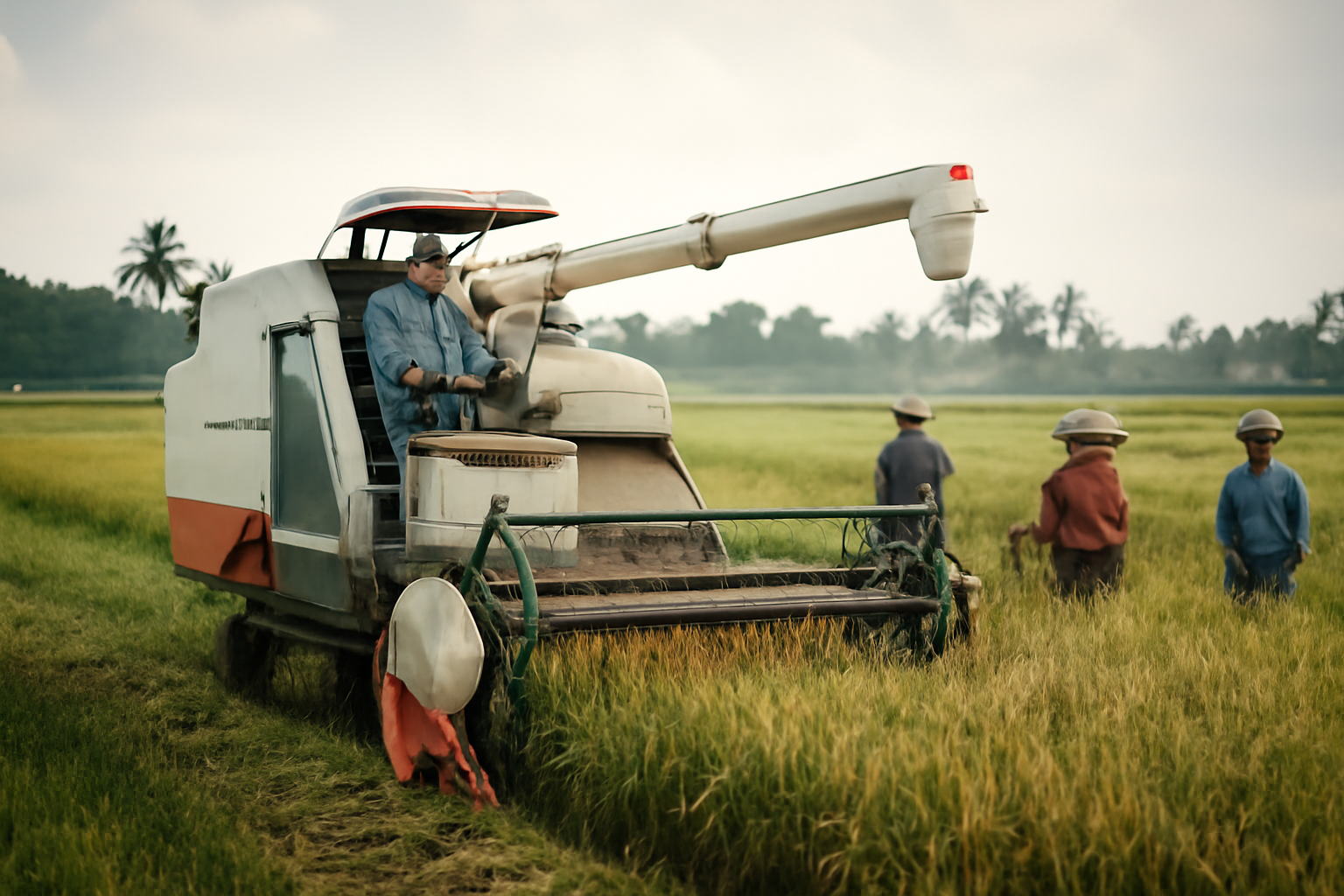
The figures identify the size of the challenge but not its causes. For producers and investors, the next important question is which parts of Indonesia’s production system account for the difference. Detailed and comparable data would help determine whether the largest opportunities lie in farm productivity, input use, mechanization, milling efficiency or distribution.
Until that evidence is available, the Rp12,000 and Rp3,800 estimates provide a stark policy signal rather than a complete prescription. Indonesia’s rice strategy must reconcile food security with production economics. If the domestic cost base remains far above regional levels, farmers, processors and public authorities will continue to face difficult choices over prices, support measures and exposure to imported rice.