Indonesia rice prices rise across milling, wholesale and retail as Bulog readies 1 million tonnes of SPHP rice
Rice prices in Indonesia rose simultaneously at the milling, wholesale and retail levels in September 2026, with premium grades posting the steepest gains. State logistics agency Bulog is preparing an additional 1 million tonnes of subsidised SPHP rice, distributed without an order quota cap through Agrinas Pangan, to counter El Nino, the lean season and KDKMP demand.
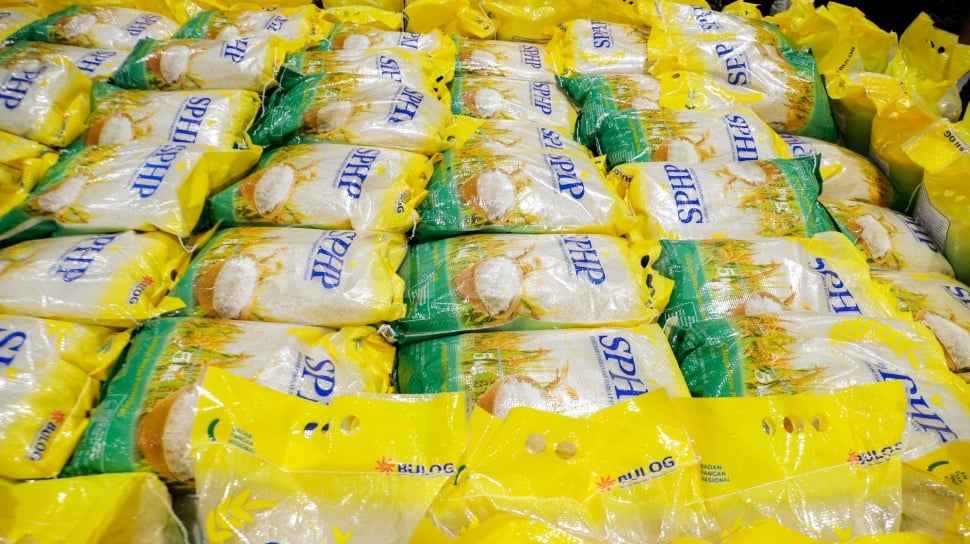
Rice prices in Indonesia rose across the entire distribution chain in September 2026, moving up at the milling, wholesale and retail levels at the same time, according to data from the national statistics agency BPS reported by Investor.id and Bisnis.com. The increase was broad-based rather than confined to a single segment, and the sharpest gains were recorded in premium rice, Bisnis.com reported.
The simultaneous movement across price stages is significant for the Indonesian market because it points to cost pressure originating upstream, at the mill gate, rather than to margin-taking at a single point in the chain. When mill-level prices rise in step with wholesale and retail quotations, traders and processors have limited room to absorb the increase internally, and the pass-through to consumers tends to be faster.
Rice inflation continues into the lean season
Bisnis.com described the September 2026 move as a continuation of rice inflation rather than a one-off adjustment, with prices climbing evenly from the mills through to retail counters. Premium rice, the grade most exposed to discretionary consumer demand and to quality-driven procurement by modern retail, led the increase.
The timing matters. Indonesia is heading into the paceklik, the lean period between harvests when domestic supply from the main crop thins out and mills draw down stocks accumulated earlier in the year. Price firmness at the mill gate during this window is a standard seasonal feature of the Indonesian rice market, but a uniform rise across all three measured stages indicates the pressure is being transmitted rather than contained.
Bulog prepares a 1-million-tonne SPHP tranche
State logistics agency Bulog has prepared an additional 1 million tonnes of rice under the SPHP programme, the government's price stabilisation and supply scheme, according to Suara.com. The agency said the stock will be released to the market without a cap on order quotas, with distribution running through Agrinas Pangan.
The uncapped structure is the operationally distinctive element. Under quota-limited releases, distributors and retailers are allocated fixed volumes, which can create queues and secondary pricing when demand exceeds the allocation. Removing the order ceiling allows buyers to take as much SPHP rice as they require, which is intended to break the scarcity expectation that typically drives speculative stockholding during price rallies.
Suara.com reported that the tranche is intended to address three overlapping pressures: El Nino conditions, the paceklik lean season, and demand associated with KDKMP. Bulog's stated position is that SPHP rice will not become scarce.
What the release means for the market
For Indonesian millers and traders, an uncapped state release changes the calculation around holding inventory. The expectation of continued scarcity is what supports a price rally through the lean season; a visible, unlimited subsidised supply at a reference price undercuts that expectation directly. For rice to work as a stabilisation tool, however, the volume has to reach the market at the pace the programme implies, and distribution through a single channel, in this case Agrinas Pangan, concentrates the execution risk.
- Prices rose at milling, wholesale and retail levels simultaneously in September 2026, per BPS data cited by Investor.id and Bisnis.com.
- Premium rice posted the largest increase, according to Bisnis.com.
- Bulog has prepared an additional 1 million tonnes of SPHP rice, Suara.com reported.
- No order quota cap applies to the release; distribution runs through Agrinas Pangan.
- The measure targets El Nino effects, the paceklik lean season and KDKMP-related demand.
Indonesia is one of the world's largest rice consumers, and its domestic balance has a direct bearing on regional trade flows. When the domestic price level rises and state stocks are deployed to contain it, the size of the remaining buffer determines whether import purchases follow. The 1-million-tonne SPHP tranche is a release from existing operational stock rather than a procurement announcement, and the sources cited do not specify import plans.
For processors and modern retail chains, the premium-grade concentration of the price rise is the more immediate issue. Premium rice carries the thinnest substitution cushion: buyers who refuse to pay up move down to medium grades, compressing premium volumes while medium-grade demand tightens further. SPHP rice, as a subsidised medium-grade product, is positioned precisely at that substitution point.