Indonesia to release three months of rice aid in one August payout worth Rp17.52 trillion
Indonesia's National Food Agency will disburse July, August and September 2026 rice assistance in a single August payout after the Finance Ministry approved Rp17.52 trillion for 33.24 million families. About 997,200 tonnes of rice will be distributed, drawn from a government reserve of 5.25 million tonnes, in a bid to cool rice prices and inflation.
Three months of rice aid in a single disbursement
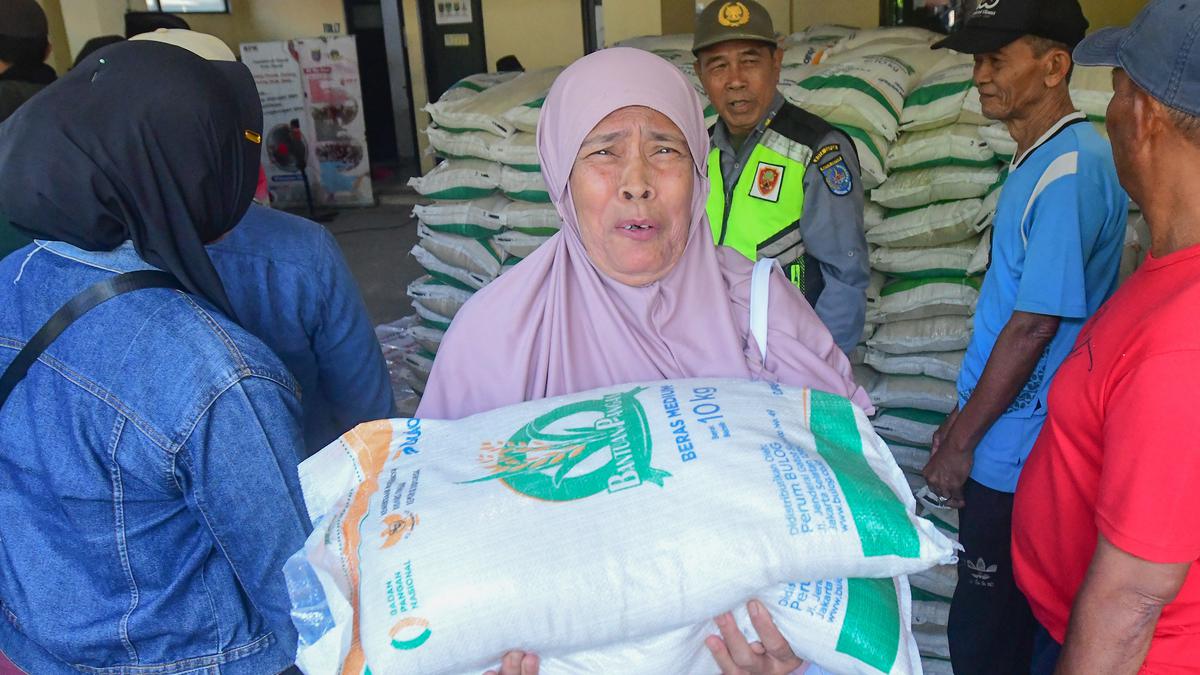
Indonesia's National Food Agency (Bapanas) will release three months of staple-food rice assistance in one disbursement in August, after the Ministry of Finance approved a budget of Rp17.52 trillion for the program. The second phase of the scheme covers 33.24 million beneficiary families (KPM) and bundles the July, August and September 2026 allocations into a single "one-shot" payout, liputan6.com reported.
The Deputy for Food Availability and Stabilization at Bapanas, I Gusti Ketut Astawa, said the original plan was to disburse one month first, but the Finance Ministry created room to release all three months at once. "The approval covers three months. The budget is Rp17.52 trillion," he told Antara on 29 July 2026. The additional spending request will be processed into a formal budget allocation letter.
Volumes and reserves
In the August rollout, roughly 997,200 tonnes of rice — close to 1 million tonnes — will be distributed. Each beneficiary family receives 10 kilograms per month, or 30 kilograms for the full three-month tranche. Bapanas said distribution readiness is secure: the government's rice reserve (CBP) held in Bulog warehouses currently stands at 5.25 million tonnes. State logistics agency Perum Bulog will handle delivery under instruction from Bapanas head Andi Amran Sulaiman.
The program, ordered directly by President Prabowo Subianto, is wider in 2026 than a year earlier. In 2025 the aid ran for four monthly allocations (June-July and October-November); in 2026 it will run for at least five monthly allocations, according to liputan6.com.
Inflation backdrop
The front-loaded disbursement is framed as an inflation-control tool. The decision followed an inflation-control meeting at the Ministry of Home Affairs on 27 July 2026. Officials argue that putting close to 1 million tonnes directly into consumers' hands will cut household rice purchases in markets and ease price pressure. "Imagine 33 million families times three months — nearly 1 million tonnes of rice received directly by consumers," Astawa said, adding that it should slightly brake inflation.
Price data remain mixed. Statistics Indonesia (BPS) reported that the rice Price Development Index (IPH) was still rising through the fourth week of July, though the number of regencies and cities recording a decline widened to 43, up from 40 and 41 in previous weeks. On the inflation side, annual rice inflation stood at 3.98 percent in June 2026, easing 0.57 percentage points from 4.55 percent in May. Month-on-month rice inflation was around 0.45 percent through June, holding below the 1 percent threshold.
What it means for supply
The scale of the August release — nearly a fifth of the 5.25-million-tonne reserve in a single month — signals heavy reliance on state stocks to steer domestic prices. With the drawdown concentrated in one disbursement, replenishment through procurement or imports becomes the variable to watch through the rest of 2026.
The coverage expansion adds to that pressure. The 2026 scheme runs for at least five monthly allocations against four in 2025, a broader commitment that raises the total tonnage the state must source. How quickly Bulog rebuilds the reserve — and whether it leans on the domestic harvest or turns to imports — will shape Indonesia's rice balance into next year.