Indonesia Pushes Goat-Milk Processing to Expand Demand and Farmer Income
Indonesia’s Food Coordinating Ministry is promoting downstream goat-milk processing to broaden demand and raise the value captured by small farmers. National output remains at about 20,000–25,000 tonnes a year, leaving processors to address limited scale, relatively high prices and uneven consumer acceptance.
Government targets a larger market for goat milk
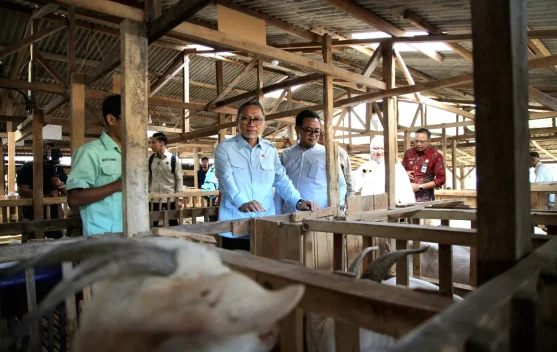
Indonesia’s Food Coordinating Ministry is encouraging investment and coordination across the goat-milk supply chain, from farm production to processing, consumer education and marketing. Coordinating Minister for Food Zulkifli Hasan presented the policy during a discussion with dairy-goat farmers in Banyumas on 1 September 2026, according to RRI. In a statement reported by the broadcaster on 3 September, he said goats could provide both animal protein and economic opportunities for small farmers, while stronger processing and market access were needed for goat meat and milk.
The initiative addresses a large but fragmented farming base. Data cited by RRI from Statistics Indonesia and the Directorate General of Livestock and Animal Health show that more than 3 million households raise goats. Important producing areas include Central Java, East Java, West Nusa Tenggara and Aceh. Indonesia has a national goat population of more than 20 million animals, offering a substantial upstream base if productivity, breeding, feed quality and animal health improve.
Milk output remains small relative to the wider dairy sector
Indonesia produces more than 160,000 tonnes of goat meat annually, while goat-milk production is estimated at only 20,000–25,000 tonnes a year. That represents less than 1% of national milk production. The limited volume restricts economies of scale and leaves goat milk relatively more expensive than other dairy products, creating a commercial barrier for processors seeking to move beyond specialist consumers.
Demand is nevertheless growing in production centres and among urban consumers, RRI reported. The ministry believes modern processing can improve acceptance, including by addressing perceptions about goat milk’s smell. Consumer education is therefore part of the programme. Flavoured products, including chocolate and strawberry milk, could make the category accessible to a broader market without relying solely on demand for plain fresh milk.
Processors test higher-value products and national distribution
Banyumas-based Meta Nusa Dharma provides one example through its Mendha Milk brand. The company sells directly and through e-commerce, using delivery services to reach customers in different parts of Indonesia. This model gives relatively small processors a route beyond local production areas, although reliable cold-chain logistics, consistent supply and product standards remain important for expanding distribution.
The ministry sees further potential in cheese, milk powder, yoghurt and other processed dairy products. These formats could diversify demand and, in the case of powder and other longer-life products, reduce some of the logistical constraints associated with fresh milk. However, commercial expansion depends on farms supplying sufficient volumes of consistent-quality raw milk. The government’s proposed measures include better feed and breeding stock, stronger animal-health management, processing technology, product standardisation, brand development and wider market access. If these measures raise yields and improve coordination between farmers and processors, more of the final product’s value could remain in rural economies. The immediate challenge is to connect a farming population of more than 3 million households with processing operations large and reliable enough to lower costs, maintain quality and build recurring demand.