Indonesia’s processed food exports lag Thailand, Vietnam and Singapore
Indonesia exported $6.25 billion of processed food in 2025, ranking fourth among the ASEAN countries cited by the Trade Ministry. The government plans to strengthen export support and connect producers with buyers through its representatives in 33 countries.
Indonesia ranks fourth among cited ASEAN exporters
Indonesia’s processed food exports reached $6.25 billion in 2025, leaving the country behind Thailand, Vietnam and Singapore, according to Trade Ministry data reported by Kumparan. Thailand led the comparison with exports of $17.69 billion, followed by Vietnam at $8.89 billion and Singapore at $6.5 billion.
The figures place Indonesia fourth among the ASEAN exporters cited by the ministry. Its shipments were $11.44 billion below Thailand’s and $2.64 billion below Vietnam’s. The gap with Singapore was narrower at $250 million, showing that a relatively modest increase would move Indonesia higher in the regional ranking, while catching the two largest competitors would require substantially greater export capacity and market penetration.
Deputy Trade Minister Dyah Roro Esti described Indonesia’s position as strategically important because the country remains among ASEAN’s top five processed food exporters. However, the ministry wants companies to improve product quality and compete more actively overseas instead of relying mainly on domestic demand.
Large domestic market offers scale but can limit export focus
Indonesia’s population of about 290 million gives food and beverage producers a large home market. That demand can support production scale, product development and investment, but it also allows businesses to grow without immediately building the certifications, distribution channels and buyer relationships required abroad.
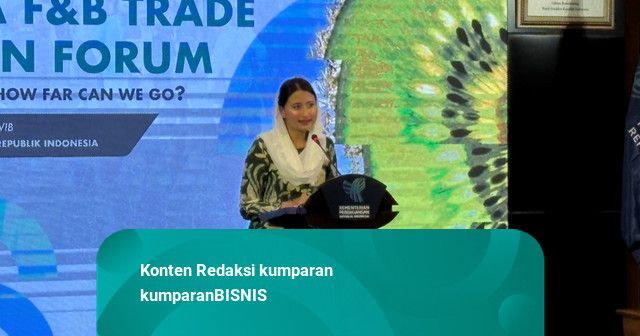
Roro said the government intends to serve as a bridge between public institutions and companies that develop products or operate food business lines. Speaking at the F&B Trade Forum at the Trade Ministry’s office in Jakarta, she called for collaboration to create a stronger business ecosystem around processed food exports.
For producers and processors, the policy emphasis makes quality central to expansion. Products designed for Indonesia’s domestic consumers may need to meet different technical requirements, packaging expectations and commercial conditions in foreign markets. The ministry did not announce a new funding target, export quota or implementation timetable, but its approach focuses on helping companies turn domestic production capabilities into internationally competitive products.
Trade representatives tasked with finding buyers
The ministry is encouraging businesses to use Indonesia’s overseas trade representation network. Roro said the network operates in more than 30 markets, covering 33 countries, and can share market information and identify buyers whose needs match Indonesian products.
Closer cooperation with trade attachés could be particularly relevant for smaller manufacturers that lack their own international sales teams. Access to buyer intelligence may reduce the cost of testing new markets, although companies will still need consistent quality, suitable pricing and reliable supply. Indonesia’s immediate benchmark is Singapore’s $6.5 billion export total, while Thailand’s $17.69 billion lead illustrates the larger challenge of building regional scale. The ministry’s proposed ecosystem will ultimately be judged by whether those connections produce repeat orders and lift shipments beyond the current $6.25 billion level.