Indonesia’s Palm Biomass Potential Faces Processing and Logistics Barriers
Indonesia produces large volumes of oil palm residues, but collection costs, processing requirements and uncertain market access limit commercialization. Industry specialists say projects must integrate technology, logistics, residue availability and sustainability from plantation to buyer.
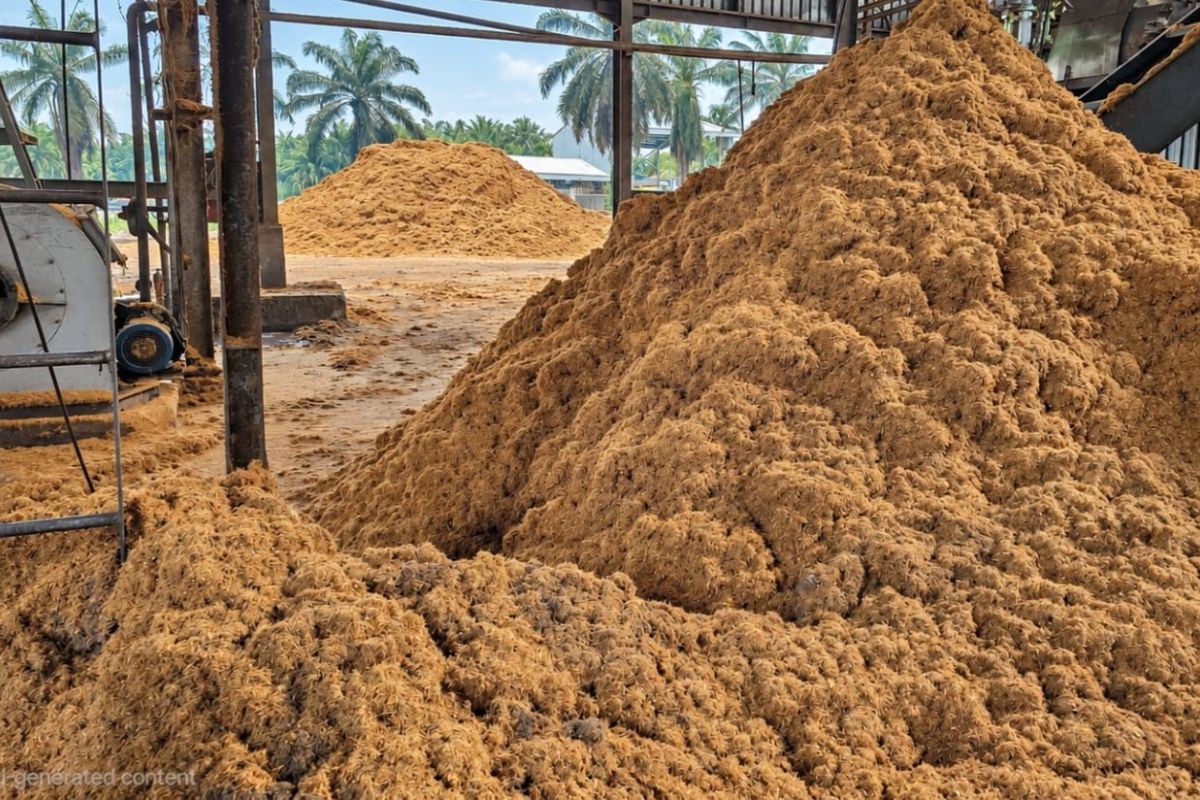
Large resource does not guarantee commercial supply
Indonesia’s palm oil industry generates enough agricultural and mill residue to support a substantial biomass sector, but much of that material cannot yet be converted into reliable, higher-value feedstock. Specialists cited by ANTARA identified costs, logistics, mill operations and sustainability assurance as the principal barriers between theoretical biomass volumes and commercially usable supply.
M. Windrawan Inantha, executive director of the UN Global Compact Network Indonesia, said residues must be recovered with suitable technology, collected and transported at reasonable cost, and supplied without compromising plantation requirements or environmental protection. He discussed the issue during a session on the circular bioeconomy of oil palm biomass at Palmex Medan 2026.
According to figures presented by Inantha, Indonesia produces 48.2–55.4 million tonnes of empty fruit bunches annually, along with 24.1–36.1 million tonnes of mesocarp fibre and 11.4–16.9 million tonnes of palm kernel shells. Oil palm fronds are estimated at 175–242 million tonnes of dry matter per year, while palm oil mill effluent, commonly known as POME, totals 120–181 million cubic metres.
Transport can outweigh the residue price
These headline volumes do not represent a single, readily available feedstock pool. Each residue stream has different physical properties, existing uses and processing needs. Empty fruit bunches, for example, may be returned to plantations as organic material, converted into ash for fertiliser or sold for other purposes. Removing them for energy or industrial processing can therefore carry an opportunity cost for plantations.
Professor Diana Chalil of the Consortium Studies on Smallholder Palm Oil at Universitas Sumatera Utara offered a separate estimate of 46.16 million tonnes for national empty fruit bunch production. After accounting for existing uses, she estimated that about 23.08 million tonnes could potentially be available. The figures illustrate the distinction between total residue generation and the volume that can actually be recovered for a new project.
Distance, road conditions and truck capacity all affect delivery costs. Chalil said that in ethanol production using empty fruit bunches, transport represents a much larger component of feedstock cost than the price of the bunches themselves. Processing-plant location and logistics design are consequently central investment decisions, particularly for bulky material with limited value before conversion.
Technology, buyers and sustainability must align
Commercial projects need to determine recoverable volumes, calculate collection and transport expenses and select technology capable of producing material that meets buyers’ specifications. They must also avoid disrupting the agricultural role of residues or weakening sustainability commitments across the sourcing area. Without alignment between these factors, large national estimates may not translate into bankable plant capacity or consistent deliveries.
The sustainability challenge is particularly visible in Riau, which accounts for about 20% of Indonesia’s palm oil production. Jimmy Wilopo of Daemeter Consulting said 35% of the Siak and Pelalawan landscape is forested, including remaining peatlands in Sumatra. The Siak Pelalawan Landscape Programme involves nine upstream and downstream palm oil companies and promotes forest and peat protection, deforestation monitoring, traceability, support for smallholders and villages, social dialogue and cooperation with local authorities. The initiative shows that biomass development will be judged not only by output and cost, but also by how residue sourcing affects plantations and sensitive landscapes.