Indonesia Mobilizes Chili Supplies as Retail Prices Reach Rp90,050 per Kilogram
Indonesia is preparing to move bird’s eye chili from surplus regions to markets facing shortages after red bird’s eye chili reached Rp90,050 per kilogram. Extreme heat, water shortages, pests and reduced planting have disrupted production, although the government expects national output of about 119,000 tonnes in September.
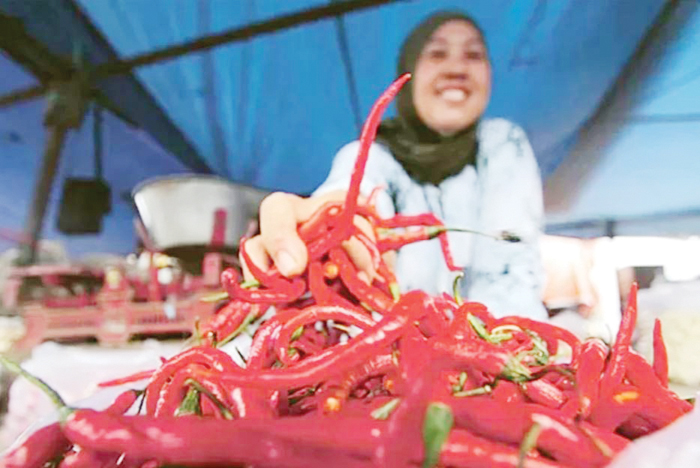
Heat and water shortages disrupt chili production
Indonesia’s National Food Agency, known as Bapanas, and the Ministry of Agriculture are preparing to move bird’s eye chili from surplus-producing regions into markets facing shortages. The intervention follows a sharp rise in consumer prices, with red bird’s eye chili reaching Rp90,050 per kilogram, according to the Bank Indonesia-managed National Strategic Food Price Information Center, or PIHPS.
PIHPS data cited by Pos Metro Padang and detikFinance put large red chili at Rp54,200 per kilogram, curly red chili at Rp62,950, green bird’s eye chili at Rp64,700 and red bird’s eye chili at Rp90,050. DetikFinance reported that curly red chili recorded the steepest percentage increase, rising 9%, while red bird’s eye chili gained 7.2%.
Industry groups attributed the increase primarily to extreme heat and depleted water supplies. Tunov Mondro Atmojo, chairman of the Indonesian Champion Chili Association, told detikFinance that farmers had been experiencing higher prices since mid-August. Insufficient water has caused chili plants to lose flowers and prevented seedlings from surviving, leaving growers dependent on existing productive plants.
Supply pressure may continue through October
Abdul Hamid, chairman of the Indonesian Chili Agribusiness Association, said harvests were continuing in East Java production areas including Jombang, Kediri and Blitar, but volumes remained very limited. He expected weather-related disruption to affect harvest volumes through October, with supplies potentially becoming sufficient again in November.
The shortage is visible along the domestic supply chain. Abdul put current farmgate prices at Rp53,000-Rp65,000 per kilogram. Prices rise to Rp70,000-Rp75,000 at wholesale markets and reach Rp90,000-Rp95,000 when purchased by consumers. A Bapanas coordination meeting with chili farmers on August 26 also identified prolonged dry weather, thrips, whiteflies and shifts by farmers into other crops as factors behind price volatility.
Government revives distribution support
Bapanas plans to use its Food Distribution Facilitation program, or FDP, with growers participating in the Agriculture Ministry’s Champion Chili network. The program connects lower-priced surplus areas, including locations outside Java, with destinations where chili prices are elevated. Bapanas deputy for food availability and stabilization I Gusti Ketut Astawa identified Kediri as one market requiring a rapid response.
During the first quarter of 2026, the FDP moved 5,590 kilograms of bird’s eye chili from Enrekang in South Sulawesi. Of that volume, 3,150 kilograms went to the Kramat Jati wholesale market in Jakarta, while Central Lombok received 1,140 kilograms and East Lombok received 1,300 kilograms. Bapanas said the distribution contributed to easing volatile-food inflation in April, when bird’s eye chili was among the products driving deflation after Ramadan and Eid al-Fitr.
September output offers a supply buffer
The Agriculture Ministry maintains that national bird’s eye chili production will remain sufficient through the end of the year. Sudi Mardianto, the ministry’s director of vegetables and medicinal plants, estimated September production at about 119,000 tonnes. In East Java, Banyuwangi has around 1,486 hectares of standing chili crop, while Sampang has about 1,691 hectares and production there has begun rising to around 5,000 tonnes.
Other Java production centers include Temanggung, Brebes and Magelang, although much of their crop remains at an early growth stage and current output is relatively low. The ministry expects rising harvests from these areas to help limit price increases ahead of Christmas and New Year 2026/2027. Government assistance has also begun reaching production centers through bore wells and irrigation pipelines, though the Champion Chili Association said the support arrived late. The effectiveness of the response will depend on whether water access allows new planting and whether redistributed volumes are large enough to narrow the substantial gap between farmgate and retail prices.