Indonesia's Metallurgical Coal Imports Surge as Global Coal Trade Stalls
Indonesian imports of metallurgical coal rose sharply in the first half of 2026 while the country's coal export volumes fell significantly, according to Republika.co.id. Kompas.com reported that global coal trade grew only marginally over the period, with Indonesia among the countries lifting volumes as a buyer rather than a seller.
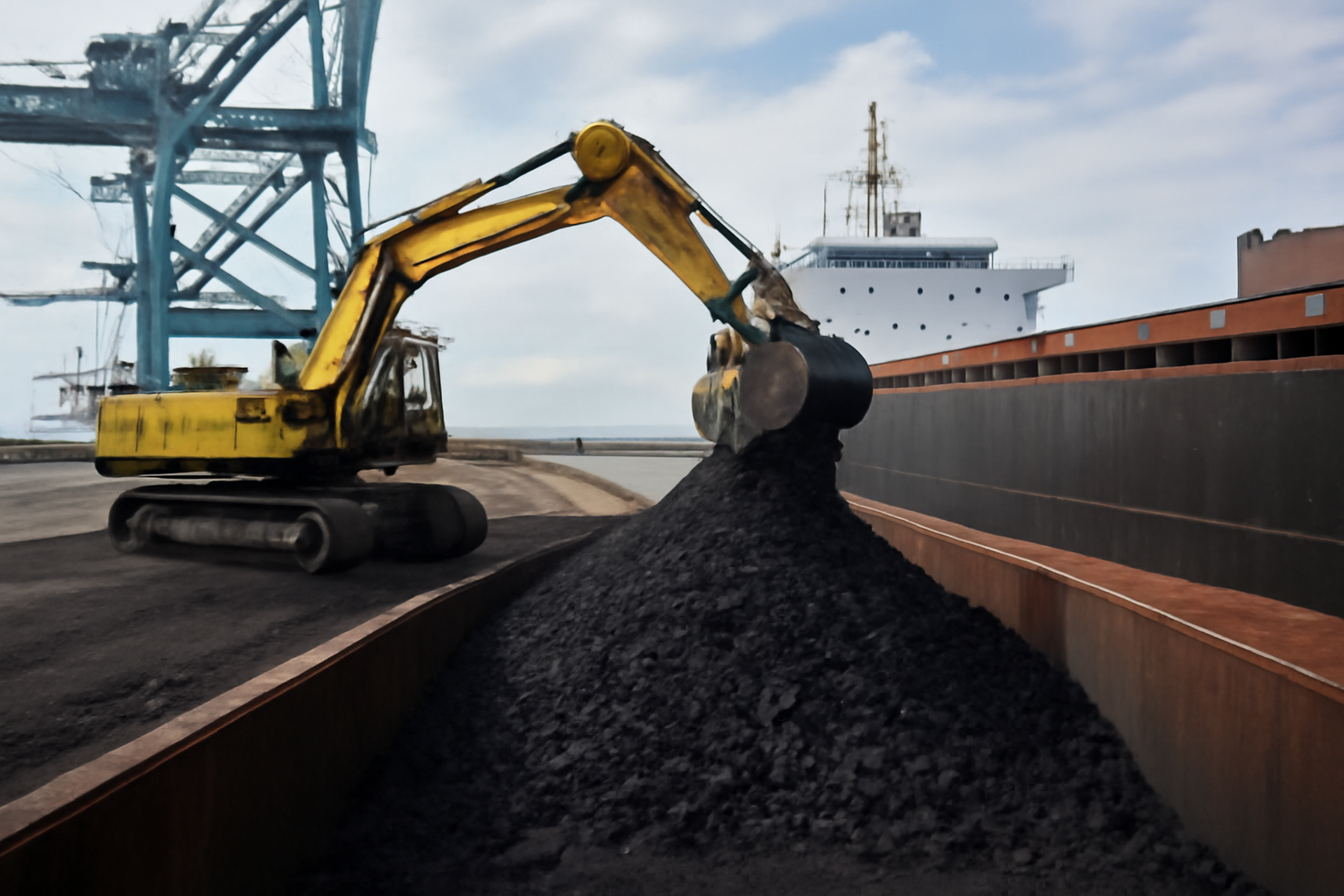
Indonesia has become one of the few sources of growth in a global coal trade that barely moved in the first half of 2026, according to Kompas.com. The outlet reported that worldwide coal trade expanded only marginally over the period, and that Indonesia was among the countries pushing volumes higher — not as a seller, but as a buyer of metallurgical coal.
Republika.co.id described the same half-year as a contradiction in Indonesia's market position. Indonesian coal export volumes fell significantly, the outlet reported, while imports of metallurgical coal jumped. A country that ranks among the world's largest coal suppliers is, in one specific grade, turning into a more important customer.
A smaller seller and a bigger buyer
The two movements are less contradictory than they look. Indonesia's export business is built on thermal coal, much of it low-rank material burned in power stations across Asia. Metallurgical coal is a different product: coking coal is converted into coke and charged into blast furnaces to make iron and steel. It has its own buyers, its own pricing benchmarks and a far shorter list of exporters. Indonesian geology yields comparatively little hard coking coal, so growth in domestic steelmaking and metal processing translates almost directly into import demand.
That distinction matters for anyone reading Indonesia as a single line in a coal balance. The tonnes leaving the country and the tonnes arriving do not compete with each other; they serve different industries and different price curves. A decline on the export side says something about thermal demand, freight economics and domestic policy. A rise on the import side says something about the country's industrial build-out.
Why a new destination for coking coal counts
The seaborne metallurgical coal market is concentrated on the supply side, with Australia, the United States, Canada, Russia and Mongolia accounting for the bulk of exports. Demand has long been anchored by China, India, Japan and South Korea. In a market where trade volumes are close to flat, an additional destination in Southeast Asia carries more weight than its absolute size suggests, because marginal cargoes set the direction of spot pricing.
The export side cuts the other way. Indonesia is the reference supplier of low-rank thermal coal for buyers in China, India and across South and Southeast Asia, and it provides the swing volume many utilities rely on for cheap tonnes. A significant fall in Indonesian export volumes, as reported by Republika.co.id, removes flexibility from the lowest-cost segment of the seaborne market — the segment with the fewest substitutes.
What the reports establish, and what they do not
From the two Indonesian publications, the following points are on the record for the first half of 2026:
- Global coal trade grew only slightly over the period, according to Kompas.com.
- Indonesia was one of the countries that lifted global trade volumes, Kompas.com reported.
- Indonesian coal export volumes fell significantly, according to Republika.co.id.
- Indonesian metallurgical coal imports rose sharply over the same months, Republika.co.id reported.
Neither report, in the material available, attaches tonnages, values or percentage changes to those movements. For producers, traders and importers the direction is established; the magnitude is not. Confirmation will come from Indonesian customs data and from the export statistics of the main coking coal suppliers, which will show whether the additional volume is being drawn from Australia, North America or the Russia–Mongolia corridor.
The broader point is that flat global trade does not mean a static market. When total volumes stop growing, the movement happens in shares: which countries buy, which grades move, which routes gain. Indonesia in the first half of 2026 was on both sides of that shift at once.