Indonesia’s local milk output meets only 20% of national demand
Indonesia produces only about 20% of the milk it consumes, leaving nearly 80% of national demand dependent on imports, particularly from Australia. Low yields, limited feed land and the tropical climate constrain expansion, while the government is assessing closed-barn technology and financing support.
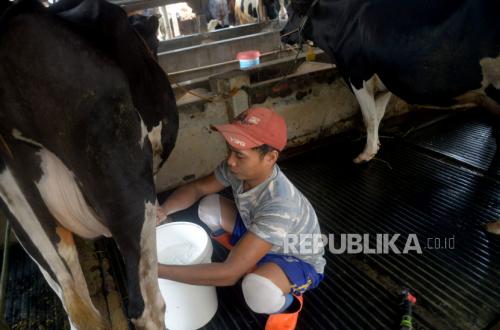
Imports supply nearly four-fifths of demand
Indonesia’s domestic dairy farms currently supply only about 20% of national milk demand, leaving nearly 80% to be covered by imports, Republika reported. Deputy Coordinating Minister for Food Hanif Faisol Nurofik said the country continues to require supplies from overseas, particularly Australia, which he identified as a source of high-quality dairy cattle.
The figures underline the scale of Indonesia’s dependence on external dairy supplies. For domestic farmers and processors, the gap between local output and consumption represents a large potential market, but closing it will require improvements in both animal productivity and the conditions under which dairy herds are raised. Hanif discussed the constraints after visiting the North Bandung Dairy Farmers Cooperative, known as KPSBU, in Lembang, West Bandung Regency, on July 24, 2026.
Yield gap limits domestic supply
Average milk production in Indonesia remains below about 12 liters per cow per day, according to Hanif. More advanced farms can reach about 34 liters per cow per day. The comparison indicates that increasing yields from the existing herd could be as important as expanding cattle numbers, although the government says the national herd must also grow rapidly.
Feed availability is one of the main obstacles. Land suitable for producing cattle feed remains very limited, while Indonesia’s tropical climate is poorly matched to high-yield dairy cattle that generally originate in subtropical areas such as Australia. Imported animals require cooler surroundings and are therefore often kept in mountainous districts. This restricts the range of suitable production locations and can complicate plans to develop farms closer to processors or major consumption centers.
Production concentrated on Java
National milk production is heavily concentrated in three provinces. East Java accounts for about 57.9% of output, West Java for nearly 30% and Central Java for about 9%, Hanif said. Several other provinces together contribute about 2%. The concentration means changes in herd health, feed costs or farm conditions in Java can have an outsized effect on domestic supply. It also shows that expanding production outside established highland dairy areas will depend on technologies that can manage heat and humidity.
The government is examining one such option in East Java: closed barns capable of controlling the microclimate around dairy cattle. If the system performs successfully, farms may no longer have to be located exclusively in mountainous areas and could expand into lower-lying regions. The approach could widen the available land base, although the source did not provide investment costs, a deployment timetable or projected gains in milk yield.
Financing seen as necessary for herd growth
Hanif said relying only on natural reproduction would take too long to increase the dairy-cattle population, particularly if Indonesia is to pursue self-sufficiency in milk. He called for government intervention through financing schemes designed to accelerate dairy development. No funding amount or detailed mechanism was disclosed.
For producers, the central challenge is therefore not simply adding cows. Farms must secure feed, manage heat and raise daily productivity toward the levels achieved by more advanced operations. Processors and importers, meanwhile, are likely to continue operating in a market where foreign milk supplies remain essential. Closed barns and public financing may improve the prospects for local production, but the current yield gap and geographic concentration show that reducing the nearly 80% import share will require changes across the production system.