Indonesia designates 48 export villages in Bangka Belitung for pepper, crafts and seafood
Indonesia Eximbank and the Finance Ministry’s Treasury Directorate have designated 48 Export Villages in Bangka Belitung. The program will prepare pepper farmers, nipah-stick artisans and processed-seafood businesses for international markets.
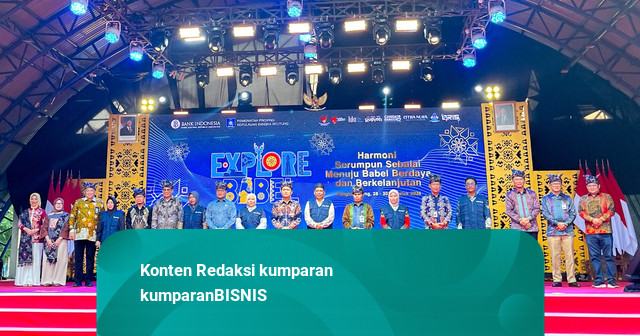
Export program spans three commodity clusters
The Indonesian Export Financing Institution, known as LPEI or Indonesia Eximbank, and the Finance Ministry’s Directorate General of Treasury have inaugurated 48 Export Villages in the Bangka Belitung Islands province. The initiative is intended to build export capacity at village level and diversify the region’s sources of economic growth.
According to Kumparan and detikFinance, the designated villages are organized around three product clusters: pepper, handicrafts made from nipah palm sticks and processed seafood. The program targets products that already have distinctive local characteristics but require stronger production capacity, consistent specifications, business governance and market access before suppliers can reliably serve foreign buyers.
White pepper accounts for most participating villages
The pepper cluster covers 34 villages and about 400 farmers in South Bangka and Central Bangka regencies. Participants produce white pepper as whole peppercorns and powder. Bangka pepper is marketed internationally as Muntok White Pepper. The product has a high piperine content, which gives it a pronounced pungency, and is protected by a geographical indication.
Another seven villages in Bangka and Central Bangka form the nipah-stick handicraft cluster, involving 50 artisans. The raw material is described as thick, long and flexible, with natural shades ranging from brown to cream. Producers use it for fully organic, biodegradable handicrafts positioned as premium products. The processed-fisheries cluster comprises seven villages and 36 small and medium-sized businesses in the same two regencies. They process fresh marine catches, while dozens of small industries operate through a common production center designed to make quality standards easier to strengthen and maintain.
Support extends from documentation to overseas samples
LPEI will assist participating businesses with institutional development, export management and access to markets. Support will include training in export procedures and documentation, preparation of financial statements under accounting standards, introductions to market intelligence, financing for samples sent abroad, laboratory testing and participation in international exhibitions. No export-volume, revenue or funding target was disclosed in the source material.
The initiative also involves the Treasury Directorate, Customs and Excise, the Industry Ministry, Bank Indonesia’s Bangka Belitung office and the provincial government. Bank Indonesia, the Industry Ministry and local authorities will act as incubators for micro, small and medium-sized enterprises, while LPEI, the Treasury Directorate and Customs will serve as export accelerators. LPEI finance, operations and information technology executive director Anwar Harsono said distinctive products may open the door to overseas markets, but consistent production, quality, specifications, governance and financial readiness determine whether businesses can remain there.
Village producers face a readiness test
The Export Village scheme is a community-development program created by Indonesia Eximbank to increase local capabilities and prepare leading village commodities for export. Muhamad Mufti Arkan, head of the regional Treasury Directorate office and the Finance Ministry’s representative in Bangka Belitung, described it as an effort to build more diverse, inclusive and sustainable sources of growth, starting with globally oriented economic development in villages.
For buyers and traders, the immediate significance lies in supplier preparation rather than a guaranteed increase in shipments. The 48-village network creates a defined pipeline of pepper, craft and seafood enterprises, but commercial results will depend on whether participants can aggregate supply, pass laboratory and buyer requirements, produce compliant documentation and maintain uniform quality. Those practical milestones will determine whether the program converts recognized local products into repeat export business.