Indonesian ministers say illegal rice imports undermine self-sufficiency drive
Finance Minister Suahasil Nazara said rice entering Indonesia illegally tarnishes the government's self-sufficiency program, according to Buton Pos. Agriculture Minister Amran said the practice harms 115 million farmers. No volumes, origins or time frame were disclosed.
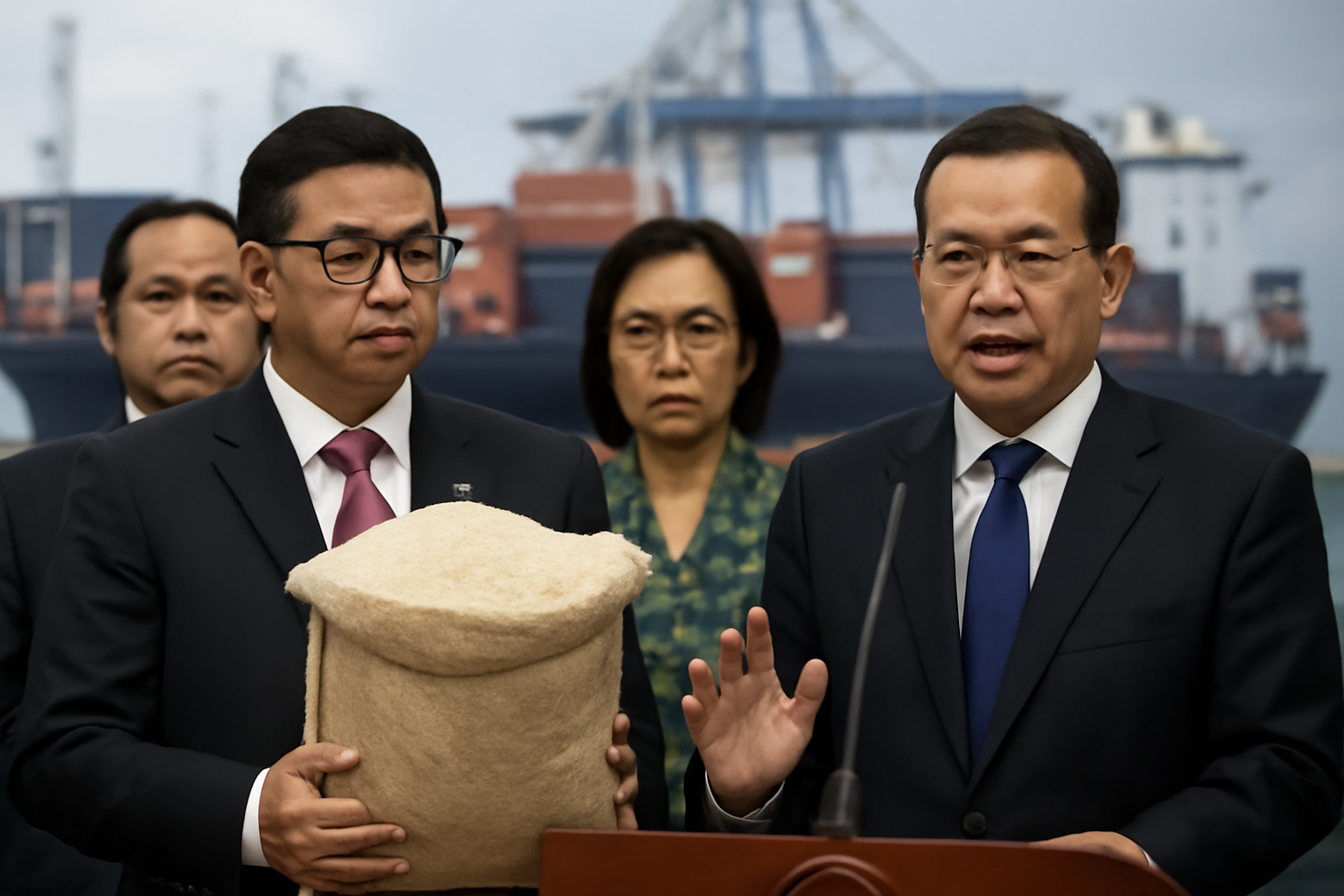
Indonesia's finance and agriculture ministers have both said that rice entering the country illegally is damaging the government's rice self-sufficiency program, with Agriculture Minister Amran putting the number of farmers hurt by the practice at 115 million, according to a report from Jakarta published by Buton Pos.
Two ministries, one message
Finance Minister Suahasil Nazara said illegally imported rice tarnishes swasembada, the government's drive to cover domestic rice demand from domestic production, according to the report. The remark is notable because border enforcement and farm policy usually sit in separate conversations: customs and excise fall under the finance ministry, while planting, harvests and procurement are the agriculture ministry's brief. Having both ministers speak to the same issue signals that unofficial rice is being treated as a customs and revenue problem as well as an agricultural one.
Amran framed the damage in terms of people rather than tonnes. The figure he cited, 115 million farmers, refers to those said to be disadvantaged by illegal rice, according to Buton Pos. In the account published, neither minister attached a volume, a value or a time frame to the flows.
Why unofficial rice matters to the domestic market
Rice imports into Indonesia are subject to official authorisation. Shipments that bypass that process arrive without duty, without volume control and without appearing in official stock data. For millers and traders, the practical effect is a parallel supply that competes with domestic milled rice in the same wholesale channels but at a lower landed cost, and that cannot be planned around because nobody knows how much of it there is.
Timing is what makes this a farmgate issue. Producer prices are most exposed during and immediately after harvest, when domestic supply peaks and mills have the least reason to bid up. Unrecorded volumes arriving in that window weigh on wholesale prices at exactly the point when farmers are selling. For policymakers, the data gap is as serious as the price effect: stock balances used to decide whether to import, release reserves or intervene are only as reliable as the volumes they actually capture.
What the report does not specify
The published account leaves the core commercial questions open:
- the volume of rice said to be entering illegally, and over what period;
- the countries of origin and the routes used;
- whether seizures, prosecutions or administrative penalties have followed;
- how the figure of 115 million farmers was derived, and whether it counts individuals or farming households.
The enforcement question
Ministerial statements of this kind usually precede tighter inspection rather than new trade rules. For compliant importers and for exporters shipping to Indonesia, the near-term risk is procedural: more documentary checks, closer scrutiny of origin papers and slower clearance at ports, with the cost of delay falling on the cargo rather than on the smuggled volumes the measures are aimed at.
Self-sufficiency remains the stated policy goal, and both ministers have now tied border enforcement directly to it. Until volumes and origins are published, however, the market is working with a political signal rather than a quantified one, and the size of the problem the government says it is confronting remains undisclosed.