Indonesia’s Free Nutritious Meals Program Lifts Demand for Chicken and Eggs
Indonesia’s Free Nutritious Meals program is creating new demand for chicken and eggs, contributing to higher chicken prices. Economists are calling for production incentives, financing and technical support as a Rp2.2 trillion livestock-production hub is developed.
Institutional demand creates a new poultry market
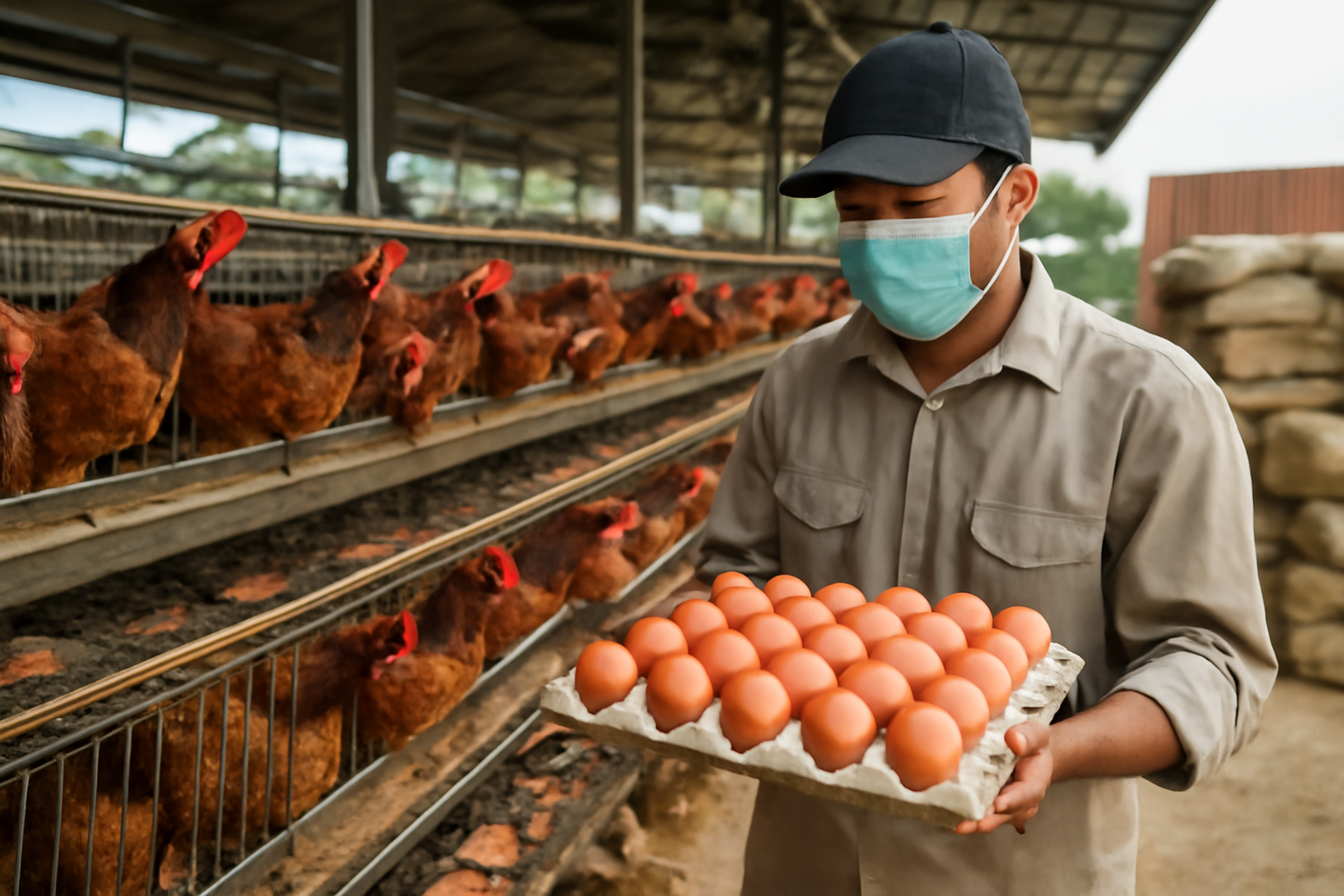
Indonesia’s Free Nutritious Meals program, known by its Indonesian abbreviation MBG, is opening a new source of demand for chicken and eggs. Investor Daily reports that the program was designed to generate economic benefits for food producers, including farmers and livestock operators, by creating demand for their commodities. Eggs, in particular, are emerging as one of the products gaining a new institutional market through the initiative.
The effect is already visible in the chicken market. Kompas reports that chicken prices have increased amid demand linked to MBG. The available reports do not quantify the price rise or specify how much poultry the program requires, but the direction of the market signal is clear: regular meal procurement is adding demand to an industry that must supply both existing commercial buyers and the new program.
Economists call for supply-side support
Higher demand can benefit poultry farmers through stronger sales, but it also increases the need for production to respond. An economist from Gadjah Mada University cited by Kompas called for measures to expand chicken and egg output. The proposed support includes incentives, breeding stock, access to the government-backed People’s Business Credit program, known as KUR, and technical assistance for livestock producers.
These measures address different constraints within the production chain. Better access to breeding stock can support flock expansion, while credit can help producers finance birds, housing and operating needs. Technical support can help farms convert that investment into reliable output. For the MBG program, the central issue is not simply securing more poultry products, but ensuring that production can keep pace with recurring procurement without creating sustained pressure on prices.
Rp2.2 trillion hub signals investment in capacity
Investor Daily reports that a livestock-production center valued at Rp2.2 trillion is being developed as MBG creates a new market for eggs. The investment indicates that the demand generated by the meals program is prompting a capacity response, rather than being treated solely as a short-term purchasing increase. The source description does not provide the hub’s capacity, completion schedule or expected production volumes.
For producers, the opportunity depends on whether participation is matched by affordable finance, suitable breeding material and practical production support. Traders and food suppliers will also need dependable volumes if they are to serve a large institutional buyer while maintaining supplies to other customers. The emerging risk is a gap between the speed of demand growth and the time required to increase livestock output. MBG can broaden the domestic market for chicken and eggs, but its effect on prices and farm income will ultimately depend on how quickly the proposed incentives and Rp2.2 trillion production investment translate into additional supply.